


Norwich, United Kingdom
Norwich is a city of 143,135 people in England, United Kingdom, founded in 1004.
Why visit Norwich
Townapedia lists 84 museums and landmarks, 82 parks and trails, 145 places to eat, 37 places to stay and 25 attractions in and around town.
Highlights include Norwich Playhouse, Theatre Royal, Hungate Medieval Art and Strangers' Hall.
Weather in Norwich
Forecast from MET Norway (CC BY 4.0). Full forecast
About Norwich
Norwich ( NORR-ij, -itch) is a cathedral city and district in Norfolk, England, of which it is the county town. It lies by the River Wensum, about 100 mi (160 km) north-east of London, 40 mi (64 km) north of Ipswich and 65 mi (105 km) east of Peterborough. The population of the Norwich City Council local authority area was estimated to be 144,000 in 2021, which was an increase from 143,135 in 2019. The wider Norwich built-up area had a population of 213,166 at the 2011 United Kingdom census.
From the Wikipedia article Norwich (this version), under CC BY-SA 4.0.
Travel tips from other travellers: Norwich on Wikivoyage (CC BY-SA 4.0).
Photos of Norwich


Things to do25

Norwich Playhouse
Cinema and theater
Theatre in Norwich, Norfolk, England
42-58 Saint Georges Street, Norwich


Maddermarket Theatre
Cinema and theater
Theatre in Norwich, England
Saint John's Alley, Norwich



Walsingham Farms Shop
Farm and orchard
Bringing a taste of North Norfolk to Norwich Market. Serving hot food and drinks, with deli and other Norfolk-made goodies for sale....
124-125 Market Place, Norwich
Tu-Sa 10:00-16:00; Su-Mo closed
Bishop Bridge
Bridge · 0.5 mi
Bridge in Norwich, Norfolk, England, UK
13 more on the map.
Museums and landmarks84


Strangers' Hall
Museum
Grade I listed building in Norwich, England
4-12 Charing Cross, Norwich
We-Fr 10:00-16:00; Su 13:00-16:30

The Sainsbury Centre
Museum · 2.7 mi
Norfolk Road, Norwich
Mo off; Tu-Fr 09:00-18:00; Sa-Su 10:00-17:00

Norwich Castle Museum
Museum
Castle Meadow, Norwich
Jul 01-Sep 29 Mo-Sa 10:00-17:00, Su 13:00-17:00; Sep 30-Jun 30...


Norwich Castle
Monument and historic site
Historic castle and museum in Norwich, England

Norwich War Memorial
Monument and historic site
Large stone memorial above the market place facing the City Hall fronted by stone steps.

Norwich Arts Centre
Museum · 0.5 mi
Former church in Norwich, Norfolk, England, UK
Reeves Yard, Norwich
Saint Benedict church tower
Monument and historic site · Anglican · 0.6 mi
72 more on the map.
Parks, trails and playgrounds82


Wensum Local Nature Reserve
Park · 1.6 mi
Local nature Reserve in Norwich, England



70 more on the map.
Restaurants and cafes145
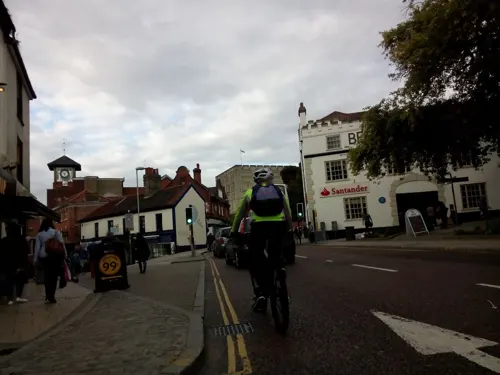
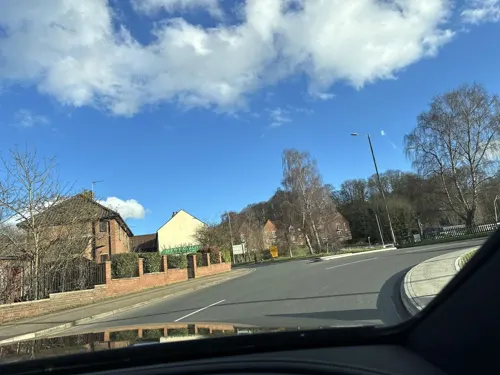
The Castle Inn
Bar and pub · 0.7 mi
Norwich’s Premier Gay Pub & Club
1 Spitalfields, Norwich
Su-We 14:00-00:00; Th-Fr 14:00-02:00; Sa 14:00-04:00
King's Arms
Bar and pub · 0.5 mi
33 Hall Road, Norwich
Mo-Th 11:00-23:00; Fr-Sa 11:00-23:30; Su 12:00-22:30



Lamb Inn
Bar and pub
Haymarket, Norwich
Mo-We 11:00-23:00; Th 11:00-00:00; Fr 11:00-00:30; Sa 10:00-00:30;...

Turtle Bay
Restaurant · Jamaican
8 Swan Lane, Norwich
Su-We 11:30-23:30; Th 11:30-00:30; Fr-Sa 11:30-01:30

Coach & Horses
Bar and pub · 0.4 mi
51 Bethel Street, Norwich
Mo-Th 11:30-23:30; Fr-Sa 11:30-00:00; Su off
Crown Point Tavern
Bar and pub · 1.5 mi
Kirby Road, Norwich
Tu,We 15:00-22:00; Th 12:00-22:00; Fr,Sa 12:00-23:00; Su 12:00-22:00
Last Pub Standing
Bar and pub
27-29 King Street, Norwich
Mo off; Tu-Th 12:00-23:00; Fr-Sa 12:00-00:00; Su 12:00-18:00
133 more on the map.
History
The capital of the Iceni tribe was a settlement located near the village of Caistor St Edmund on the River Tas about 5 mi (8 km) to the south of modern Norwich. After an uprising led by Boudica in about 60 AD, the Caistor area became the Roman capital of the Iceni ( in nowadays East Anglia ) named Venta Icenorum, literally "marketplace of the Iceni". This fell into disuse about 450 AD.
The Anglo-Saxons settled the site of the modern city some time between the 5th and 7th centuries, founding the towns of Northwic ("North Harbour"), from which Norwich takes its name, and Westwic (at Norwich-over-the-Water) and a lesser settlement at Thorpe.
Norwich became settled as a town in the 10th century and then became a prominent centre of East Anglian trade and commerce attested by the presence of a mint. The name Norvic is attested on pennies minted during the reign of Æthelstan.
Read more of the history
It is possible that three separate early Anglo-Saxon settlements, one north of the river and two either side on the south, joined as they grew; or that a single Anglo-Saxon settlement, north of the river Wensum-Yare, emerged in the mid-7th century after the abandonment of the previous three. Mercian coins and sherds of pottery from the Rhineland dating from the 8th century suggest that long-distance trade was happening during this time. The Vikings were a strong cultural influence in Norwich for 40 to 50 years at the end of the 9th century, setting up an Anglo-Scandinavian district near the north end of present-day King Street. Between 924 and 939, during the reign of King Æthelstan, Norwich became fully established as a town, with its own mint. The word Norvic appears on coins across Europe minted during this period. The ancient city was a thriving centre for trade and commerce in East Anglia in 1004 when it was raided and burnt by Sweyn Forkbeard, the Viking king of Denmark.
At the time of the Norman Conquest, in 1067, the city was one of the largest in England. The Domesday Book, compiled in 1086, states that the city had approximately 25 churches and a population of between 5,000 and 10,000. It also records the site of an Anglo-Saxon church in Tombland, the site of the Saxon market place and the later Norman cathedral. Norwich continued to be a major centre for trade, described officially as the Port of Norwich. Quern stones and other artefacts from Scandinavia and the Rhineland have been found during excavations in Norwich city centre. These date from the 11th century onwards.
Norwich Castle was founded soon after the Norman Conquest. The Domesday Book records that 98 Saxon homes were demolished to make way for the castle. The Normans established a new focus of settlement around the Castle and the area to the west of it: this became known as the "New" or "French" borough, centred on the Normans' own market place, which survives today as Norwich Market, the largest permanent undercover market in Europe.
In 1096, Herbert de Losinga, Bishop of Thetford, began construction of Norwich Cathedral. The chief building material for the Cathedral was limestone, imported from Caen in Normandy. To transport the building stone to the site, a canal was cut from the river (from the site of present-day Pulls Ferry) up to the east wall. Herbert de Losinga then moved his See there, to what became the cathedral church for the Diocese of Norwich. The Bishop of Norwich still signs himself Norvic.
Norwich received a royal charter from Henry II in 1158, and another from Richard the Lionheart in 1194. After a riot in the city in 1274, Norwich has the distinction of being the only complete English city to be excommunicated by the Pope.
The first recorded presence of Jews in Norwich is 1134. In 1144, the Jews of Norwich were accused of ritual murder after a boy (William of Norwich) was found dead with stab wounds. William acquired the status of martyr. Pilgrims made offerings to a shrine at the Cathedral (largely finished by 1140) up to the 16th century, but the records suggest there were few of them. In 1174, Norwich was sacked by the Flemings. In February 1190, all the Jews of Norwich were massacred except for a few who found refuge in the castle.
At the site of a medieval well, the bones of 17 individuals, including 11 children, were found in 2004 by workers preparing the ground for construction of a Norwich shopping centre. The remains were determined by forensic scientists to be most probably the remains of such murdered Jews, and a DNA expert determined that the victims were all related so that they probably came from one Ashkenazi Jewish family. The study of the remains featured in an episode of the BBC television documentary series History Cold Case. A research paper from 30 August 2022 confirmed the remains were most likely Ashkenazi Jews. The paper found that many of the victims had certain medical disorders most often seen in Ashkenazi communities, suggesting that a population bottleneck had occurred among Ashkenazim before the 12th century. This challenged traditional views among historians that the bottleneck had happened between the 14th and 16th centuries.
In 1216, the castle fell to Louis, Dauphin of France, and Hildebrand's Hospital was founded, followed ten years later by the Franciscan Friary and Dominican Friary. The Great Hospital dates from 1249 and the College of St Mary in the Field from 1250. In 1256, Whitefriars was founded. In 1266 the city was sacked by the "Disinherited". It has the distinction of being the only English city ever to be excommunicated, following a riot between citizens and monks in 1274.
From the History section of Norwich on Wikipedia, under CC BY-SA 4.0.
More about Norwich
Geography
Norwich is 100 miles (160 km) north-east of London, 40 miles (64 km) north of Ipswich and 65 miles (105 km) east of Peterborough. The city lies at almost the same latitude as Leicester and Shrewsbury.
Norwich, like the rest of the British Isles, has a temperate maritime climate. It does not suffer extreme temperatures, and benefits from rainfall fairly evenly spread throughout the year. Coltishall, about 11 mi (18 km) to the north-east, was the nearest official met-office weather station for which records are available, although it ceased reporting in early 2006 – Norwich airport now provides readings. Norwich's position in East Anglia, jutting out into the North Sea can produce weather conditions that have less effect on other parts of the country, such as snow or sleet showers during the winter months on a northerly or easterly wind, or sea fog/haar during the summer half of the year. An example of Norwich being afflicted by sea fog is shown in the adjacent image.
The highest temperature recorded at Coltishall was 33.1 °C (91.6 °F) during June 1976. However, going back further to 1932, and Norwich's absolute record high reached 35.6 °C (96.1 °F), while 37.0 °C was reached in July 2022 at Norwich Weather Centre. Typically the warmest day of the year should reach 28.8 °C (83.8 °F) and 9.9 days should register a temperature of 25.1 °C (77.2 °F) or higher.
Economy
Norwich's economy was historically manufacturing-based, including a large shoemaking industry, but it transitioned in the 1980s and 1990s into a service-based economy.
The greater-Norwich economy (including Norwich, Broadland and South Norfolk government districts) as measured by GVA was estimated at £7.4 billion in 2011 (2011 GVA at 2006 prices). The city's largest employment sectors are business and financial services (31%), public services (26%), retail (12%), manufacturing (8%) and tourism (7%).
The proportion of working-age adults in Norwich claiming unemployment benefits was 3.3% compared with 3.6% across the UK.
New developments on the former Boulton and Paul site include a Riverside entertainment complex with nightclubs and other venues featuring national leisure brands. Nearby, the football stadium is being upgraded with more residential property development alongside the River Wensum.
Archant, formerly Eastern Counties Newspapers (ECN), is a national publishing group that has grown out of the city's local newspapers and is headquartered in Norwich.
Arts and culture
Historically Norwich has been associated with art, literature and publishing. This continues. It was the site of England's first provincial library, which opened in 1608, and the first city to implement the Public Libraries Act 1850. The Norwich Post was the first provincial newspaper outside London, founded in 1701. The Norwich School of artists was the first provincial art movement, with nationally acclaimed artists such as John Crome associated with the movement. Other literary firsts include Julian of Norwich's Revelations of Divine Love, published in 1395, which was the first book written in the English language by a woman, and the first poem written in blank verse, composed by Henry Howard, Earl of Surrey, in the 16th century.
Today the city is a regional centre for publishing, with 5 per cent of the UK's independent publishing sector based in the city in 2012. In 2006 Norwich became the UK's first City of Refuge, part of the International Cities of Refuge Network (ICORN) which promotes free speech. Norwich made the shortlist for the first city to be designated UK City of Culture, but in July 2010 it was announced that Derry had been selected. In May 2012 Norwich was designated as England's first UNESCO City of Literature.
Education
The city has 56 primary schools (including 16 academies and free schools) and 13 secondary schools, 11 of which are academies. The city's eight independent schools include Norwich School and Norwich High School for Girls. There are five schools for children with learning disabilities. The former Norwich High School for Boys in Upper St Giles Street has a blue plaque commemorating Sir John Mills, who was a pupil there.
Norwich has two universities: the University of East Anglia and Norwich University of the Arts. The student population is around 15,000, many of them from overseas. The University of East Anglia, founded in 1963, is located on the outskirts of the city. It has a creative writing programme, established by Malcolm Bradbury and Angus Wilson, whose graduates include Kazuo Ishiguro and Ian McEwan. It has done work on climate research and climate change. Its campus is home to the Sainsbury Centre for Visual Arts, which houses several important art collections. The Norwich University of the Arts dates back to 1845 as the Norwich School of Design. Founded by artists and followers of the Norwich School art movement, it was founded to provide designers for local industries. Previously a specialist art school (the Norwich School of Art and Design), it achieved university status in 2013.
From the Wikipedia article Norwich, under CC BY-SA 4.0.
Notable people from Norwich
 Philip PullmanEnglish author (born 1946)Photo: Photographed by Adrian Hon , http://mssv.net/, CC BY-SA 2.0
 Olivia ColmanBritish actressPhoto: Raph_PH, CC BY 2.0
 Harriet MartineauEnglish writer and sociologist (1802–1876)Photo: Richard Evans, Public domain
 Paul NurseNobel prize winning British biochemistPhoto: Not specified in the submission, CC BY-SA 3.0
 Julian of NorwichEnglish theologian and anchoressPhoto: User:Poliphilo, CC0
 William Jackson HookerEnglish botanist and botanical illustrator (1785-1865)Photo: Spiridione Gambardella (c.1815–1886), CC BY-SA 4.0
 China MiévilleEnglish writer, critic, and activist (born 1972)Photo: Ceridwen, CC BY 3.0
 PaigeBritish professional wrestler and actressPhoto: All Elite Wrestling, CC BY-SA 4.0
 Richard Nevillejure uxoris 16th Earl of Warwick and suo jure 6th Earl of Salisbury (1428-1471)Photo: John Rous, Public domain
 James Edward SmithEnglish botanist, founder of the Linnean Society of London (1759–1828)Photo: Unknown author Unknown author, Public domain
- Elizabeth Frysocial reformer from England (1780-1845)
- Peter BarlowBritish mathematician and physicist


Born in Norwich, according to Wikidata (CC0). Each name links to its Wikipedia article.
Where to stay37
Churches and places of worship73
All Saints Antiques Centre
Church · Anglican
All Saints Street, Norwich
Shopping73
Gas and EV charging23
Schools, colleges and libraries37
Healthcare35
Map of Norwich
250 places. The map loads OpenStreetMap tiles when you open it.
Getting there and nearby towns
Norwich Airport (NWI) is the nearest airport with scheduled flights listed in OpenStreetMap, 4 miles away.
- Cringleford 3 mi southwest, about 5 min by car
- Bowthorpe 3 mi west, about 6 min by car
- Spixworth 4 mi north, about 7 min by car
- Stoke Holy Cross 4 mi south, about 6 min by car
- Costessey 4 mi northwest, about 7 min by car
- Rackheath 4 mi northeast, about 7 min by car
- Swardeston 4 mi southwest, about 7 min by car
- Poringland 5 mi southeast, about 8 min by car
- Mulbarton 5 mi southwest, about 9 min by car
- Hethersett 6 mi west, about 9 min by car
Drive times are estimates from straight-line distance, not routes.
Keep exploring
Local news
Headlines from INDB.
Reviews, tips and questions
Loading what members have shared...
Sources and licences
- GeoNames (CC BY 4.0): population, coordinates, regions and time zone
- Mapillary (see each image): photos
- OpenStreetMap contributors (ODbL 1.0): places, airports, map data
- Wikidata (CC0 1.0): elevation, founding date, time zone, website, landmarks and historic places
- Wikimedia Commons (see each image): photos
- Wikipedia (CC BY-SA 4.0): overview and history text
Photo credits
- Norwich Skyline, Andrew Hurley, CC BY-SA 2.0
- Norwich - panoramio, Tanya Dedyukhina, CC BY 3.0
- NorwichPlayhouse, Cameron Self, CC BY 2.5
- Maddermarket, Cameron Self, aka C1self at en.wikipedia, CC BY 2.5
- Blackfriars Bridge Norwich, Northmetpit, CC BY-SA 3.0
- Strangers' Hall - Charing Cross, Norwich - museum windows, Elliott Brown, CC BY 2.0
- Catton Park, Northmetpit, Public domain
- Danby Wood 4, Dudley Miles, CC BY-SA 4.0
- Heigham Park Norwich 2, Northmetpit, CC BY-SA 4.0
- Waterloo Park Norwich Bandstand & Pavilion, Northmetpit, CC0
- Brundall Church Fen 3, Dudley Miles, CC BY-SA 4.0
- Norwich castle, The original uploader was Bluemoose at English Wikipedia ., CC BY-SA 3.0
- Norwich Cathedral I, Aleister Crowley 20:33, 19 January 2007 (UTC), CC BY-SA 3.0
- NHS NNUH entrance, Unknown author, CC BY-SA 3.0
- Chapelfield Mall Norwich aerial by John Fielding, John Fielding from Norwich, UK, CC BY 2.0
- Sainsbury Centre for Visual Arts, Oxyman, CC BY 2.5
- The Forum Norwich 2015, Geni, CC BY-SA 4.0
- Norwich Theatre Royal, Northmetpit, Public domain
- St Andrew's Church, St Andrews Street, Norwich, Elliott Brown, CC BY 2.0
- Church of St. Peter Hungate, Princes Street, Norwich, Elliott Brown, CC BY 2.0
- Church of St John the Baptist , Timberhill, Elliott Brown, CC BY 2.0
- Norwich - Britannia Chambers And Attached Area Railings - 20220911122136, Barrymyles, CC BY-SA 4.0
- -2018-07-25 Kings Head public house, Magdalen Street, Norwich (4), Evelyn Simak, CC BY-SA 2.0
- Odeon Norwich, Chloecairns, CC BY-SA 3.0
- Earlham Library, Lajmmoore, CC BY-SA 4.0
- Norwich Castle keep, 2009, Andrew Hurley from Wallasey, England, United Kingdom, CC BY-SA 2.0
- Norwich Cathedral - The Tower and Spire, JackPeasePhotography, CC BY 2.0
- Wensum Local Nature Reserve, Northmetpit, Public domain
- St John the Baptist on Timberhill, Andrewrabbott, CC BY-SA 4.0
- -2017-02-25 Looking across Carrow Bridge, Norwich, Norfolk, Stephen McKay, CC BY-SA 2.0
- -2021-04-24 Foundry Bridge, River Wensum, Norwich, Adrian S Pye, CC BY-SA 2.0
- Samson sculpture at Museum of Norwich at the Bridewell, JamJamSvn, CC BY-SA 4.0
- -2011-03-24 Bandstand, Chapelfield gardens, Norwich, Norfolk, Tanya Dedyukhina, CC BY 3.0
- Frozen Eaton Park Boat Pond, Sebastiandoe5, CC BY-SA 4.0
- Street-level photo, miguel_andrade, CC BY-SA 4.0
- Street-level photo, smsm1, CC BY-SA 4.0
- Street-level photo, smsm1, CC BY-SA 4.0
- Street-level photo, wasd42, CC BY-SA 4.0
- Street-level photo, miguel_andrade, CC BY-SA 4.0
- Street-level photo, smsm1, CC BY-SA 4.0
- Street-level photo, smsm1, CC BY-SA 4.0
- Street-level photo, smsm1, CC BY-SA 4.0
- Street-level photo, miguel_andrade, CC BY-SA 4.0
- Street-level photo, miguel_andrade, CC BY-SA 4.0
- Street-level photo, miguel_andrade, CC BY-SA 4.0
- Street-level photo, smsm1, CC BY-SA 4.0
- Street-level photo, miguel_andrade, CC BY-SA 4.0
- Street-level photo, miguel_andrade, CC BY-SA 4.0
- Street-level photo, smsm1, CC BY-SA 4.0
- Street-level photo, smsm1, CC BY-SA 4.0
- Street-level photo, smsm1, CC BY-SA 4.0
- Street-level photo, smsm1, CC BY-SA 4.0
- Street-level photo, smsm1, CC BY-SA 4.0
- Street-level photo, smsm1, CC BY-SA 4.0
- Street-level photo, railorama, CC BY-SA 4.0
- Street-level photo, IpswichEdits, CC BY-SA 4.0


Page built November 10, 2026. Spotted a mistake? Tell us or suggest a place.