


York, United Kingdom
York is a city of 156,135 people in England, United Kingdom, founded in 71.
Why visit York
Townapedia lists 170 museums and landmarks, 150 parks and trails, 426 places to eat, 107 places to stay and 21 attractions in and around town.
Highlights include Vue York, York Theatre Royal, City Walls and City Walls.
Weather in York
Forecast from MET Norway (CC BY 4.0). Full forecast
About York
York is a cathedral city in North Yorkshire, England, with Roman origins, sited at the confluence of the rivers Ouse and Foss. It has many historic buildings and other structures, including the minster, castle and city walls, all of which are Grade I listed. It is the traditional county town of Yorkshire, and the administrative centre of the City of York district. It is located 27 miles (43 km) north-east of Leeds, 90 miles (140 km) south of Newcastle upon Tyne and 207 miles (333 km) north of London.
From the Wikipedia article York (this version), under CC BY-SA 4.0.
Travel tips from other travellers: York on Wikivoyage (CC BY-SA 4.0).
Photos of York


Things to do21
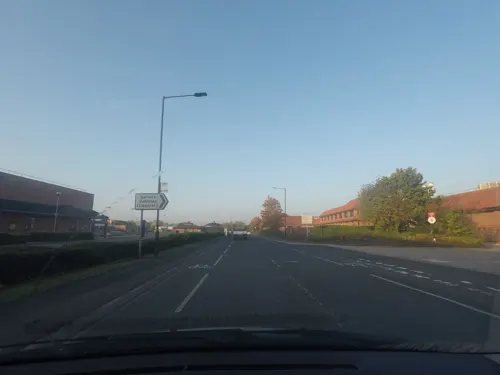

York Theatre Royal
Cinema and theater
St Leonard's Place, York
Mo 09:00-17:00,Tu-Fr 09:00-17:00; Sa 10:00-21:00; Su 10:00-16:00


Grand Opera House
Cinema and theater
Theatre in York, North Yorkshire, England, UK
Cumberland Street, York


Tadcaster Bridge
Bridge · 8.8 mi
Historic bridge in Tadcaster, North Yorkshire, England, UK



9 more on the map.
Museums and landmarks170


Bar Convent Museum
Museum · 0.4 mi
Oldest surviving Roman Catholic convent in England, established in 1686. (Source: Wikipedia:en)
17 Blossom Street, York
Mo-Sa 10:00-17:00

Clifford's Tower
Monument and historic site
Main building (bailery) of the original Castle of York set on a high mound (motte). Present building dates from 1259 on the site of...
Tower Street, York
Apr 01-Sep 30 10:00-18:00; Oct 01-Oct 31 10:00-17:00; Nov 01-Mar...

Jorvik Viking Centre
Museum
Museum in York, England, United Kingdom
Coppergate, York
Apr-Oct 10:00-17:00; Nov-Mar 10:00-16:00

National Railway Museum
Museum · 0.6 mi
National rail transport museum in York, England, United Kingdom
Leeman Road, York
Mo-Su 10:00-17:00; Dec 24-Dec 26 off

Treasurer's House
Monument and historic site · 0.4 mi
Home of treasurers of York Minster until 1547, then a private house. Now a National Trust property with a collection of antique...
Minster Yard, York
Mo-Su 11:00-16:00



158 more on the map.
Parks, trails and playgrounds150


Museum Gardens
Park · 0.4 mi
Ten-acre botanical Museum Gardens, around the Yorkshire Museum and set in the surroundings of the medieval ruins of St. Mary’s Abbey....
Mo-Su 09:00-18:00

Rowntree Park
Park · 0.7 mi
Public open space in York, North Yorkshire, England, UK
Mo-Fr 09:00-22:00; Sa-Su 08:00-22:00
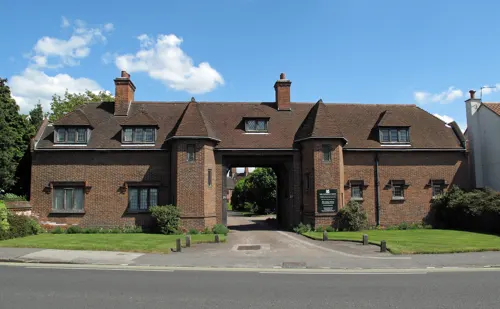



Stillingfleet Lodge Gardens
Park · 6.7 mi
Stewart Lane
Apr-Sep: We 13:00-17:00, Fr 13:00-17:00, Sa[1] 13:00-17:00; Su[1]...


138 more on the map.
Restaurants and cafes426

Fox & Roman
Bar and pub · 1.6 mi
58 Tadcaster Road, York
Mo-Fr 11:30-23:00; Sa 09:00-23:00; Su 11:30-22:00
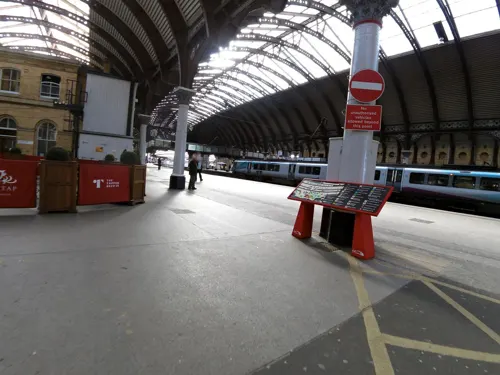


The Punch Bowl
Bar and pub · 0.4 mi
5-9 Blossom Street, York
Mo,Tu,We,Th,Su 08:00-24:00; Fr,Sa 08:00-25:00



Costa
Cafe · Coffee Shop · 0.4 mi
On footbridge level
Station Road, York
Mo-Th 05:30-19:00; Sa 06:00-18:00; Su 07:00-17:30

The Knapton Lion
Bar and pub · 2.6 mi
Main Street, Kapton
Mo 18:00-23:00; Tu-Sa 12:00-15:00,18:00-23:00; Su 12:00-16:00,19:00-22:30
414 more on the map.
History
Archaeological evidence suggests that Mesolithic people settled in the region of York between 8000 and 7000 BC, although it is not known whether their settlements were permanent or temporary. By the time of the Roman conquest of Britain, the area was occupied by a tribe known to the Romans as the Brigantes. The Brigantian tribal area initially became a Roman client state, but later its leaders became more hostile and the Roman Ninth Legion was sent north of the Humber into Brigantian territory.
The city was founded in AD 71, when the Ninth Legion conquered the Brigantes and constructed a wooden military fortress on flat ground above the river Ouse, close to its confluence with the river Foss. The fortress, whose walls were rebuilt in stone by the VI legion based there subsequent to the IX legion, covered an area of 50 acres (20 ha) and was inhabited by 6,000 legionary soldiers. The site of the principia (headquarters) of the fortress lies under the foundations of York Minster, and excavations in the undercroft have revealed part of the Roman structure and columns.
Read more of the history
The Roman emperors Hadrian, Septimius Severus and Constantius I all held court in York during their various campaigns. During his stay between AD 207 and 211 the emperor Severus proclaimed York capital of the province of Britannia Inferior, and it is likely that it was he who granted York the privileges of a colonia or city. Constantius I died in AD 306 during his stay in York, and his son Constantine the Great was proclaimed emperor by the troops based in the fortress. In AD 314, a bishop from York attended the Council at Arles to represent Christians from the province.
While the Roman colonia and fortress were on high ground, by AD 400 the town was victim to occasional flooding from the rivers Ouse and Foss, and the population reduced. York declined in the post-Roman era, and was taken and settled by the Angles in the 5th century.
Reclamation of parts of the town was initiated in the 7th century under King Edwin of Northumbria, and York became his chief city. The first wooden minster church was built in York for the baptism of Edwin in 627, according to the Venerable Bede. Edwin ordered the small wooden church be rebuilt in stone; however, he was killed in 633, and the task of completing the stone minster fell to his successor Oswald. In the following century, Alcuin of York came to the cathedral school of York. He had a long career as a teacher and scholar, first at the school at York now known as St Peter's School, founded in AD 627, and later as Charlemagne's leading advisor on ecclesiastical and educational affairs.
In 866, Northumbria was in the midst of internecine struggles when the Vikings raided and captured York. As a prosperous economic centre, York was a target for the Vikings. Led by Ivar the Boneless and Halfdan, Scandinavian forces (referred to by the Anglo-Saxons as the "Great Heathen Army") attacked the town on All Saints' Day. Launching the assault on a holy day proved an effective tactical move – most of York's leaders were in the cathedral, leaving the town vulnerable to attack and unprepared for battle.
After it was conquered, the city was renamed from the Old English Eoforwic to Jorvik. It became the capital of Viking territory in Britain, and at its peak had more than 10,000 inhabitants. This was a population second only to London within Great Britain. Jorvik proved an important economic and trade centre for the Vikings. Norse coinage was created at the Jorvik mint, while archaeologists have found evidence of a variety of craft workshops around the town's central Coppergate area. These demonstrate that textile production, metalwork, carving, glasswork and jewellery-making were all practised in Jorvik. Materials from as far afield as the Persian Gulf have also been discovered, suggesting that the town was part of an international trading network. Under Viking rule the city became a major river port, part of the extensive Viking trading routes throughout northern Europe.
The last ruler of an independent Jórvík, Eric Bloodaxe, was driven from the city in AD 954 by King Eadred in his successful attempt to complete the unification of England.
In 1068, two years after the Norman invasion of England, the people of York rebelled. Initially they succeeded, but upon the arrival of William the Conqueror the rebellion was suppressed. William, at once, built a wooden fortress on a motte. In 1069, after another rebellion, the king built another timbered castle across the River Ouse. These were destroyed in 1069 and rebuilt by William about the time of his ravaging Northumbria in what is called the "Harrying of the North" where he destroyed everything from York to Durham. The remains of the rebuilt castles, now in stone, are visible on either side of the River Ouse.
The first stone minster church was badly damaged by fire in the uprising, and the Normans built a minster on a new site. Around the year 1080, Archbishop Thomas started building the cathedral that in time became the current Minster.
As York began to recover and rebuild following the Norman invasion, it slowly reemerged as an administrative and religious hub in the region.
In 1190, York Castle was the site of an infamous massacre of its Jewish inhabitants, in which at least 150 people were murdered, although some authorities put the figure as high as 500.
The city, through its location on the River Ouse and its proximity to the Great North Road, became a major trading centre. King John granted the city's first charter in 1212, confirming trading rights in England and Europe. During the later Middle Ages, York merchants imported wine from France, cloth, wax, canvas, and oats from the Low Countries, timber and furs from the Baltic and exported grain to Gascony and grain and wool to the Low Countries.
From the History section of York on Wikipedia, under CC BY-SA 4.0.
More about York
Geography
York lies in the Vale of York, a flat area of fertile arable land bordered by the Pennines, the North York Moors and the Yorkshire Wolds. The city was built at the confluence of the Rivers Ouse and Foss on a terminal moraine left by the last ice age.
During Roman times, the land surrounding the Ouse and Foss was marshy, making the site easy to defend. The city is prone to flooding from the River Ouse, and has an extensive network of flood defences with walls along the river, and a liftable barrier across the Foss where it joins the Ouse at the "Blue Bridge". In October and November 2000, York experienced the worst flooding in 375 years; more than 300 homes were flooded. In December 2015, the flooding was more extensive and caused major disruption. The extreme impact led to a personal visit by Prime Minister David Cameron. Much land in and around the city is on flood plains too flood-prone for development other than agriculture. The ings are flood meadows along the Ouse, while the strays are open common grassland in various locations around the city.
Economy
A July 2020 report by Council stated that York is worth "£5.2 billion to the UK economy ... with 9,000 businesses and 110,000 people employed across the city". According to Make It York, the city benefits from features that include a well-educated workforce, "excellent transport links to both national and international markets, pronounced strengths in a range of high value sectors, a pioneering digital infrastructure," and support networks for businesses.
York's economy is based on the service industry, which in 2000 was responsible for 88.7% of employment in the city.
Statistics based on 2019 data indicated that tourism was worth over £765 million to the city, supported 24,000 jobs and attracted 8.4 million visitors each year.
The Employment Rate in 2018 was 78.8%. The private sector accounted for 77,000 jobs in 2019 while 34,500 jobs were in the public sector.
The service industries include public sector employment, health, education, finance, information technology (IT) and tourism that accounted for 10.7% of employment as of 2016. Tourism has become an important element of the economy, with the city offering a wealth of historic attractions, of which York Minster is the most prominent, and a variety of cultural activities. As a holiday destination York was the 6th most visited English city by UK residents (2014–16) and the 13th most visited by overseas visitors (2016).
Arts and culture
The city is part of the UNESCO Creative Cities Network as a city of Media Arts. An unsuccessful 2010 bid by York city council and a number of heritage organisations to make a UNESCO World Heritage Site indirectly led to the city making a successful bid for its title.
The Theatre Royal, which was established in 1744, produces an annual pantomime which attracts loyal audiences from around the country. The theatre's veteran star, Berwick Kaler, often played the dame, before he retired from acting in the pantomime in 2019, and officially parted ways with the theatre after the so-called "Panto Wars". The Theatre Royal continues to produce an annual pantomime without Kaler, who came out of retirement in 2021 to star in a new panto at The Grand Opera House. Both the Grand Opera House and Joseph Rowntree Theatre also offer a variety of productions. The city is home to the Riding Lights Theatre Company, which as well as operating a busy national touring department, also operates a busy youth theatre and educational departments. York is also home to a number of amateur dramatic groups. The Department of Theatre, Film and Television and Student Societies of the University of York put on public drama performances.
Education
York Castle, a complex of buildings ranging from the medieval Clifford's Tower to the 20th-century entrance to the York Castle Museum (formerly a prison) has had a chequered history. As well as the Castle Museum, the city contains numerous other museums and historic buildings such as the Yorkshire Museum and its Museum Gardens, Jorvik Viking Centre, York Art Gallery, Merchant Adventurers' Hall, the reconstructed medieval house Barley Hall (owned by the York Archaeological Trust), the 18th-century Fairfax House, the Mansion House (the historic home of the Lord Mayor) and the so-called Treasurer's House (owned by the National Trust). The National Railway Museum is situated just beyond the station, and is home to a vast range of transport material and the largest collection of railway locomotives in the world. Included in this collection are the world's fastest steam locomotive Mallard and the world-famous Flying Scotsman, which has been overhauled in the Museum.
Although noted for its Medieval history, visitors can also gain an understanding of the Cold War through visiting the York Cold War Bunker, former headquarters of No 20 Group of the Royal Observer Corps.
From the Wikipedia article York, under CC BY-SA 4.0.
Notable people from York
 W. H. AudenBritish-American poet (1907–1973)Photo: Carl Van Vechten, Public domain
 Alcuin8th-century Northumbrian scholar, clergyman, poet, and teacherPhoto: Fulda, Public domain
 John SnowEnglish epidemiologist and physician (1813–1858)Photo: Unknown author, Public domain
 Martin ReesBritish cosmologist and astrophysicist (1942-)Photo: Roger Harris, CC BY 3.0
 William EttyBritish painter (1787-1849)Photo: William Etty / David Octavius Hill /..., Public domain
 David DavisBritish Conservative Party politician (born 1948)Photo: Richard Townshend, CC BY 3.0
 David BradleyBritish actorPhoto: Miguel Discart & Kiri Karma, CC BY-SA 2.0
- Judi DenchEnglish actress (born 1934)
- Guy FawkesEnglish member of the Gunpowder Plot of 1605
- John BarryBritish composer and conductor (1933–2011)
- William Parsons, 3rd Earl of RosseAnglo-Irish astronomer (1800-1867)
- Mark AddyEnglish actor


Born in York, according to Wikidata (CC0). Each name links to its Wikipedia article.
Where to stay107
Churches and places of worship160
Shopping192
Gas and EV charging28
Schools, colleges and libraries109
Our Lady Queen of Martyrs Catholic Primary School - a Catholic Voluntary Academy
School · Roman Catholic · 1.1 mi
Hamilton Drive, York
Saint Barnabas Church of England Voluntary Controlled Primary School
School · Anglican · 0.9 mi
Jubilee Terrace, York
Healthcare64
Map of York
250 places. The map loads OpenStreetMap tiles when you open it.
Getting there and nearby towns
Leeds Bradford Airport (LBA) is the nearest airport with scheduled flights listed in OpenStreetMap, 24 miles away.
- Bishopthorpe 3 mi south, about 4 min by car
- Upper Poppleton 3 mi northwest, about 5 min by car
- Nether Poppleton 3 mi northwest, about 6 min by car
- Murton 3 mi east, about 5 min by car
- Haxby 4 mi north, about 6 min by car
- Skelton 4 mi northwest, about 6 min by car
- Copmanthorpe 4 mi southwest, about 6 min by car
- Askham Bryan 4 mi southwest, about 6 min by car
- Stockton on the Forest 4 mi northeast, about 7 min by car
- Rufforth 4 mi west, about 7 min by car
Drive times are estimates from straight-line distance, not routes.
Keep exploring
Local news
Headlines from INDB.
Reviews, tips and questions
Loading what members have shared...
Sources and licences
- GeoNames (CC BY 4.0): population, coordinates, regions and time zone
- Mapillary (see each image): photos
- OpenStreetMap contributors (ODbL 1.0): places, airports, map data
- Openverse (see each image): photos
- Wikidata (CC0 1.0): elevation, founding date, time zone, website, landmarks and historic places
- Wikimedia Commons (see each image): photos
- Wikipedia (CC BY-SA 4.0): overview and history text
Photo credits
- York (Aerial view), DACP, CC BY-SA 2.0
- Église St Michael Spurriergate York 3, Chabe01, CC BY-SA 4.0
- 1256593 Church of St Michael, Spurriergate York 20240522 0075 DxO, Tilman2007, CC BY-SA 4.0
- Clock St Michael Spurriergate York 02, Malcolmxl5, CC BY-SA 4.0
- 9 and 11 Low Ousegate York Mar24 02, Malcolmxl5, CC BY-SA 4.0
- 9 and 11 Low Ousegate York Mar24 01, Malcolmxl5, CC BY-SA 4.0
- 9 and 11 Low Ousegate York Mar24 03, Malcolmxl5, CC BY-SA 4.0
- 13 Low Ousegate York 02, Malcolmxl5, CC BY-SA 4.0
- 13 Low Ousegate York 01, Malcolmxl5, CC BY-SA 4.0
- Église St Michael Spurriergate York 2, Chabe01, CC BY-SA 4.0
- West door of St Michael Spurriergate York Aug25, Malcolmxl5, CC0
- Craic It Up O'Neill's York, Malcolmxl5, CC BY-SA 4.0
- Neill’s, Low Ousegate, York, Malcolmxl5, CC BY-SA 4.0
- 7 Low Ousegate York Mar24 02, Malcolmxl5, CC BY-SA 4.0
- 7 Low Ousegate York Mar24 01, Malcolmxl5, CC BY-SA 4.0
- North side and churchyard Church of St Michael Spurriergate York, Malcolmxl5, CC BY-SA 4.0
- West door Church of St Michael Spurriergate York, Malcolmxl5, CC BY-SA 4.0
- Reredos of St Michael's church York Sep24 02, Malcolmxl5, CC BY-SA 4.0
- Reredos of St Michael's church York Sep24 01, Malcolmxl5, CC BY-SA 4.0
- Clock, St Michael Spurriergate (former), York (7638786644), Tim Green from Bradford, CC BY 2.0
- 3 and 5 Low Ousegate York Mar24 02, Malcolmxl5, CC BY-SA 4.0
- 3 and 5 Low Ousegate York Mar24 01, Malcolmxl5, CC BY-SA 4.0
- 1256593 Church of St Michael, Spurriergate York 20240523 0170 DxO, Tilman2007, CC BY-SA 4.0
- The Grand Opera House, R. M. Calamar, CC BY 2.0
- Tadcaster Bridge, Tim Green, CC BY 2.0
- Coin making at Jorvik Viking Centre, No machine-readable author provided. CambridgeBayWeather assumed (based on copyright claims)., CC BY 2.5
- York - National Railway Museum - 04, Benjamin Smith, CC BY-SA 4.0
- Rowntree Park York, Vincej, Public domain
- Dean's Park, Drkirstyross, CC BY-SA 3.0
- York Minster from M&S, MatzeTrier, CC BY-SA 3.0
- York Castle in 1699, Francis Place (1647-1728), Public domain
- St Mary, Bishophill Junior, York, Tim Green, CC BY 2.0
- Engraving of the original Retreat near York instituted 1792, Tuke, Daniel Hack,1827-1895, Public domain
- York Theatre Royal2, Jhsteel, CC BY-SA 3.0
- York - City walls - 1, Benjamin Smith, CC BY-SA 4.0
- Bar Convent Exterior, Gordon Hatton, CC BY-SA 2.0
- Barley Hall external, jhartshorn (James Hartshorn), CC BY-SA 2.0
- Bootham Park Hospital Feb 2008, Potkettle, CC BY 3.0
- St Pauls Church Heslington, Alison Stamp, CC BY-SA 2.0
- York Designer Outlet, Sama4 ( talk ), CC BY-SA 3.0
- York Hospital Front entrance, Davies10, CC BY-SA 3.0
- Yorkshire Museum of Farming, Murton Park York, England - Main Entrance area (RLH), Richard Harvey, CC BY-SA 3.0
- Église St Andrew York 3, Chabe01, CC BY-SA 4.0
- Holy Trinity Goodramgate, Johnlp ( talk ), CC BY-SA 3.0
- St Giles, Skelton, Alison Stamp, CC BY-SA 2.0
- York - Grand Hotel - 2, Benjamin Smith, CC BY-SA 4.0
- The Blue Bell, York, Malcolmxl5, CC BY-SA 4.0
- St Lawrence Parish Church, York, in snow, On behalf of St Lawrence P.C.C., Public domain
- Joseph Rowntree Theatre York 02, Malcolmxl5, CC BY-SA 4.0
- Holy Trinity Church Heworth York, Malcolmxl5, CC BY-SA 4.0
- Reel Cinema, The Mount, York (12th June 2013) 002, Mtaylor848, CC BY-SA 3.0
- The Punch Bowl on the junction of Blosssom Street and Nunnery Lane, York (12th June 2013), Mtaylor848, CC BY-SA 3.0
- St Clement, York, Warofdreams, CC BY-SA 4.0
- City Screen York 03, Malcolmxl5, CC BY-SA 4.0
- Heworth CE Primary School, York, Malcolmxl5, CC BY-SA 4.0
- Posters Gate Piccadilly York, Malcolmxl5, CC BY-SA 4.0
- YHA York, Crimson Caribou, CC BY-SA 4.0
- Charles XII, Heslington (27601436911), Tim Green from Bradford, CC BY 2.0
- The Caldarium, Roman Bath Museum, Eboracum, York, England (7676858850), Carole Raddato from FRANKFURT, Germany, CC BY-SA 2.0
- Hampton by Hilton Piccadilly York Jul25, Malcolmxl5, CC0
- Cineworld and LNER Community Stadium, Monks Cross, York (29th August 2020), Mtaylor848, CC BY-SA 4.0
- Office Tourisme York 4, Chabe01, CC BY-SA 4.0
- Red House Antiques Centre, Jhsteel, CC BY-SA 3.0
- Main Gates of York Museum Grounds, York, Kilnburn ( talk ) 17:29, 18 August 2009 (UTC), Attribution
- Church of St Saviour, York, Jhsteel, CC BY-SA 3.0
- Treasurer’s House 2023, Seasider53, CC BY-SA 4.0
- All Saints School Mill Mount York Aug24 03, Malcolmxl5, CC BY-SA 4.0
- 1256886 The Black Swan Public House, 23 Peaseholme Green York 20240523 0103 DxO, Tilman2007, CC BY-SA 4.0
- York College for Girls, Warofdreams, CC BY-SA 4.0
- The Blue Bridge (15256172131), dun_deagh, CC BY-SA 2.0
- Public footpath near Fulford Golf Club - panoramio (1), Benjamin Shaw, CC BY-SA 3.0
- Bowling Green, West Bank Park, Gordon Hatton, CC BY-SA 2.0
- Goddard's Garden York North Yorkshire, Brokentaco, CC BY 2.0
- Street-level photo, smsm1, CC BY-SA 4.0
- Street-level photo, lamaar639, CC BY-SA 4.0
- Street-level photo, lamaar639, CC BY-SA 4.0
- Street-level photo, lamaar639, CC BY-SA 4.0
- Street-level photo, lamaar639, CC BY-SA 4.0
- Street-level photo, lamaar639, CC BY-SA 4.0
- Street-level photo, lamaar639, CC BY-SA 4.0
- Street-level photo, Semir_Mapillary, CC BY-SA 4.0
- Street-level photo, lamaar639, CC BY-SA 4.0


Page built November 10, 2026. Spotted a mistake? Tell us or suggest a place.