


London, United Kingdom
London is a capital city of 8,961,989 people in England, United Kingdom, founded in 47.
Why visit London
Townapedia lists 304 museums and landmarks, 160 parks and trails, 300 places to eat, 75 places to stay and 165 attractions in and around town.
Highlights include Bloomsbury Theatre, Castle Cinema, Imperial War Museum London and British Museum.
Weather in London
Forecast from MET Norway (CC BY 4.0). Full forecast
About London
London is the capital and largest city of England and the United Kingdom, with a population of 9.14 million people in 2025. Its wider metropolitan area is the largest in Western Europe, with a population of 15.4 million. London stands on the River Thames in southeast England, at the head of a 50-mile (80 km) tidal estuary down to the North Sea, and has been a major settlement for nearly 2,000 years. Its ancient core and financial centre, the City of London, was founded by the Romans as Londinium and has retained its medieval boundaries.
From the Wikipedia article London (this version), under CC BY-SA 4.0.
Travel tips from other travellers: London on Wikivoyage (CC BY-SA 4.0).
Photos of London

Things to do165


Little Angel Theatre
Cinema and theater · 2.3 mi
13 Dagmar Passage, London
Mo 11:00-17:00; Tu-Su 11:00-15:00


Bush Hall
Cinema and theater · 4.6 mi
Bush Hall was built in 1904. It was used as a soup kitchen during World War II, in the late 1950s and early 1960s as a bingo hall and...
310 Uxbridge Road, London

Ciné Lumière
Cinema and theater · 2.4 mi
17 Queensbury Place, London
Mo-Fr 09:00-21:30; Sa, Su 10:00-21:30

153 more on the map.
Museums and landmarks304

Imperial War Museum London
Museum · 1.1 mi
IWM London tells the story of those whose lives have been shaped by war from the First World War to the present day.
Lambeth Road, London
10:00-18:00; Dec 24-26 off


Queen's House
Museum · 5.6 mi
Explore an internationally renowned art collection set amidst the history and beauty of the 17th-century Queen’s House, originally the...
Mo-Su 10:00-17:00

Victoria and Albert Museum
Museum · 2.2 mi
Cromwell Road, London
Sa-Th 10:00-17:45; Fr 10:00-22:00; Dec 24-26 off


Dr Johnson's House
Museum · 0.9 mi
17 Gough Square, London
Oct-Apr: Mo-Sa 11:00-17:00; May-Sep: Mo-Sa 11:00-17:30

Ham House
Monument and historic site · 9.2 mi
Historic house museum in Ham, London Borough of Richmond upon Thames, England, UK
Mo-Su 12:00-16:00; PH off


Peckham Platform
Museum · 3.4 mi
Peckham Space is a space for creating and displaying art related to Peckham, run by Camberwell College of Art, University of the Arts...
89 Peckham High Street, London
We-Fr 11:00-18:00;Sa-Su 10:00-17:00
292 more on the map.
Parks, trails and playgrounds160

Brockwell Lido
Sports field and stadium · 3.9 mi
Brockwell Lido has an open air swimming pool, gym facilities, health suite including physiotherapy treatment rooms and the Lido Cafe
Dulwich Road, London
Mo-Th 06:30-20:00;Fr 06:30-19:00;Sa-Su 07:00-18:00;PH 06:30-19:00

The Castle Climbing Centre
Sports field and stadium · 4.2 mi
Engine House of Metropolitan Water Board
Green Lanes, London
Mo-Fr 08:00-22:00, Sa-Su 09:00-20:00


148 more on the map.
Restaurants and cafes300

Browns
Restaurant · British · 8.0 mi
The Green, London
Mo-Th 10:00-23:00; Fr 10:00-00:00; Sa 09:00-00:00; Su 09:00-23:00
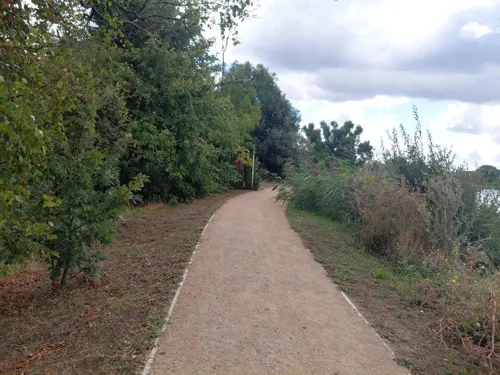
Coal House Cafe
Cafe · Sandwich, Coffee Shop · 4.5 mi
Gas house to West of reservoir
226 Lordship Road, London
Mo-Su 09:00-17:00


George Inn
Bar and pub · 1.6 mi
75-77 Borough High Street, London
Mo-Th 11:00-23:00; Fr-Sa 11:00-00:00; Su 12:00-22:30

Prince of Teck
Bar and pub · 3.1 mi
161 Earl's Court Road, London
Mo-Th 08:30-23:30; Fr,Sa 08:30-00:00; Su 08:30-23:30


The Blackfriar
Bar and pub · 1.0 mi
174 Queen Victoria Street, London
Mo-Tu, Sa 11:00-23:00; We-Fr 11:00-23:30; Su 12:00-22:30

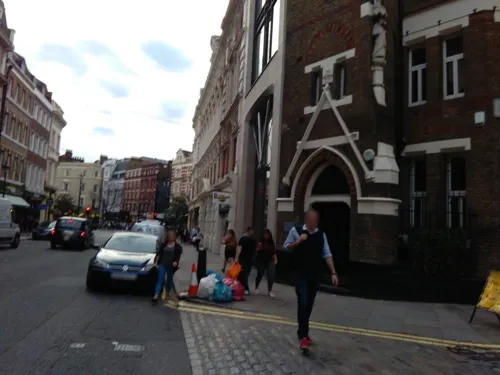

The Lord Tredegar
Bar and pub · 4.2 mi
50 Lichfield Road, London
Mo-Th 16:00-23:00; Fr-Sa 12:00-24:00; Su 12:00-22:00

The Old Bank of England
Bar and pub · 0.7 mi
194 Fleet Street, London
Mo-We 11:30-22:00; Th-Fr 11:30-23:00; Sa 11:30-22:00; Su 12:00-20:00
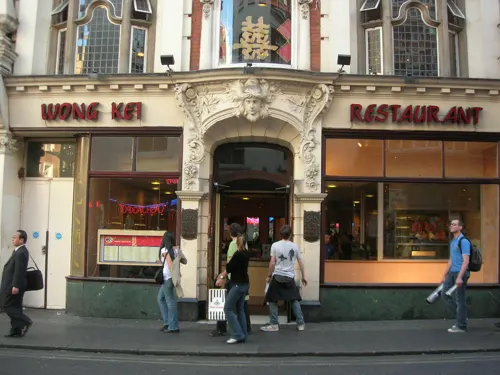


288 more on the map.
History
In 1993, remains of a Bronze Age bridge were found on the south River Thames foreshore, upstream from Vauxhall Bridge. Two of the timbers were radiocarbon dated to 1750–1285 BC. In 2010 foundations of a large timber structure, dated to 4800–4500 BC, were found on the Thames' south foreshore downstream from Vauxhall Bridge. Both are located on the south bank of the Thames, where the now-underground River Effra flows into the Thames.
Despite the evidence of scattered Brythonic settlements in the area, the first major settlement was founded by the Romans around AD 47, about 4 years after their invasion of AD 43. This only lasted until about AD 61, when the Iceni tribe led by Queen Boudica stormed it and burnt it to the ground.
The next planned incarnation of Londinium prospered, superseding Colchester as the principal city of the Roman province of Britannia in 100. At its height in the 2nd century, Roman London had a population of about 60,000.
Read more of the history
With the early-5th-century collapse of Roman rule, the walled city of Londinium was effectively abandoned, although Roman civilisation continued around St Martin-in-the-Fields until about 450. From about 500 an Anglo-Saxon settlement known as Lundenwic developed slightly west of the old Roman city. By about 680 the city had become a major port again, but there is little evidence of large-scale production. From the 820s repeated Viking assaults brought decline.
The Vikings applied Danelaw over much of eastern and northern England from 886; The Anglo-Saxon Chronicle records that Alfred "refounded" London that year. This involved the abandonment of Lundenwic and a revival of life and trade within the old Roman walls. London then grew slowly until a dramatic increase in about 950.
By the 11th century, London was the largest town in England. Westminster Abbey, rebuilt in Romanesque style by King Edward the Confessor, was one of the grandest churches in Europe. Winchester had been the capital of Anglo-Saxon England, but from this time, London became the main forum for foreign traders and the base for defence in time of war. In the view of Frank Stenton: "It had the resources, and it was rapidly developing the dignity and the political self-consciousness appropriate to a national capital."
After winning the Battle of Hastings, William, Duke of Normandy, was crowned King of England as William I in the newly completed Westminster Abbey on Christmas Day 1066. He built the Tower of London to intimidate the inhabitants. In 1097 William II began building Westminster Hall, near the abbey. It became the basis of a new Palace of Westminster.
In the 12th century the institutions of central government, which had followed the royal English court around the country, grew in size and sophistication and became increasingly fixed, for most purposes at Westminster, although the royal treasury came to rest in the Tower of London. While the City of Westminster developed into a true governmental capital, its distinct neighbour, the City of London, remained England's largest city and principal commercial centre and flourished under its own unique administration, the Corporation of London. In 1100, its population was some 18,000; by 1300, it had grown to nearly 100,000. With the Black Death in the mid-14th century, London lost nearly a third of its population. London was the focus of the Peasants' Revolt in 1381.
London was a centre of England's Jewish population before their expulsion by Edward I in 1290. Violence against Jews occurred in 1190, when it was rumoured that Richard I had ordered their massacre after some of their leaders had presented themselves at his coronation. In 1264, during the Second Barons' War, Simon de Montfort's rebels killed 500 Jews while attempting to seize records of debts.
The Reformation produced a shift to Protestantism. Much property passed into private ownership, accelerating business in the city. In 1475 the Hanseatic League set up a trading base. Woollen cloth was shipped undyed from 14th- and 15th-century London to the Low Countries. The reopening of the Netherlands to English shipping in January 1565 spurred a burst of commercial activity. Mercantilism grew and monopoly traders such as the East India Company were founded as trade expanded to the New World. London became the main North Sea port, with migrants from England and abroad. The population rose from about 50,000 in 1530 to about 225,000 in 1605. Shakespeare built his Globe Theatre in Southwark in 1599. Stage performances halted when Puritan authorities shut down the theatres in the 1640s. The ban was lifted during the 1660 Restoration; London's oldest theatre, Drury Lane, opened in 1663. By the end of the Tudor period in 1603, London was still compact. There was an assassination attempt on James I in Westminster, in the Gunpowder Plot of 5 November 1605. In 1637 the government of Charles I attempted to reform London's administration; the Corporation made "The Great Refusal", explaining the City of London's unique governmental status.
In the English Civil War, most Londoners supported the Roundheads. After an advance by the Cavaliers in 1642, culminating in the battles of Brentford and Turnham Green, London was surrounded by a defensive perimeter wall. The fortifications failed their only test when the New Model Army entered London in 1647. London suffered the Great Plague of 1665–1666, killing some 100,000 people, a fifth of the population. In 1666, the Great Fire destroyed much of the wooden-built city. Rebuilding took over 10 years, supervised by the polymath Robert Hooke.
From the History section of London on Wikipedia, under CC BY-SA 4.0.
More about London
Geography
Greater London is one of nine regions of England and the top subdivision covering most of the metropolis. The City of London at its core once comprised the whole settlement; as its urban area grew, the Corporation of London resisted attempts to amalgamate the city with its suburbs, causing "London" to be defined several ways.
Forty per cent of Greater London is covered by the London post town, in which "London" forms part of postal addresses. The London telephone area code (020) covers an area similar in size to Greater London, although some outer districts are excluded and some just outside included. The London linked-number area extends 18 miles around Kings Cross, see Director telephone system. The Greater London boundary has been aligned to the M25 motorway in places.
Urban expansion is prevented by the Metropolitan Green Belt, although the built-up area extends beyond the boundary in places, producing a separately defined Greater London Urban Area. Beyond this is the London commuter belt. Greater London is split for some purposes into Inner London and Outer London, and by the River Thames into North and South, with an informal Central London area. The coordinates of the nominal "centre of London", traditionally the original Eleanor Cross at Charing Cross near the junction of Trafalgar Square and Whitehall, are about 51°30′26″N 00°07′39″W.
Economy
London's gross regional product in 2023 was £617.92 billion (US$846.46 billion) or around a quarter of UK GDP. London has five major business districts: the City, Westminster, Canary Wharf, Camden & Islington, and Lambeth & Southwark. Greater London had 27 million m2 of office space in 2001, and the City contains the most space, with 8 million m2 of office space. London has some of the highest real estate prices in the world.
London's finance industry is based in the City of London and Canary Wharf, the two major business districts. London took over as a major financial centre shortly after 1795 when the Dutch Republic collapsed before the Napoleonic armies. This caused many bankers established in Amsterdam to move to London. London's market-centred system grew more dominant in the 18th century. This economic strength of the city was attributed to its diversity. By the mid-19th century, London was the leading global financial centre; at the end of the century, over half the world's trade was financed in British currency. As of 2023, London ranks second in the world rankings on the Global Financial Centres Index and ranked second in A.T. Kearney's 2018 Global Cities Index.
Arts and culture
According to a 2003 report, London has a quarter of the UK's leisure economy. The city is one of the four fashion capitals of the world, is the world's third-busiest film production centre, presents more live comedy than any other city, and has the biggest theatre audience of any city in the world. Alongside New York, London has been described as the cultural capital of the world.
The entertainment district of the West End has its focus around Leicester Square for film premieres, and Piccadilly Circus, with its giant electronic advertisements. It contains London's theatre district and Chinatown district. Agatha Christie's The Mousetrap, the world's longest-running play, has performed in the West End since 1952. Opera and ballet are performed at the Royal Opera House, the London Coliseum, Sadler's Wells Theatre and the Royal Albert Hall. London was the centre of music halls such as the Hackney Empire.
Islington's 1 mile (1.6 km) long Upper Street has more bars and restaurants than any other British street. Europe's busiest shopping area and England's longest shopping street is Oxford Street, nearly 1 mile (1.6 km) long. One of the world's largest retail destinations, London ranks near the top of retail sales of any city. In 2017, London was ranked the top city for luxury store openings. London Fashion Week takes place in February and September.
Education
London is a major global centre of higher education, teaching and research and has the largest concentration of higher education institutes in Europe. According to the QS World University Rankings 2015/16, London has the greatest concentration of top class universities in the world and its international student population of around 110,000 is larger than any other city in the world. In the 2022 QS World University Rankings, Imperial College London is ranked No. 6 in the world, University College London (UCL) is ranked 8th, and King's College London (KCL) is ranked 37th. All are regularly ranked highly, with Imperial College being the UK's leading university in the Research Excellence Framework ranking 2021. The London School of Economics has been described as the world's leading social science institution for both teaching and research. The London Business School is one of the world's leading business schools. The city is home to three of the world's top ten performing arts schools (as ranked by the 2020 QS World University Rankings): the Royal College of Music (ranking 2nd in the world), the Royal Academy of Music (ranking 4th) and the Guildhall School of Music and Drama (ranking 6th).
From the Wikipedia article London, under CC BY-SA 4.0.
Notable people from London
 Tim Berners-LeeEnglish computer scientist (born 1955)Photo: Summit, CC BY 4.0
 William BlakeEnglish poet and artist (1757–1827)Photo: Thomas Phillips, Public domain
 Charles II of EnglandKing of England, Scotland, and Ireland (1630-1685)Photo: John Michael Wright, Public domain
 Phil CollinsEnglish drummer, singer, and songwriter (born 1951)Photo: Will Ireland, Courtesy of Concord, CC BY-SA 4.0
 J. M. W. TurnerEnglish painter and draftsman (c.1775–1851)Photo: J. M. W. Turner, Public domain
 Dante Gabriel RossettiEnglish poet, illustrator, painter, and translator (1828-1882)Photo: William Holman Hunt, Public domain
 William HogarthEnglish painter, printmaker, pictorial satirist, social critic and editorial cartoonist (1697-1764)Photo: Unknown author, Public domain
 Rod StewartEnglish singer and songwriter (born 1945)Photo: Michael Cohn Photo, CC BY-SA 4.0
 Jack SzostakAmerican biologistPhoto: Cmichel67, CC BY-SA 4.0
 Edward LearBritish artist, illustrator, author and poet (1812-1888)Photo: Unknown author Unknown author, Public domain
 Michael HoughtonvirologistPhoto: Kerry Angelo Piper, CC BY 2.0
 Edwin LutyensBritish architect (1869–1944)Photo: Weaver, Lawrence, 1876-1930, Public domain


Born in London, according to Wikidata (CC0). Each name links to its Wikipedia article.
Where to stay75
Churches and places of worship116
Shopping149
Gas and EV charging74
Schools, colleges and libraries77
Healthcare68
MSI Reproductive Choices Local Treatment Centre
Clinic and pharmacy · 1.1 mi
108 Whitfield Street, London
Map of London
250 places. The map loads OpenStreetMap tiles when you open it.
Getting there and nearby towns
London City Airport (LCY) is the nearest airport with scheduled flights listed in OpenStreetMap, 7 miles away.
- Holborn 1 mi north, about 1 min by car
- City of Westminster 1 mi southwest, about 1 min by car
- Clerkenwell 1 mi northeast, about 2 min by car
- City of London 1 mi east, about 2 min by car
- King's Cross 2 mi north, about 2 min by car
- Kennington 2 mi southeast, about 3 min by car
- Islington 2 mi northeast, about 3 min by car
- Camden Town 2 mi north, about 4 min by car
- Barnsbury 2 mi north, about 4 min by car
- Worthing 49 mi south, about 1 h 15 min by car
Drive times are estimates from straight-line distance, not routes.
Keep exploring
Local news
Headlines from INDB.
Reviews, tips and questions
Loading what members have shared...
Sources and licences
- GeoNames (CC BY 4.0): population, coordinates, regions and time zone
- Mapillary (see each image): photos
- OpenStreetMap contributors (ODbL 1.0): places, airports, map data
- Openverse (see each image): photos
- Wikidata (CC0 1.0): elevation, founding date, time zone, website, landmarks and historic places
- Wikimedia Commons (see each image): photos
- Wikipedia (CC BY-SA 4.0): overview and history text
Photo credits
- London Skyline, Ilya Grigorik, CC BY-SA 3.0
- London General bus LT57 (LTZ 1057), route 11, 23 March 2014, Joshua Brown from Ashford, Kent, United Kingdom, CC BY-SA 2.0
- London - Church of St Martin-in-the-Fields - panoramio, Edgar El, CC BY 3.0
- Daily News, London 1987, EuroAsia Vizion, CC BY 2.0
- Ham House, London, Stevekeiretsu, CC BY-SA 4.0
- Westminster-Abbey, Σπάρτακος, CC BY-SA 3.0
- British Museum from NE 2 (cropped), Ham, CC BY-SA 3.0
- British Library + St Pancras 7527-31hug, Patche99z, CC BY-SA 3.0
- Buckingham Palace, London - April 2009, Diliff, CC BY-SA 3.0
- Marx Memorial Library 37a Clerkenwell Green, Unknown author, CC BY-SA 2.0
- St Pauls aerial (cropped), Mark Fosh, CC BY 2.0
- Victoria & Albert Museum Entrance, London, UK - Diliff, Diliff, CC BY-SA 3.0
- HarrodsDay, User:Mikegr, CC BY-SA 3.0
- Victoria Park aerial, Matt Brown from London, England, CC BY 2.0
- 2008 Haymarket Theatre, Kbthompson at English Wikipedia, CC BY-SA 3.0
- Greenwich London, Vladimír Procházka, CC BY-SA 4.0
- Westminster Cathedral London, 4th May 2024 - 53708806889, Frank Kovalchek, CC BY 2.0
- Imperial War Museum. London, UK, Ввласенко, CC BY-SA 3.0
- Peace Pagoda Battersea Park, Gordon Joly, CC BY 2.5
- GreenwichParcRoyal, Photograher and original uploader was Sebjarod at fr.wikipedia, Public domain
- Chelsea physic garden, flickr user flickr-rickr, CC BY-SA 2.0
- His Majesty’s Theatre London August 2023, AirshipJungleman29, CC BY-SA 4.0
- Aldwych Theatre 3, No machine-readable author provided. Edward assumed (based on copyright claims)., Public domain
- Marble Hill House-River(south)front, Chris McKenna ( user:Thryduulf ), CC BY-SA 4.0
- St Anne, Limehouse (36640179641), Amanda Slater from Coventry, West Midlands, UK, CC BY-SA 2.0
- Lambeth, London, UK - panoramio (124), joinai, CC BY 3.0
- Clapham Common 360 Panorama - July 2007, Diliff, CC BY 3.0
- Liberty of London, habitatgirl, CC BY 2.0
- Apollo Theatre, February 2022, Magic Goes Wrong, Richard Nevell, CC BY-SA 4.0
- Benjamin Franklin House, 36 Craven Street, London, Ridiculopathy, CC0
- UCL Bloomsbury Theatre, Frankieroberto at English Wikipedia, Public domain
- Brockwell Lido, Unknown author, CC BY 2.0
- BrockwellParkHut, Richard Irons, CC BY-SA 3.0
- Bush Hall London, Chris Brown, CC BY-SA 2.0
- Cyberdog shop 2009, Fenvoe, CC BY 3.0
- Dr. Johnson's House, Jim Linwood, CC BY 2.0
- Duchess Theatre 1, User:Edward, Public domain
- LewishamShopping, The original uploader was Secretlondon at English Wikipedia ., CC BY-SA 3.0
- Quo Vadis, Soho, W1 (2588280146), Ewan Munro from London, UK, CC BY-SA 2.0
- SwissCottageCentral Library20070217, No machine-readable author provided. Andytuna assumed (based on copyright claims)., CC BY-SA 3.0
- The George Inn 1, Ewan Munro from London, UK, CC BY-SA 2.0
- Hoover Building, Ewan Munro from London, UK, CC BY-SA 2.0
- Prince of Teck, Earls Court 04, Edwardx, CC BY-SA 3.0
- The Black Friar (16634557733), It's No Game, CC BY 2.0
- Peckham Platform small, Patterncutter, CC BY-SA 3.0
- Crockers Folly, St Johns Wood, NW8 (6982425962), Ewan Munro from London, UK, CC BY-SA 2.0
- Aerial photo of the The Castle Climbing Centre in Stoke Newington, Hackney, London (2), Jonty Wareing, CC BY-SA 4.0
- John Bell & Croyden Skincare, Cheryl Goddard, CC BY-SA 4.0
- Ye Olde Cherry Tree, Southgate, Philafrenzy, CC BY-SA 4.0
- Lord Tredegar, Bow, E3 (3543064903), Ewan Munro from London, UK, CC BY-SA 2.0
- House on Cockspur Street London, Ricardalovesmonuments, CC BY-SA 4.0
- 1192681 II THE OLD BANK OF ENGLAND London 20250615 0001, Tilman2007, CC BY-SA 4.0
- Clapton Library signage, Hackney, London, R.M. Tallant, CC BY-SA 4.0
- 1 Colville Place, Fitzrovia, August 2023, No Swan So Fine, CC BY-SA 4.0
- Flying Horse Public House, Jwslubbock, CC BY-SA 4.0
- Crowne Plaza hotel, Blackfriars House, New Bridge St, London 03, Paul the Archivist, CC BY-SA 4.0
- Ciné Lumière, South Kensington, SW7 (2477001202), Ewan Munro from London, UK, CC BY-SA 2.0
- Picturehouse Central, Piccadilly Circus, W1 (18234385723), Ewan Munro from London, UK, CC BY-SA 2.0
- The Castle Cinema - July 2006, Ken Roe, CC BY 3.0
- J. Sainsbury's supermarket Camden Road, London, Philafrenzy, CC BY-SA 4.0
- Colliers Wood library (39532453795), JuliaC2006 from Rochester, UK, CC BY 2.0
- Canada Water Library March 2012, monkeywing from London, UK, CC BY 2.0
- Bandstand At Boundary Street Garden, Jwslubbock, CC BY-SA 4.0
- Camden Gardens 2020 front, TheFrog001, CC0
- Christ Church (8668914258), Reading Tom from Reading, UK, CC BY 2.0
- Foyles, Charing Cross Road (April 2015) (cropped), Chris Sampson, CC BY 2.0
- Collinge & Clark storefront, CJJ2501, CC0
- London - April 2009 (3496487723), Cristian Bortes from Cluj-Napoca, Romania, CC BY 2.0
- Apsley House 1, Unknown author, CC BY-SA 3.0
- St Mary le Bow, Bellminsterboy, CC BY-SA 4.0
- Royal-free-5-July-2025, CapabilityTrent, CC0
- St Mary Abchurch towards organ, London, UK - Diliff, Diliff, CC BY-SA 3.0
- Hilton london metropole, SunDawn, CC BY-SA 4.0
- Covent Garden, Corpus Christi Catholic Church, chancel, AndyScott, CC BY-SA 4.0
- At Brixton, London 2025 012, Photograph by Mike Peel ( www.mikepeel.net )., CC BY-SA 4.0
- Front of Theatre Royal Stratford East by Richard Davenport, Sbrooks91, CC BY-SA 4.0
- John Wright MBE (1905-1991) master puppeteer founded the Little Angel Theatre here in 1961, Spudgun67, CC BY-SA 4.0
- Natural History Museum, London Velociraptor, Ricardalovesmonuments, CC BY-SA 4.0
- Archbishop's Park 3, Mx. Granger, CC0
- Statue of Sir Arthur Harris outside St Clement Danes, Greenshed, Public domain
- St Alfege Church 002, MrsEllacott, CC BY-SA 4.0
- Stained glass of Southwark in Christ Church, Southwark 2025-03-13, Matt Brown, CC BY 2.0
- Blue Shutters above Stanfords Mercer Walk 2024-05-14, Tony Hisgett, CC BY 2.0
- Wong Kei, malias, CC BY 2.0
- Dog graf. All Saints London., jumblejet, CC BY 2.0
- Street-level photo, rskedgell, CC BY-SA 4.0
- Street-level photo, ris, CC BY-SA 4.0
- Street-level photo, tommorris, CC BY-SA 4.0
- Street-level photo, ris, CC BY-SA 4.0
- Street-level photo, laye, CC BY-SA 4.0
- Street-level photo, erias, CC BY-SA 4.0
- Street-level photo, tommorris, CC BY-SA 4.0
- Street-level photo, NatchaponJ, CC BY-SA 4.0
- Street-level photo, kieran, CC BY-SA 4.0
- Street-level photo, sk53bis, CC BY-SA 4.0
- Street-level photo, mdroads, CC BY-SA 4.0
- Street-level photo, harry_wood, CC BY-SA 4.0
- Street-level photo, jris, CC BY-SA 4.0
- Street-level photo, gness, CC BY-SA 4.0
- Street-level photo, athuler, CC BY-SA 4.0
- Street-level photo, moon4, CC BY-SA 4.0
- Street-level photo, domdomegg, CC BY-SA 4.0
- Street-level photo, rskedgell, CC BY-SA 4.0
- Street-level photo, Semir_Mapillary, CC BY-SA 4.0
- Street-level photo, smsm1, CC BY-SA 4.0
- Street-level photo, erias, CC BY-SA 4.0
- Street-level photo, southglos, CC BY-SA 4.0
- Street-level photo, IpswichEdits, CC BY-SA 4.0
- Street-level photo, pbb, CC BY-SA 4.0
- Street-level photo, RyanBush, CC BY-SA 4.0


Page built November 10, 2026. Spotted a mistake? Tell us or suggest a place.