




Whitehaven, United Kingdom
Whitehaven is a town of 22,945 people in England, United Kingdom.
Why visit Whitehaven
Townapedia lists 12 museums and landmarks, 6 parks and trails, 91 places to eat, 4 places to stay and 3 attractions in and around town.
Highlights include Rosehill Theatre, St Bees Lighthouse, The Beacon Museum and The Rum Story.
Weather in Whitehaven
Forecast from MET Norway (CC BY 4.0). Full forecast
About Whitehaven
Whitehaven is a town and civil parish in the Cumberland district of Cumbria, England. It is a port on the north-west coast, and lies 4 miles (6 km) outside the Lake District National Park. It is 35 miles (56 km) south-west of Carlisle. The parish also includes the small village of Sandwith.
From the Wikipedia article Whitehaven (this version), under CC BY-SA 4.0.
Travel tips from other travellers: Whitehaven on Wikivoyage (CC BY-SA 4.0).
Things to do3


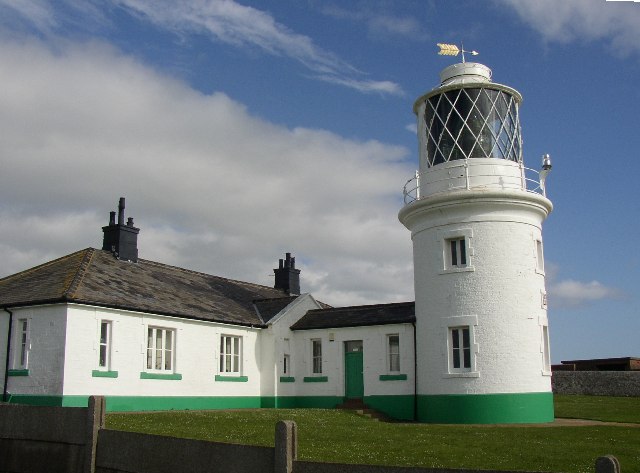
St Bees Lighthouse
Lighthouse · 3.2 mi
Lighthouse in Cumbria, England

Museums and landmarks12

Haig Colliery Mining Museum
Museum · 0.7 mi
Former Haig Colliery. Cumbria's last operating undersea coal mine. Former Haig Colliery Mining Museum.

Parks, trails and playgrounds6







Restaurants and cafes91



Akash Tandoori
Restaurant · Indian
3 Tangier Street, Whitehaven
79 more on the map.
History
Although there was a Roman fort at Parton, around 1.2 miles (1.9 km) to the north, there is no evidence of a Roman settlement on the site of the present town of Whitehaven.
The area was settled by Irish-Norse Vikings in the 10th century. The area name of Copeland, which includes Whitehaven, indicates that the land was purchased from the Kingdom of Strathclyde, possibly with loot from Ireland.
Following the arrival of the Normans, in about 1120 St Bees Priory was founded by William de Meschin, which was granted a large tract of land from the coast at Whitehaven to the river Keekle, and then south down the River Ehen to the sea. This included the small fishing village of Whitehaven. Following Henry VIII's dissolution of the priory in 1539, ownership of this estate passed through a number of secular landlords until it passed into the hands of the Lowther family in the 17th century.
Whitehaven was historically a township within the parish of St Bees. The town's three Anglican churches of Holy Trinity, St Nicholas, and St James were chapels-of-ease to the parish church at St Bees until 1835 when each was given an ecclesiastical parish.
Read more of the history
The modern growth of Whitehaven started with the purchase by Sir Christopher Lowther of the Whitehaven estate in 1630 and the subsequent development of the port and the mines. In 1634 he built a stone pier providing shelter and access for shipping, enabling the export of coal from the Cumberland Coalfield, particularly to Ireland. This was a key event in the rapid growth of the town from a small fishing village to an industrial port.
In 1642 the manor of St Bees was inherited by Sir John Lowther, 2nd Baronet, of Whitehaven (1642–1706), who developed the town of Whitehaven, its coal industry and the trade with Ireland. He oversaw the rise of Whitehaven from a small fishing village (at his birth consisting of some fifty houses and a population of about 250) to a planned town three times the size of Carlisle. At his death the 'port of Whitehaven' had 77 registered vessels, totalling about four thousand tons, and was exporting more than 35,000 tons of coal a year.
Whitehaven's growing prosperity was also based on tobacco. By 1685 there were ships regularly bringing tobacco from the British colonies of Virginia, Maryland and Pennsylvania in America, and by the early 18th century about 10% of England's tobacco imports passed through Whitehaven. By the middle of the 18th century, it was the second or third port in England for tobacco imports. The tobacco was then sold on the domestic market or re-exported, e.g. to Ireland, France and the Netherlands.
However, after the Acts of Union 1707 united England with Scotland, thereby abolishing excise duties between them, the port of Glasgow began to take over Whitehaven's tobacco trade, leading to the later creation of Glasgow's Tobacco Lords. By the second half of the 18th century, there was a marked decline in shipping of tobacco via Whitehaven, and by 1820 the Customs Collector did not mention tobacco in his report on Whitehaven.
Daniel Defoe visited Whitehaven in the 1720s and wrote that the town had
grown up from a small place to be very considerable by the coal trade, that it is now the most eminent port in England for shipping off of coals, except Newcastle and Sunderland and even beyond the last. They have of late fallen into some merchandising also, occasioned by the strange great number of their shipping, and there are now some considerable merchants; but the town is yet but young in trade.
Whitehaven was involved with the transatlantic slave trade, and records show 64 known slaving voyages to Africa originating in Whitehaven between 1711 and 1768. That is about 0.5 per cent of all British slaving trips. Whitehaven was not a good base for ships in the slave trade as there was a limited supply of trade goods to be obtained from the port or its hinterland. The trade eventually moved to other ports where there were local industries that could supply the goods that were exchanged for those people bought in Africa. The only advantage Whitehaven had was during wartime, when ships setting out or returning were less likely to be intercepted by enemy privateers. In 2006, the Copeland Council (Whitehaven's local authority) issued a formal apology for Whitehaven's role in the slave trade.
Scottish-American naval officer John Paul Jones raided the town in 1778 during the American Revolutionary War, burning some merchant ships in the harbour.
During the 19th century the port of Whitehaven was overtaken by Bristol, Liverpool and Glasgow, as they had deep-water dock facilities and were closer to large centres of population and industry. The huge development of a national railway network had also reduced Whitehaven's 18th century competitive advantage of having coal extracted very close to a harbour for shipment by sea.
An 1888 legal case, Bush v Whitehaven Port and Town Trustees, was one of a series of legal cases involved in the development of the doctrine of frustration of contract in English law. Bush, the contractor in this case, had contracted to construct a water-main for a "slump sum" [sic]. His tender was submitted in June, and he was "given to understand" that he could begin the work at once, but part of the land was not available until October. This meant the work took place during the winter, when operations are more difficult and more costly. The jury in this case decided that the timing issue substantially affected the contract, and awarded damages to be paid to the contractor.
From the History section of Whitehaven on Wikipedia, under CC BY-SA 4.0.
Notable people from Whitehaven
 Dean HendersonEnglish association football player (born 1997)Photo: Bryan Berlin, CC BY-SA 4.0
 Jonny EdgarBritish racing driver (born 2004)Photo: SmackJam, CC BY-SA 4.0
 Isabel MaddisonBritish mathematician (1869–1950)Photo: Unknown author Unknown author, Public domain
 Robert SalmonAmerican painter, born in England (1775-1845)Photo: Robert Salmon, Public domain
- Scott CarsonEnglish association football player
- Brad KavanaghBritish actor
- Bob BensonEnglish footballer (1883-1916)
- John BrockbankEnglish footballer (1848-1896)
- Jack LawsonBritish politician (1881-1965)
- Jon DuncanBritish orienteer
- Margaret Beckbadminton player
- William ThomsonArchbishop of York (1819–1890)


Born in Whitehaven, according to Wikidata (CC0). Each name links to its Wikipedia article.
Where to stay4
Churches and places of worship15
Woodbank Evangelical Church
Church · Pentecostal · 1.3 mi
Woodhouse Road, Whitehaven
Shopping21
Gas and EV charging3
Schools, colleges and libraries16
Healthcare3
Map of Whitehaven
174 places. The map loads OpenStreetMap tiles when you open it.
Getting there and nearby towns
Walney Aerodrome (BWF) is the nearest airport with scheduled flights listed in OpenStreetMap, 32 miles away.
- Lowca 2 mi north, about 4 min by car
- Cleator Moor 3 mi southeast, about 5 min by car
- Moor Row 3 mi southeast, about 5 min by car
- Frizington 4 mi east, about 6 min by car
- Distington 4 mi northeast, about 6 min by car
- Saint Bees 4 mi south, about 6 min by car
- Arlecdon 5 mi east, about 7 min by car
- Egremont 5 mi southeast, about 9 min by car
- Workington 7 mi north, about 11 min by car
- Blackpool 55 mi southeast, about 1 h 30 min by car
Drive times are estimates from straight-line distance, not routes.
Keep exploring
Local news
Headlines from INDB.
Reviews, tips and questions
Loading what members have shared...
Sources and licences
- GeoNames (CC BY 4.0): population, coordinates, regions and time zone
- OpenStreetMap contributors (ODbL 1.0): places, airports, map data
- Wikidata (CC0 1.0): elevation, founding date, time zone, website, landmarks and historic places
- Wikimedia Commons (see each image): photos
- Wikipedia (CC BY-SA 4.0): overview and history text
Photo credits
- Somerset House, Whitehaven, Cumbria, David Trochos, CC BY-SA 3.0
- Main doorway, Somerset House, Whitehaven, Cumbria, David Trochos, CC BY-SA 3.0
- StBeesLighthouse, Humphrey Bolton, CC BY-SA 2.0
- St John the Evangelist, Bigrigg, Alex, CC BY-SA 4.0
- St Begh's Church interior, Whitehaven, John Morris, CC BY 2.0
- St Benedicts School, Diocese of Lancaster Education Service, CC BY-SA 4.0
- Rosehill Theatre - Whitehaven, Alan Cleaver, CC BY 2.0
Page built November 10, 2026. Spotted a mistake? Tell us or suggest a place.