


Abernethy, United Kingdom
Abernethy is a town of 1,470 people in Scotland, United Kingdom.
Why visit Abernethy
Townapedia lists 10 museums and landmarks, 3 parks and trails, 5 places to eat and 5 attractions in and around town.
Highlights include Museum of Abernethy and Balmanno Castle.
Weather in Abernethy
Forecast from MET Norway (CC BY 4.0). Full forecast
About Abernethy
Abernethy is a village and former burgh in the Perth and Kinross council area and historic county of Perthshire, in the east central Lowlands of Scotland. The village is situated in rural Strathearn, 8 miles (13 km) south-east of the city of Perth, near the River Earn's confluence with the River Tay and on the northern edge of the Ochil Hills.
From the Wikipedia article Abernethy, Perth and Kinross (this version), under CC BY-SA 4.0.
Things to do5



Museums and landmarks10


Balmanno Castle
Monument and historic site · 2.9 mi
Moated tower house in Dron, Perth and Kinross, Scotland, UK

Carpow Roman Fort
Monument and historic site · 1.4 mi
Archaeological site in Perth and Kinross, Scotland, UK
To the three local women accused of witchcraft in 1662
Monument and historic site
Parks, trails and playgrounds3

Restaurants and cafes5
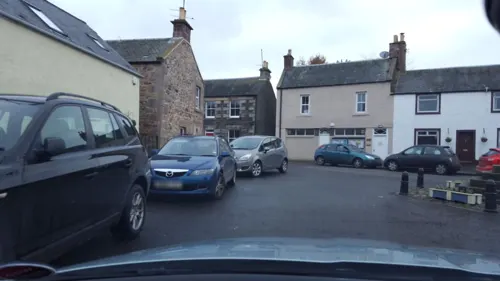
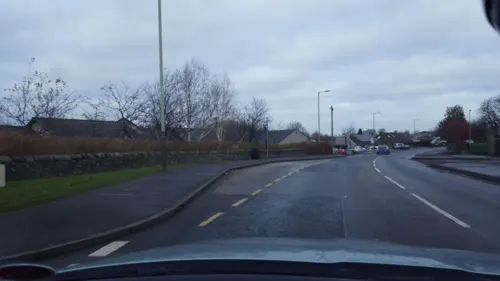
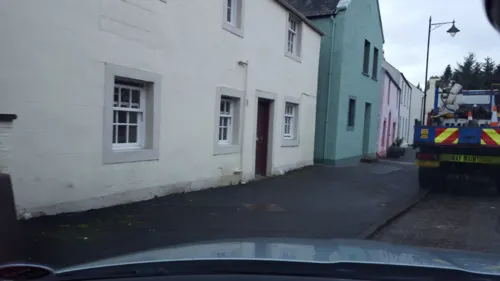


History
Abernethy, recorded in the 10th century as Aburnethige, means 'mouth of the river Nethy'. The first element of the name is the Pictish word aber 'river mouth'. The river-name Nethy is from the Celtic root nect- 'pure, clean'. The Nethy Burn flows down from the Ochil Hills past the present village. The Gaelic form of the name is Obar Neithich.
Near to Abernethy lies the small settlement of Catochil, whose name is first attested in a sixteenth-century copy of a text from 1295, as Cathehill, and again in 1508 as Catoichill. This place-name too is thought to be from Pictish, or its close relative Common Brittonic, from the elements *ced ("woodland") and *ogel ("high", its form influenced by the name of the Ochil Hills among which it lies).
There is evidence of early settlement in the area, with a Bronze Age log boat being discovered at Carpow in 2001, believed to date from around 1,000 BC. The Carpow boat is one of the best-preserved examples in Britain, and the second-oldest example of a boat recovered in Scotland. Remains of suspected pre-historic stone circles have been discovered to the north and south of the village. Castle Law was the site of an Iron Age hillfort, first excavated in the late 19th century.
Read more of the history
A group of Roman sites within the village have been given the name "the Abernethy complex", including later use of the fortress at Castle Law and the site of the former Carpow Roman Fort to the east of the village.
The village was once the "capital" (or at least a major religious and political centre) of the kingdom of the Picts. The parish church, which sits on land given by Nechtan,a king of the Picts, is dedicated to Saint Brigid of Kildare (fl. 451–525), and the church is said to have been founded by Dairlugdach, second abbess of Kildare, one of early Christian Ireland's major monasteries.
Several pieces of Pictish or early medieval sculpture have been found in Abernethy, including an incomplete Pictish symbol stone attached to the base of the round tower. The location "Afarnach's Hall" referred to in the earliest mediaeval Arthurian literature is usually identified as Abernethy.
Abernethy is believed to have been the seat of an early Pictish bishopric, its diocese extending westward along Strathearn. In the 12th century the bishop's seat was moved to Muthill, then Dunblane, so that Abernethy, no longer being a residential bishopric is today listed by the Catholic Church as a titular see.
In 1072, Abernethy was the site of the Treaty of Abernethy concluded between William the Conqueror and Malcolm III of Scotland. Alexander de Abernethy maintained a connection to the area.
Abernethy remained the site of a small priory of Augustinian canons, founded 1272. In the 15th century, this priory was suppressed in favour of a collegiate church under the patronage of the Douglas Earls of Angus. Remains of the collegiate church survived until 1802 within the present village graveyard, when they were replaced by the present plain red sandstone church, which is still dedicated to Saint Brigid.
Abernethy was granted a charter as a burgh of barony in 1476 by the 5th Earl of Angus, a status confirmed in 1628 by the 11th Earl. The Earl of Angus and Lord Abernethy have become subsidiary titles of the Dukes of Hamilton. It later became a police burgh and held its burgh status and instruments of local government until the Local Government (Scotland) Act 1973.
In 1933, Powrie Park was gifted to the burgh by William Powrie as a memorial and is maintained as common good land by Perth and Kinross Council.
In October 1909, future Prime Minister Winston Churchill spoke at a political rally in the village, which was protested by a group of Suffragettes including Adela Pankhurst.
In the Second World War, the village hosted a camp for Polish forces and was the destination for a number of evacuees. In 2012, the London Olympics torch relay passed through Abernethy as part of its progress around the British Isles.
From the History section of Abernethy, Perth and Kinross on Wikipedia, under CC BY-SA 4.0.
More about Abernethy
Arts and culture
Abernethy was formerly associated with agriculture, including soft fruit production, salmon fishing and weaving.
A general store is found in the village's Main Street. The local post office was replaced in 2009 with a mobile service. The village also hosts a public house, museum, garden centre, public park and heritage gardens.
A Gala / Fete Day is held annually on the first or second Saturday in June, with a race to the top of nearby Castle Law taking place the following day.
The Museum of Abernethy in the village opened in May 2000 by Magnus Magnusson, former chairman of the Ancient Monuments Board for Scotland, and is open to the public during May to September each year. It also holds a key to the round tower. In 2025, the museum celebrated its 25th anniversary with a number of events.
Abernethy has an ancient history back to the earliest days of Christianity in Scotland, and a pivotal role in shaping it, albeit in a gently far-reaching way.
Education
The village maintains a single non-denominational state primary school. Abernethy Primary School's current building was constructed in 2002 and expanded in 2013. In 2023, the school roll was 148 pupils.
From the Wikipedia article Abernethy, Perth and Kinross, under CC BY-SA 4.0.
Notable people from Abernethy
 John Grantstone mason trade unionist and politician, Senator for New South Wales, Australia (1857–1928)Photo: The Swiss Studios, Public domain
- Herbert James PatonBritish philosopher (1887–1969)
Born in Abernethy, according to Wikidata (CC0). Each name links to its Wikipedia article.
Churches and places of worship2
Schools, colleges and libraries1
Map of Abernethy
26 places. The map loads OpenStreetMap tiles when you open it.
Getting there and nearby towns
Perth Airport (PSL) is the nearest airport with scheduled flights listed in OpenStreetMap, 8 miles away.
- Perth 6 mi northwest, about 10 min by car
- Falkland 7 mi southeast, about 11 min by car
- Ladybank 8 mi southeast, about 13 min by car
- Almondbank 10 mi northwest, about 16 min by car
- Glenrothes 11 mi southeast, about 18 min by car
- Methven 12 mi northwest, about 19 min by car
- Invergowrie 13 mi northeast, about 21 min by car
- Methil 15 mi southeast, about 24 min by car
- Dundee 16 mi northeast, about 26 min by car
- Kirkcaldy 16 mi south, about 26 min by car
Drive times are estimates from straight-line distance, not routes.
Towns near Abernethy


Keep exploring
Local news
Headlines from INDB.
Reviews, tips and questions
Loading what members have shared...
Sources and licences
- GeoNames (CC BY 4.0): population, coordinates, regions and time zone
- Mapillary (see each image): photos
- OpenStreetMap contributors (ODbL 1.0): places, airports, map data
- Wikidata (CC0 1.0): elevation, founding date, time zone, website, landmarks and historic places
- Wikimedia Commons (see each image): photos
- Wikipedia (CC BY-SA 4.0): overview and history text
Photo credits
- Abernethy Cross and Tower, Thetaywhale, CC BY 4.0
- Balmanno Castle (3636176895), B4bees from Kinross, Scotland, CC BY 2.0
- Museum of Abernethy, Thetaywhale, CC BY 4.0
- Street-level photo, hobgoblin, CC BY-SA 4.0
- Street-level photo, hobgoblin, CC BY-SA 4.0
- Street-level photo, hobgoblin, CC BY-SA 4.0
- Street-level photo, hobgoblin, CC BY-SA 4.0
- Street-level photo, hobgoblin, CC BY-SA 4.0
- Street-level photo, hobgoblin, CC BY-SA 4.0
- Street-level photo, hobgoblin, CC BY-SA 4.0
- Street-level photo, southglos, CC BY-SA 4.0
- Street-level photo, southglos, CC BY-SA 4.0
Page built November 10, 2026. Spotted a mistake? Tell us or suggest a place.