


Kingston upon Hull, United Kingdom
Kingston upon Hull is a city of 314,018 people in England, United Kingdom, founded in 1101.
Why visit Kingston upon Hull
Townapedia lists 50 museums and landmarks, 54 parks and trails, 174 places to eat, 24 places to stay and 20 attractions in and around town.
Highlights include The Deep, Hull New Theatre, Hands on History Museum and Hull and East Riding Museum.
Weather in Kingston upon Hull
Forecast from MET Norway (CC BY 4.0). Full forecast
About Kingston upon Hull
Kingston upon Hull, or simply Hull, is a port city and unitary authority area in the East Riding of Yorkshire, England. It lies upon the River Hull at its confluence with the Humber Estuary, 25 miles (40 km) inland from the North Sea. It is a tightly bounded city which excludes the majority of its suburbs; with a population of 273,257 (2025), it is the fourth-largest city in the Yorkshire and the Humber region. The built-up area has a population of 436,300.
From the Wikipedia article Kingston upon Hull (this version), under CC BY-SA 4.0.
Travel tips from other travellers: Kingston upon Hull on Wikivoyage (CC BY-SA 4.0).
Photos of Kingston upon Hull


Things to do20


Hull New Theatre
Cinema and theater
Theatre in Kingston upon Hull, England

Hull Truck Theatre
Cinema and theater · 0.5 mi
Theatre at St Stephen's Hull, Hull, England

Humber Bridge
Bridge · 5.4 mi
Suspension bridge near Kingston upon Hull, England

Paull Lighthouse
Lighthouse · 4.5 mi
Lighthouse in Paull, East Riding of Yorkshire, England, UK


Murdoch's Connection
Bridge
Bridge in Kingston upon Hull, East Riding of Yorkshire, England, UK
Myton Swing Bridge
Bridge
Road bridge in Kingston upon Hull, East Riding of Yorkshire, England, UK

Thorngumbald Clough High Lighthouse
Lighthouse · 5.1 mi
Lighthouse in Paull, East Riding of Yorkshire, England, UK
8 more on the map.
Museums and landmarks50
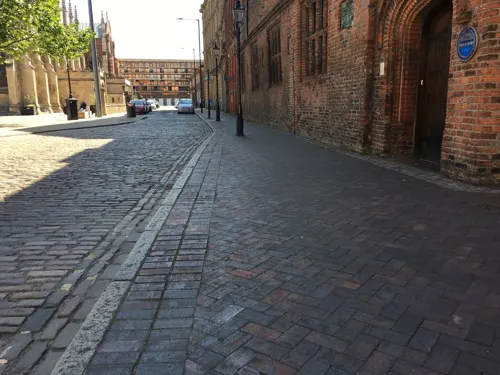
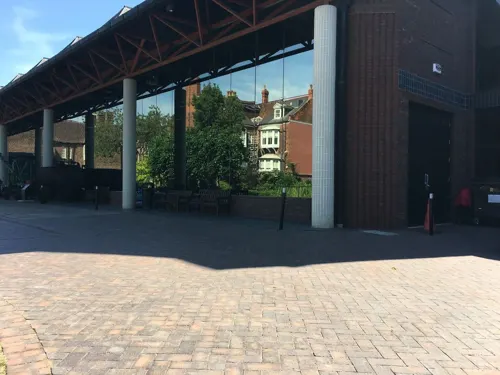
Hull and East Riding Museum
Museum
Museum in Kingston upon Hull, East Riding of Yorkshire, England
36 High Street, Hull
Mo-Sa 10:00-16:30; Su 11:00-16:00; Dec 24-28 off; Jan 01 off


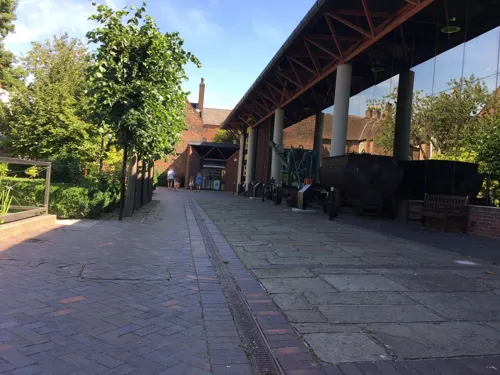
Hull Streetlife Museum
Museum
High Street, Hull
Mo-Sa 10:00-16:30; Su 11:00-16:00


Wilberforce House
Museum
Museum in Kingston upon Hull, East Riding of Yorkshire, England, UK

Ferens Art Gallery
Museum
Art gallery in Hull, United Kingdom
Mo-Sa 10:00-16:30; Su 11:00-16:00; Dec 24-28 off; Jan 01 off
Streetlife Museum of Transport
Museum
Transport museum in Kingston upon Hull, England
38 more on the map.
Parks, trails and playgrounds54



Barrow Blow Wells
Park · 4.5 mi
Local nature reserve in North Lincolnshire
Barrow Haven Reedbed
Park · 4.0 mi
Nature reserve in Lincolnshire, England
Far Ings National Nature Reserve
Park · 6.1 mi
Nature reserve in north Lincolnshire


42 more on the map.
Restaurants and cafes174
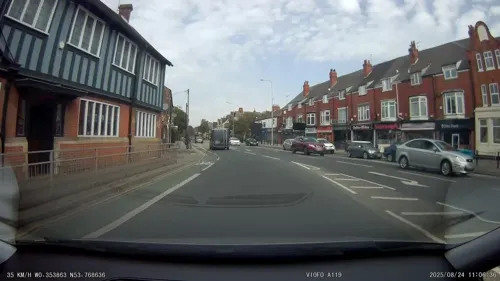
Haworth Arms
Bar and pub · 1.8 mi
Beverley Road, Kingston upon Hull
Mo-We 12:00-24:00; Th-Fr 12:00-01:00; Sa 12:00-00:00; Su 12:00-23:00

Tandoor Mahal Restaurant
Restaurant · Indian · 1.9 mi
587-589 Anlaby Road, Hull
17:00-23:00; Fr-Sa 17:00-23:30

The Empress
Bar and pub
20 Alfred Gelder Street, Hull
Mo-Su 11:30-23:00


The Minerva
Bar and pub · 0.5 mi
10 Nelson Street, Hull
Mo-Sa 11:30-23:00; Su 12:00-23:00

Ye Olde Black Boy
Bar and pub
150 High Street, Hull
11:30-23:00, Su 11:00-11:30

Ye Olde White Harte
Bar and pub
25 Silver Street, Hull
Mo-Sa 08:30-20:00, Su 10:00-16:00


Caffè Nero
Cafe · Coffee Shop
37-40 Savile Street, Hull
Mo-Fr 07:00-17:30; Sa 07:30-17:30; Su 08:30-17:00

162 more on the map.
History
Kingston upon Hull stands on the north bank of the Humber Estuary at the mouth of its tributary, the River Hull. The valley of the River Hull has been inhabited since the early Neolithic period, but there is little evidence of a substantial settlement in the area of the present city. The area was attractive to people because it gave access to a prosperous hinterland and navigable rivers but the site was poor, being remote, low-lying and with no fresh water. It was originally an outlying part of the hamlet of Myton, named Wyke. The name is thought to originate either from a Scandinavian word Vik meaning inlet or from the Saxon Wic meaning dwelling place or refuge.
Read more of the history
The River Hull was a good haven for shipping, whose trade included the export of wool from Meaux Abbey, which owned Myton. In 1293, the town of Wyke was acquired from the abbey by King Edward I, who, on 1 April 1299, granted it a royal charter that renamed the settlement King's town upon Hull or Kingston upon Hull. The charter is preserved in the archives of the Guildhall. When first created, the borough straddled the ancient parishes of Hessle and North Ferriby, but was remote from either parish church. A chapel of ease dedicated to Holy Trinity was built to serve the part of the borough in Hessle parish; that church subsequently became Hull Minster. St Mary's Church similarly began as a chapel of ease for the part of the borough in North Ferriby parish.
In 1440, a further charter incorporated the town and instituted local government consisting of a mayor, a sheriff and twelve aldermen.
In his Guide to Hull (1817), J. C. Craggs provides a colourful background to Edward's acquisition and naming of the town. He writes that the King and a hunting party started a hare which "led them along the delightful banks of the River Hull to the hamlet of Wyke ... [Edward], charmed with the scene before him, viewed with delight the advantageous situation of this hitherto neglected and obscure corner. He foresaw it might become subservient both to render the kingdom more secure against foreign invasion, and at the same time greatly to enforce its commerce". Pursuant to these thoughts, Craggs continues, Edward purchased the land from the Abbot of Meaux, had a manor hall built for himself, issued proclamations encouraging development within the town, and bestowed upon it the royal appellation, King's Town.
The port served as a base for Edward I during the First War of Scottish Independence and later developed into the foremost port on the east coast of England. It prospered by exporting wool and woollen cloth, and importing wine and timber. Hull also established a flourishing commerce with the Baltic ports of the Hanseatic League.
From its medieval beginnings, Hull's main trading links were with Scotland and northern Europe. Scandinavia, the Baltic and the Low Countries were all key trading areas for Hull's merchants. In addition, there was trade with France, Spain and Portugal.
Sir William de la Pole was the town's first mayor. A prosperous merchant, de la Pole founded a family that became prominent in government. Another successful son of a Hull trading family was bishop John Alcock, who founded Jesus College, Cambridge and was a patron of the grammar school in Hull. The increase in trade after the discovery of the Americas and the town's maritime connections are thought to have played a part in the introduction of a virulent strain of syphilis through Hull and on into Europe from the New World.
The town prospered during the 16th and early 17th-centuries, and Hull's affluence at this time is preserved in the form of several well-maintained buildings from the period, including Wilberforce House, now a museum documenting the life of William Wilberforce.
During the English Civil War, Hull became strategically important because of the large arsenal located there. Very early in the war, on 11 January 1642, the king named the Earl of Newcastle governor of Hull while Parliament nominated Sir John Hotham and asked his son, Captain John Hotham, to secure the town at once. Sir John Hotham and Hull corporation declared support for Parliament and denied Charles I entry into the town. Charles I responded to these events by besieging the town. This siege helped precipitate open conflict between the forces of Parliament and those of the Royalists.
After the Civil War, docks were built along the route of the town walls, which were demolished. The first dock (1778, renamed Queen's Dock in 1854) was built in the area occupied by Beverley and North gates, and the intermediate walls, which were demolished, a second dock (Humber Dock, 1809) was built on the land between Hessle and Myton gates, and a third dock between the two was opened 1829 as Junction Dock (later Prince's Dock).
Whaling played a major role in the town's fortunes until the mid-19th century. As sail power gave way to steam, Hull's trading links extended throughout the world. Docks were opened to serve the frozen meat trade of Australia, New Zealand and South America. Hull was also the centre of a thriving inland and coastal trading network, serving the whole of the United Kingdom.
Throughout the second half of the 19th-century and leading up to the First World War, the Port of Hull played a major role in the emigration of Northern European settlers to the New World, with thousands of emigrants sailing to Hull and stopping for administrative purposes before travelling on to Liverpool and then North America.
Parallel to this growth in passenger shipping was the emergence of the Wilson Line of Hull (which had been founded in 1825 by Thomas Wilson).
From the History section of Kingston upon Hull on Wikipedia, under CC BY-SA 4.0.
More about Kingston upon Hull
Geography
Kingston upon Hull is on the northern bank of the Humber Estuary. The city centre is west of the River Hull and close to the Humber. The city is built upon alluvial and glacial deposits which overlie chalk rocks but the underlying chalk has no influence on the topography. The land within the city is generally very flat and is only 2 to 4 metres (6.5 to 13 ft) above sea level. Because of the relative flatness of the site there are few physical constraints upon building and many open areas are the subject of pressures to build.
The parishes of Drypool, Marfleet, Sculcoates, and most of Sutton parish, were absorbed within the borough of Hull in the 19th and 20th centuries. Much of their area has been built over, and socially and economically they have long been inseparable from the city. Only Sutton retained a recognisable village centre in the late 20th century, but on the south and east the advancing suburbs had already reached it. The four villages were, nevertheless, distinct communities, of a largely rural character, until their absorption in the borough—Drypool and Sculcoates in 1837, Marfleet in 1882, and Sutton in 1929. The current boundaries of the city are tightly drawn and exclude many of the metropolitan area's nearby villages, of which Cottingham is the largest. The city is surrounded by the rural East Riding of Yorkshire.
Arts and culture
Hull has several museums of national importance. The city has a theatrical tradition with some famous actors and writers having been born and lived in Hull. The city's arts and heritage have played a role in attracting visitors and encouraging tourism in recent efforts at regeneration. Hull has a diverse range of architecture and this is complemented by parks and squares and a number of statues and modern sculptures. The city has inspired author Val Wood who has set many of her best-selling novels in the city. The Wilberforce Lecture and award of the Wilberforce Medallion, which has taken place annually since 1995, celebrates the historic role of Hull and William Wilberforce in combating the abuse of human rights.
In April 2013 Hull put forward a bid to be the UK City of Culture in 2017, reaching the shortlist of four in June 2013 along with Dundee, Leicester and Swansea Bay. On 20 November 2013, Maria Miller, the Culture Secretary, announced that Hull had won the award to become the UK City of Culture 2017.
Monopoly have released a version focusing on Hull, with attractions such as the Deep and St Stephens included.
The Museums Quarter is a development on the High Street in the heart of the Old Town. It combines four museums around a leisure garden. The work cost £5.1 million and was carried out from 1998 to 2003, being formally opened by the Duke of Gloucester.
Education
Kingston upon Hull is home to the University of Hull, which was founded in 1927 and received its Royal Charter in 1954. It now has a total student population of around 20,000 across its main campuses in Hull and Scarborough. The main University campus is in North Hull, on Cottingham Road. Notable alumni include former Deputy Prime Minister John Prescott, social scientist Lord Anthony Giddens, Woman's Hour presenter and writer Jenni Murray, Professor of Vaccinology at the University of Oxford and co-developer of the Oxford-AstraZeneca COVID-19 vaccine Dame Sarah Gilbert, Nobel Prize laureate and Professor of Economics at Stanford Graduate School of Business Guido Imbens, and the Oscar winning film director Anthony Minghella. The University of Hull is a partner in the new University Centre of the Grimsby Institute of Further and Higher Education (GIFE) being built in Grimsby, North Lincolnshire.
The University of Lincoln grew out of the University of Humberside, a former polytechnic based in Hull. In the 1990s the focus of the institution moved to nearby Lincoln and the administrative headquarters and management moved in 2001. The University of Lincoln has retained a campus in George Street in Hull city centre whilst Hull University purchased the adjacent University of Lincoln campus site on Cottingham Road.
From the Wikipedia article Kingston upon Hull, under CC BY-SA 4.0.
Notable people from Kingston upon Hull
 Amy Johnsonpioneering English aviator (1903–1941)Photo: Andy Dingley (scanner), Public domain
 Tom CourtenayEnglish actor (born 1937)Photo: Elena Ternovaja, CC BY-SA 3.0
 Daniel JamesWelsh association football playerPhoto: Timmy96, CC0
 Liam CooperScottish-English association football playerPhoto: Biso, CC BY 4.0
 Nick BarmbyEnglish former professional footballer; football coach (born 1974)Photo: Mattythewhite, CC BY-SA 3.0
 Calum ScottEnglish singerPhoto: Kirkdudley, CC0
 Robert AramayoEnglish actor (b. 1992)Photo: Danielle G. Campbell, CC BY-SA 4.0
 Dorothy MackaillEnglish-born American actress (1903-1990)Photo: Edwin Bower Hesser, for Photoplay magazine, Public domain
 Mick RonsonEnglish guitarist, songwriter, multi-instrumentalist, arranger and record producer (1946–1993)Photo: mickeydb, CC BY-SA 2.0
- John VennBritish logician and philosopher (1834-1923)
- Ernest William BrownEnglish-American astronomer and mathematician
- Edward Arthur MilneBritish astrophysicist and mathematician (1896-1950)
Born in Kingston upon Hull, according to Wikidata (CC0). Each name links to its Wikipedia article.
Where to stay24
Churches and places of worship61
Church of the Holy Cross
Church · Catholic · 4.0 mi
Carrington Avenue, Cottingham
Shopping82
Gas and EV charging26
Schools, colleges and libraries46
New Holland Church of England and Methodist Primary School
School · Anglican, Methodist · 3.3 mi
School Lane, Barrow-upon-Humber
Healthcare42
Map of Kingston upon Hull
250 places. The map loads OpenStreetMap tiles when you open it.
Getting there and nearby towns
Humberside Airport (HUY) is the nearest airport with scheduled flights listed in OpenStreetMap, 12 miles away.
- New Holland 3 mi south, about 5 min by car
- Dunswell 4 mi north, about 7 min by car
- Goxhill 5 mi south, about 8 min by car
- York 34 mi northwest, about 54 min by car
- Lincoln 37 mi south, about 59 min by car
- Rotherham 47 mi southwest, about 1 h 15 min by car
- Wakefield 48 mi west, about 1 h 15 min by car
- Leeds 50 mi west, about 1 h 15 min by car
- Sheffield 53 mi southwest, about 1 h 30 min by car
- Mansfield 55 mi southwest, about 1 h 30 min by car
Drive times are estimates from straight-line distance, not routes.
Towns near Kingston upon Hull


Keep exploring
Local news
Headlines from INDB.
Reviews, tips and questions
Loading what members have shared...
Sources and licences
- GeoNames (CC BY 4.0): population, coordinates, regions and time zone
- Mapillary (see each image): photos
- OpenStreetMap contributors (ODbL 1.0): places, airports, map data
- Wikidata (CC0 1.0): elevation, founding date, time zone, website, landmarks and historic places
- Wikimedia Commons (see each image): photos
- Wikipedia (CC BY-SA 4.0): overview and history text
Photo credits
- Hull Maritime Museum, David Wright, CC BY-SA 2.0
- The Deep, Kingston upon Hull May24 (cropped), Hullian111, CC BY-SA 4.0
- Hull New Theatre Feb23, Hullian111, CC BY-SA 4.0
- Humber Street Gallery, Bernard Sharp, CC BY-SA 2.0
- Wilberforce House Hull, Original uploader was Keith D at en.wikipedia, CC BY-SA 3.0
- Pearson Park, Peter Church, CC BY-SA 2.0
- East Park Hull, Stephen Horncastle, CC BY-SA 2.0
- Pickering Park IMG 6718 - panoramio, Paul Lakin, CC BY 3.0
- Kingston upon Hull - Minster - 1, Benjamin Smith, CC BY-SA 4.0
- St Andrews Church, Paul Stabeler, CC BY 3.0
- St Peters Bilton, Keith D at English Wikipedia, CC BY-SA 3.0
- Hull Truck Theatre, Hull Truck Theatre, CC BY-SA 3.0
- KC South Stand, Paul, CC BY-SA 3.0
- Kingston upon Hull - Humber Dock Marina, Benjamin Smith, CC BY-SA 4.0
- Kingston upon Hull - Hull Maritime Museum - 1, Benjamin Smith, CC BY-SA 4.0
- Hull Royal Infirmary Main Building, May24, Hullian111, CC BY-SA 4.0
- Ptstmarysschoolfront, User:Paulturner1990, Public domain
- Ye Olde White Hart Silver Street Hull, Bernard Sharp, CC BY-SA 2.0
- The Empress Public House, Richard Locket, CC BY-SA 4.0
- George Hotel, Richard Locket, CC BY-SA 4.0
- Paragon arcade, Hull IMG 4075 - panoramio, Paul Lakin, CC BY 3.0
- Ron Dearing UTC, Kingston upon Hull Oct23 Overview from Freetown Way, Hullian111, CC BY-SA 4.0
- Wilberforce House Museum, Cristina Eiras, CC BY-SA 4.0
- Tandoor Mahal in Hull, Andy Li, CC0
- The Empress Hull, Noelia Correa, CC BY-SA 4.0
- The George Hotel, Noelia Correa, CC BY-SA 4.0
- The Minerva, Noelia Correa, CC BY-SA 4.0
- Ye Olde Black Boy, Noelia Correa, CC BY-SA 4.0
- Humberside Fire & Rescue DH03P4 - YT21 EHF, Hullian OneEleven, CC BY-SA 2.0
- Sir Leo Schulz (27945993281), Tim Green from Bradford, CC BY 2.0
- Humber Bridge Bob Riach, Bob riach, CC BY-SA 4.0
- Paull Lighthouse, on the side of the River Humber, near Hull, UK 03, Ridiculopathy, CC0
- Queens Gardens, Hull IMG 0225 - panoramio, Paul Lakin, CC BY 3.0
- Street-level photo, gness, CC BY-SA 4.0
- Street-level photo, aidan573, CC BY-SA 4.0
- Street-level photo, gness, CC BY-SA 4.0
- Street-level photo, aidan573, CC BY-SA 4.0
- Street-level photo, albertdougie15, CC BY-SA 4.0
- Street-level photo, lamaar639, CC BY-SA 4.0
- Street-level photo, aidan573, CC BY-SA 4.0
- Street-level photo, albertdougie15, CC BY-SA 4.0
- Street-level photo, albertdougie15, CC BY-SA 4.0
- Street-level photo, aidan573, CC BY-SA 4.0
- Street-level photo, gness, CC BY-SA 4.0
- Street-level photo, gness, CC BY-SA 4.0
- Street-level photo, lamaar639, CC BY-SA 4.0
- Street-level photo, gness, CC BY-SA 4.0
- Street-level photo, gness, CC BY-SA 4.0
- Street-level photo, gness, CC BY-SA 4.0
- Street-level photo, albertdougie15, CC BY-SA 4.0


Page built November 10, 2026. Spotted a mistake? Tell us or suggest a place.