


Helensburgh, United Kingdom
Helensburgh is a town of 13,230 people in Scotland, United Kingdom.
Why visit Helensburgh
Townapedia lists 15 museums and landmarks, 6 parks and trails, 27 places to eat, 7 places to stay and 1 attraction in and around town.
Highlights include Hill House, Scottish Submarine Centre and Helensburgh Golf Club.
Weather in Helensburgh
Forecast from MET Norway (CC BY 4.0). Full forecast
About Helensburgh
Helensburgh ( HEL-ənz-bər-ə; Scottish Gaelic: Baile Eilidh) is a town and former burgh on the north side of the Firth of Clyde in Scotland, situated at the mouth of the Gareloch. The town had a population of 14,127 in 2022.
From the Wikipedia article Helensburgh (this version), under CC BY-SA 4.0.
Travel tips from other travellers: Helensburgh on Wikivoyage (CC BY-SA 4.0).
Photos of Helensburgh


Things to do1

Museums and landmarks15

Hill House
Museum · 0.8 mi
Home in Helensburgh, Scotland designed by Charles Rennie Mackintosh
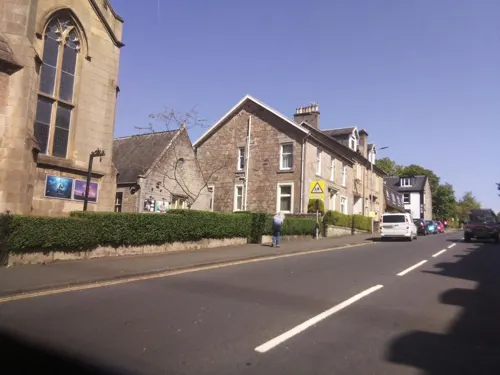

MV Captayannis
Monument and historic site · 2.2 mi
Greek freighter shipwrecked in the Firth of Clyde, Scotland
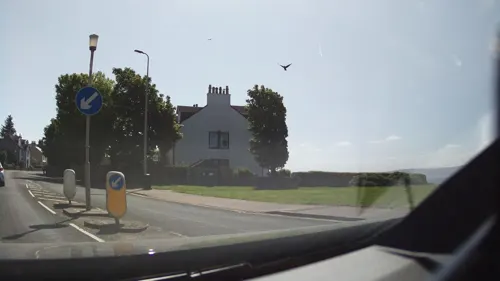



HMS Cumberland
Monument and historic site · 2.3 mi
1842 Cumberland-class third-rate ship of the line
Helensburgh (Rhu) Airfield and MAEE Memorial
Monument and historic site · 1.3 mi
3 more on the map.
Parks, trails and playgrounds6




Restaurants and cafes27
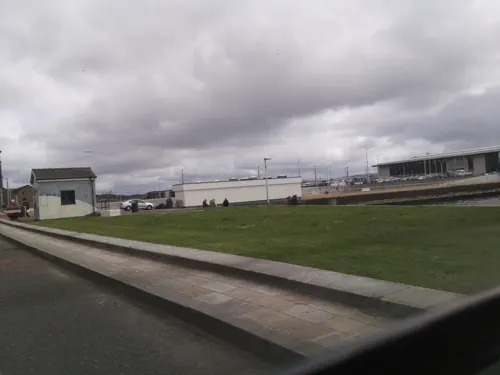
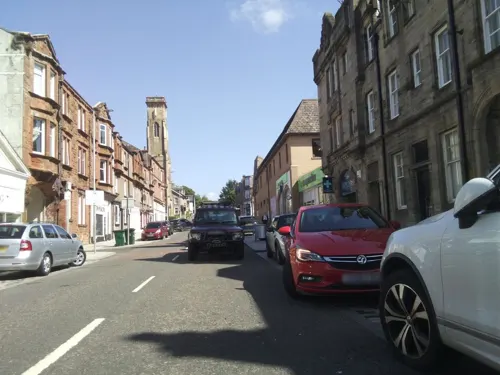
Riverhill Courtyard
Restaurant · Scottish, European, International
26 West Princes Street, Helensburgh
Mo-Sa 09:00-23:45, Su 10:00-22:00
The Clyde Bar
Bar and pub · 0.5 mi
62-64 West Clyde Street, Helensburgh
Mo-We 11:00-00:00; Th-Sa 11:00-01:00; Su 12:30-01:00
The Henry Bell
Bar and pub · 0.5 mi
19-29 James Street, Helensburgh
Mo,Tu,We,Th,Su 08:00-24:00; Fr,Sa 08:00-25:00
Dino's Ice Cream
Ice cream · 0.4 mi
31 West Clyde Street, Helensburgh
Mo-Su 09:00-21:00

Masala Twist
Restaurant · Indian · 0.4 mi
29 James Street, Helensburgh
Mo-Sa 12:00-22:00, Su 13:00-22:00
Peckham's
Restaurant · Regional, International
1 East Princes Street, Helensburgh
Mo-Th 09:00-23:00, Fr-Sa 09:00-01:00, Su 10:00-23:00

The Ginger Breadman Cafe
Cafe · Coffee Shop, Regional
64a Sinclair Street
Mo-Sa 08:00-16:00; Su 09:00-15:00
Costa
Cafe · Coffee Shop
28 West Princes Street, Helensburgh
Mo-Fr 07:00-18:00, Sa 08:30-17:30, Su 09:00-17:00
15 more on the map.
History
Although it has long been known that there are some prehistoric remains in the Helensburgh area, recent fieldwork by the North Clyde Archaeological Society has uncovered more. However, the oldest building in the town itself is Ardencaple Castle, which was the ancestral home of Clan MacAulay, and the history of which may date back to the twelfth century. Today only one tower of this building remains, the rest having been demolished in 1957–59.
In 1752, Sir James Colquhoun (died 1786), chief of the Clan Colquhoun of Luss, bought the land which was to become Helensburgh; at that time it was known by such names as Malig, Millig or Milligs.
In 1776, he placed an advertisement in a Glasgow newspaper seeking to feu the land, and in particular he stated that "bonnet makers, stocking, linen and woolen weavers will meet with encouragement". However, his efforts were unsuccessful, partly because roads were rudimentary and also because the shore at Helensburgh made it unattractive to shipping – it was shallow, dotted with large rocks and subject to a prevailing onshore wind.
Read more of the history
No precise date is known for the change of name to Helensburgh. However, it was probably around 1785 when Sir James decided to name the town after his wife, Lady Helen Sutherland (1717–1791); she was the granddaughter of the 16th Earl of Sutherland. However, for a few years, both the old and new names for the town were in use and it was also known for a time simply as the New Town. The town's coat of arms is based on those of the Colquhouns and the Sutherlands.
Helensburgh received its burgh charter from King George III in 1802. This was somewhat surprising, as the 1799 Statistical Account of Scotland indicates that Helensburgh only had a population of about 100 at that time. To commemorate the bicentenary of the burgh charter in 2002 many members of Helensburgh Heritage Trust combined to produce a special history book of the town. Henry Bell (1767–1830) had arrived in Helensburgh by 1806. By training, he was a millwright, but he had also worked for a period in a shipyard at Bo'ness. He probably designed and built the Baths Inn, which he and his wife then ran as a hotel; he designed and built other buildings, such as Dalmonach Works at Bonhill in West Dunbartonshire (now demolished) and St Andrew's Parish Church in Carluke in South Lanarkshire. The Baths Inn later became the Queen's Hotel, and it is now private accommodation as part of Queen's Court at 114 East Clyde Street.
At that time, the taking of baths (hot and cold, fresh water and salt water) was considered to be advantageous to the health. As a result of his initiative, Helensburgh began to develop as a holiday resort, and Bell also served as the town's first recorded Provost from 1807–09.
When Henry Bell came to Helensburgh, roads to Glasgow were in poor condition and the journey by boat could take several days, depending on the strength and direction of the wind and on tidal conditions. Consequently, in 1812, Henry Bell introduced the paddle steamer Comet to bring guests from Glasgow in comfort and more speedily to his hotel. The Comet was the first commercial steamship in Europe.
That this vessel and subsequent steamships could travel straight into the wind meant that Helensburgh's shallow shore line was a much smaller problem for sailors. As a result, the town began to grow from a population of about 500 in 1810 to 2,229 by the 1841 Census. It is difficult to overstate the importance of Bell in Scottish and British economic history; not only was he a pioneer of tourism, but it can also be argued that the later pre-eminence of the River Clyde in shipbuilding was in no small measure due to him.
Following the arrival of the Glasgow, Dumbarton and Helensburgh Railway in 1858 the population of Helensburgh grew even more rapidly, reaching 5,964 in the 1871 Census. The Municipal Buildings, designed by John Honeyman, were completed in 1879.
Glasgow at this time was developing very rapidly as an industrial city, but this rapid growth caused it to become dirty, smoky and unpleasant. The railway meant that the wealthier business people of Glasgow could now set up home in the fresh air of Helensburgh and commute daily between the two places. This led to the expansion of the town northwards up the hill and the building of many substantial Victorian villas. The best known of these is The Hill House, which was designed in 1902–03 by Glasgow architect Charles Rennie Mackintosh and which now belongs to the National Trust for Scotland. These parts of the town are laid out in the gridiron pattern, Helensburgh being an early example of a planned town in Scotland.
In 1960, the line from Helensburgh Central to Glasgow Queen Street Low Level and on to Airdrie was electrified with the then revolutionary new Blue Trains providing faster, regular interval services. Unfortunately, equipment problems led to the temporary withdrawal of the Blue Trains, which did not return to traffic until late 1961. Since then, traffic on this route has risen steadily, helped from October 2010 when two trains each hour commenced running right through to Edinburgh via the newly re-opened (and electrified) Airdrie-Bathgate line.
By the late 1870s, the North British Railway Company (which had become owner of the Glasgow, Dumbarton and Helensburgh Railway) felt that its steamer services were at a competitive disadvantage, because passengers had to walk from Helensburgh Station, through the town centre and down the pier, thus causing longer journey times. By contrast, their competitors on the other side of the Clyde, the Caledonian Railway and the Glasgow & South Western Railway had stations right beside their piers. The North British therefore proposed to extend the railway line through the town centre from the station on to the pier.
From the History section of Helensburgh on Wikipedia, under CC BY-SA 4.0.
More about Helensburgh
Geography
Helensburgh is 25 miles (40 km) northwest of Glasgow. The town faces south towards Greenock across the Firth of Clyde, which is approximately 3 miles (5 km) wide at this point. Ocean-going ships can call at Greenock, but the shore at Helensburgh is very shallow, although to the west of the town the Gareloch is deep.
Helensburgh lies at the western mainland end of the Highland Boundary Fault. This means that the hills to the north of Helensburgh lie in the Highlands, whereas the land to the south of Helensburgh is in the Lowlands or Central Belt of Scotland. Consequently, there is a wide variety of landscape in the surrounding area – for example, Loch Lomond (part of Scotland's first National Park) is only 4 miles (6.4 km) over the hill to the north-east of Helensburgh. Although the Highland Boundary Fault is not geologically active, very minor earthquakes do occur occasionally in the area.
From the Wikipedia article Helensburgh, under CC BY-SA 4.0.
Notable people from Helensburgh
 John Logie BairdScottish inventor, demonstrating the world's first working television (1888–1946)Photo: Unknown author Unknown author, Public domain
 Norah Neilson GrayBritish artist of the Glasgow School (1882-1931)Photo: Unknown author Unknown author, Public domain
 Gordon ReidBritish wheelchair tennis playerPhoto: robbiesaurus from Smithtown, NY, USA, CC BY-SA 2.0
 John HammersleyBritish mathematician (1920-2004)Photo: Geoffrey Grimmett, CC BY-SA 4.0
 Herbert Guthrie-SmithNew Zealand farmer, author and conservationist (1861/2–1940)Photo: Herbert Guthrie-Smith; circa 1912;..., Public domain
 Duncan Airlie JamesScottish actor and martial artistPhoto: QuickOffTheMarkProd, CC BY-SA 4.0
 Ivan McKeeScottish politician (born 1963)Photo: Scottish Government, CC BY 4.0
- Morven ChristieScottish actress
- Jack BuchananBritish actor, singer, director and producer (1891-1957)
- David MacDonaldBritish film director, writer and producer (1904–1983)
- Georgie GlenBritish actress
- Peter SuchEnglish cricketer (born 1964)
Born in Helensburgh, according to Wikidata (CC0). Each name links to its Wikipedia article.
Where to stay7
Churches and places of worship8
Helensburgh Parish Church
Church · Church Of Scotland · 0.4 mi
Colquhoun Square, Helensburgh
St Joseph's Roman Catholic Church
Church · Roman Catholic
41 Lomond Street, Helensburgh
Shopping10
Gas and EV charging2
Schools, colleges and libraries9
Healthcare4
Map of Helensburgh
89 places. The map loads OpenStreetMap tiles when you open it.
Getting there and nearby towns
Glasgow Airport (GLA) is the nearest airport with scheduled flights listed in OpenStreetMap, 15 miles away.
- Port Glasgow 5 mi south, about 8 min by car
- Johnstone 15 mi southeast, about 24 min by car
- Largs 15 mi south, about 25 min by car
- Renfrew 16 mi southeast, about 26 min by car
- Milngavie 16 mi east, about 26 min by car
- Paisley 17 mi southeast, about 27 min by car
- Glasgow 21 mi southeast, about 33 min by car
- Newton Mearns 22 mi southeast, about 36 min by car
- Kirkintilloch 23 mi east, about 36 min by car
- Rutherglen 23 mi southeast, about 38 min by car
Drive times are estimates from straight-line distance, not routes.
Towns near Helensburgh


Keep exploring
Local news
Headlines from INDB.
Reviews, tips and questions
Loading what members have shared...
Sources and licences
- GeoNames (CC BY 4.0): population, coordinates, regions and time zone
- Mapillary (see each image): photos
- OpenStreetMap contributors (ODbL 1.0): places, airports, map data
- Wikidata (CC0 1.0): elevation, founding date, time zone, website, landmarks and historic places
- Wikimedia Commons (see each image): photos
- Wikipedia (CC BY-SA 4.0): overview and history text
Photo credits
- Colquhoun Square Helensburgh, Son of Groucho, CC BY 2.0
- 05099 Dhammakaya Scotland Church, Helensburgh 007, WeeHolly, CC BY-SA 4.0
- 05099 Dhammakaya Scotland Church, Helensburgh 002, WeeHolly, CC BY-SA 4.0
- 05099 Dhammakaya Scotland Church, Helensburgh 004, WeeHolly, CC BY-SA 4.0
- 05099 Dhammakaya Scotland Church, Helensburgh 013, WeeHolly, CC BY-SA 4.0
- 05099 Dhammakaya Scotland Church, Helensburgh 012, WeeHolly, CC BY-SA 4.0
- 05099 Dhammakaya Scotland Church, Helensburgh 003, WeeHolly, CC BY-SA 4.0
- 05099 Dhammakaya Scotland Church, Helensburgh 010, WeeHolly, CC BY-SA 4.0
- 05099 Dhammakaya Scotland Church, Helensburgh 001, WeeHolly, CC BY-SA 4.0
- 05099 Dhammakaya Scotland Church, Helensburgh 009, WeeHolly, CC BY-SA 4.0
- 05099 Dhammakaya Scotland Church, Helensburgh 005, WeeHolly, CC BY-SA 4.0
- HillHouse, Unknown author, CC BY-SA 2.5
- MV Captayannis-May2023-Hassan Ghani, Hassanghani, CC BY-SA 4.0
- Helensburgh Parish Church (St Andrew's Kirk), Helensburgh, Scotland, Michal Klajban, CC BY-SA 4.0
- Helensburgh St Michael and All Angels Church Exterior, AlasdairW, CC BY-SA 4.0
- DSCN5948 Hermitage Academy, AlasdairW, CC BY-SA 3.0
- Lomond School Helensburgh, AlasdairW, CC BY-SA 3.0
- Victoria Infirmary, Helensburgh, Stewartnbl, CC BY-SA 4.0
- DSCN6721 Colquhoun Square Celtic Cross and Helensburgh Parish Church, AlasdairW, CC BY-SA 4.0
- DSCN3664 Helensburgh War Memorial, AlasdairW, CC BY-SA 4.0
- DSCN6188 53 James Street from James Street Community Garden, AlasdairW, CC BY-SA 4.0
- Street-level photo, southglos, CC BY-SA 4.0
- Street-level photo, southglos, CC BY-SA 4.0
- Street-level photo, southglos, CC BY-SA 4.0
- Street-level photo, southglos, CC BY-SA 4.0
- Street-level photo, southglos, CC BY-SA 4.0
- Street-level photo, southglos, CC BY-SA 4.0
- Street-level photo, southglos, CC BY-SA 4.0
- Street-level photo, southglos, CC BY-SA 4.0
- Street-level photo, southglos, CC BY-SA 4.0
- Street-level photo, smsm1, CC BY-SA 4.0
- Street-level photo, southglos, CC BY-SA 4.0
- Street-level photo, southglos, CC BY-SA 4.0
- Street-level photo, southglos, CC BY-SA 4.0
- Street-level photo, southglos, CC BY-SA 4.0
- Street-level photo, southglos, CC BY-SA 4.0
- Street-level photo, southglos, CC BY-SA 4.0
- Street-level photo, southglos, CC BY-SA 4.0
- Street-level photo, southglos, CC BY-SA 4.0
- Street-level photo, southglos, CC BY-SA 4.0
- Street-level photo, southglos, CC BY-SA 4.0
- Street-level photo, southglos, CC BY-SA 4.0
- Street-level photo, smsm1, CC BY-SA 4.0
- Street-level photo, southglos, CC BY-SA 4.0
- Street-level photo, southglos, CC BY-SA 4.0
- Street-level photo, southglos, CC BY-SA 4.0


Page built November 10, 2026. Spotted a mistake? Tell us or suggest a place.