


Lisburn, United Kingdom
Lisburn is a town of 77,506 people in Northern Ireland, United Kingdom.
Why visit Lisburn
Townapedia lists 177 museums and landmarks, 190 parks and trails, 361 places to eat, 80 places to stay and 46 attractions in and around town.
Highlights include Belfast Waterfront Conference and Exhibition Centre, Grand Opera House, Crumlin Road Gaol and Ulster Museum.
Weather in Lisburn
Forecast from MET Norway (CC BY 4.0). Full forecast
About Lisburn
Lisburn is a cathedral city in Northern Ireland. It is 8 mi (13 km) southwest of Belfast city centre, on the River Lagan, which forms the boundary between County Antrim and County Down. First laid out in the 17th century by English and Welsh settlers, with the arrival of French Huguenots in the 18th century, the town developed as a global centre of the linen industry.
From the Wikipedia article Lisburn (this version), under CC BY-SA 4.0.
Travel tips from other travellers: Lisburn on Wikivoyage (CC BY-SA 4.0).
Photos of Lisburn


Things to do46

Belfast Waterfront Conference and Exhibition Centre
Cinema and theater · 6.9 mi
2 Lanyon Place, Belfast

Grand Opera House
Cinema and theater · 6.4 mi
Opera house in Belfast, County Antrim, Northern Ireland
2-4 Great Victoria Street, Belfast


Albert Bridge, Belfast
Bridge · 7.0 mi
Bridge in Belfast, County Antrim, Northern Ireland

Crumlin Viaduct (Northern Ireland)
Bridge · 9.9 mi
Railway bridge in Crumlin, Northern Ireland

Dargan Bridge, Belfast
Bridge · 7.1 mi
Railway bridge in Belfast, Northern Ireland

Governor's Bridge, Belfast
Bridge · 5.5 mi
Irish roadbridge over the River Lagan in south Belfast

King's Bridge
Bridge · 5.7 mi
Bridge in Belfast, County Antrim, Northern Ireland



Brian Friel Theatre
Cinema and theater · 5.9 mi
Studio theatre at Queen's University, Belfast, Northern Ireland
34 more on the map.
Museums and landmarks177


Ulster Museum
Museum · 5.7 mi
Part of the National Museum of Northern Ireland
Botanic Gardens, Belfast
Tu-Su 10:00-17:00

Eileen Hickey Irish Republican History Museum
Museum · 6.3 mi
5 Conway Place, Belfast
Tu-Sa 10:00-14:00


Giant's Ring
Monument and historic site · 3.6 mi
Neolithic henge monument

Hillsborough Castle
Monument and historic site · 4.8 mi
Castle in Royal Hillsborough, County Down, Northern Ireland

Northern Ireland War Memorial
Museum · 6.9 mi
War memorial in Belfast, Northern Ireland, United Kingdom

165 more on the map.
Parks, trails and playgrounds190


Sir Thomas and Lady Dixon Park
Park · 2.5 mi
Public park, Belfast, Northern Ireland, UK


Alexandra Park
Park · 7.8 mi
Jan 04-31 07:30-16:30; Feb 01-07,Oct 31-Nov 13 07:30-17:00; Feb...


Bog Meadows
Park · 5.0 mi
Nature reserve in Belfast, Northern Ireland, UK

Balmoral Park
Park · 3.7 mi
Exhibition park near Lisburn, Northern Ireland
178 more on the map.
Restaurants and cafes361
Caffè Nero
Cafe · Coffee Shop · 6.5 mi
10 Donegall Square West
Mo-Fr 06:30-19:00; Sa 07:30-19:00; Su 08:00-19:00

Ben Madigan’s Bar & Kitchen
Bar and pub · Regional · 8.0 mi
169-175 Cavehill Road, Belfast
Mo-Sa 11:30-01:00; Su 12:00-24:00
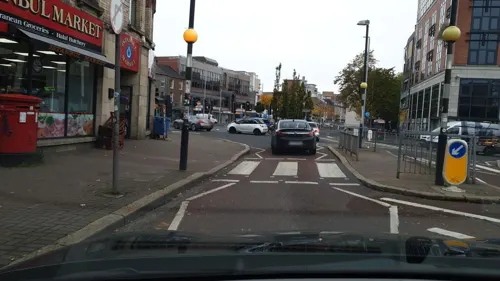
Bites of India
Restaurant · Indian · 6.1 mi
11 Botanic Avenue, Belfast
Mo-Sa 11:00-23:00; Su 13:00-22:00
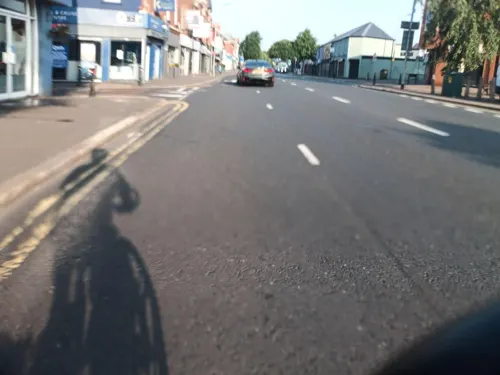
Caffè Nero
Cafe · Coffee Shop · 8.4 mi
376-378 Upper Newtownards Road, Belfast
Mo-Sa 07:30-22:00; Su 08:00-22:00
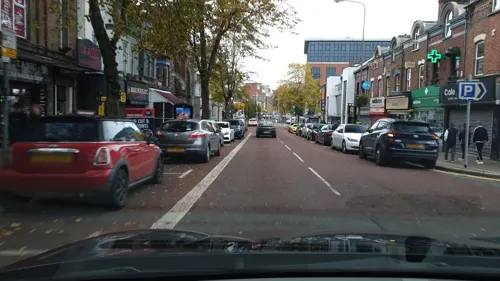
Caffè Nero
Cafe · Coffee Shop · 6.1 mi
42 Botanic Avenue, Belfast
Mo-Fr 07:00-21:00; Sa 07:00-20:00; Su 08:00-20:00

Blue Bear Grill
Diner · American · 1.3 mi
Lisburn Leisure Park, Lisburn
Mo-Th 10:30-21:00; Fr-Sa 10:00-22:00; Su 10:00-21:00

Cafe Smart
Cafe · Breakfast, Coffee Shop, Irish, Local · 8.3 mi
56 Belmont Road, Belfast
Mo-Sa 07:45-16:30, Su 09:00-16:30

349 more on the map.
History
Lisburn's original site was a fort located north of modern-day Wallace Park. In 1609 James I granted Sir Fulke Conway, a Welshman of Norman descent, the lands of Killultagh in southwest County Antrim.
In 1611 George Carew, 1st Earl of Totnes remarked: "In our travel from Dromore towards Knockfargus, we saw in Kellultagh upon Sir Fulke Conway’s lands a house of cagework in hand and almost finished, where he intends to erect a bawn of brick in a place called Lisnagarvagh. He has built a fair timber bridge over the river of Lagan near the house." In 1622 the first impressions of Sir Fulke's brother and heir, Edward Conway, was of "a curious place ... Greater storms are not in any place nor greater serenities: foul ways, boggy ground, pleasant fields, water brooks, rivers full of fish, full of game, the people in their attire, language, fashion: barbarous. In their entertainment free and noble."
Read more of the history
Management of the Conways' Irish estate fell largely to George Rawdon, a Yorkshire man, who laid out the streets of Lisburn as they are today: Market Square, Bridge Street, Castle Street and Bow Street. He had a manor house built on what is now Castle Gardens, and in 1623, a church on the site of the current cathedral. In 1628, Charles I granted a charter for a weekly market, which is still held in the town every Tuesday. To populate the town, Rawdon, hostile to the Presbyterian Scots already moving into the area, brought over English and Welsh settlers.
In 1641 the Irish, rising in the first instance against English, and not Scottish, settlers, were driven back three times from the town. A herd four hundred head of cattle driven against the gates failed to batter them down. The town nonetheless burned. In 1649 the town was secured by forces loyal to Cromwell's English Commonwealth, routing an army of Scots Covenanters, and their Royalist allies, in the Battle of Lisnagarvey.
The Presbyterians, despite their loyalty to the Crown, upon its Restoration continued to be penalised as "dissenters" from the established Church of Ireland. It was not until 1670 that they were permitted a meeting house in town, and that had to be of "perishable materials [...] dark, narrow and devoid of any pretensions to art and comfort. Their support for William III (whose forces wintered in the town) during the Williamite War in Ireland likewise failed to win them equal standing. Like the Catholics, who had to wait another 60 years for a Mass House, Presbyterians were discouraged from exerting their presence. The First Presbyterian Church built in 1768 was screened (until 1970) from Market Square by shops.
The town was destroyed once again in 1707: the accidental conflagration giving rise to the town's motto Ex igne resurgam --"Out of the fire I shall arise". Conway's Manor House was not restored (part of the surrounding wall and its gateway with the date 1677 engraved still stands on the south and east side of Castle Gardens). The Anglican church, designated by Charles II as Christ Church Cathedral in 1662, was rebuilt retaining the tower and the surviving galleries in the nave. The distinctive octagonal spire was added in 1804.
One of the few buildings spared in the fire of 1707 was the Friend's Meeting House. Quakerism had been brought to the town in 1655 by a veteran of Cromwell's army, William Edmundson. In 1766, a prosperous linen merchant, John Hancock, endowed what is now the grammar school known as Friends' School Lisburn.
John Wesley first visited Lisburn in 1756, and thereafter he returned to preach biannually until 1789. The first Wesleyan Methodist Preaching House was established in the town in 1772.
Lisburn prides itself as the birthplace of Ireland's linen industry. While production had been introduced by the Scots, the arrival in 1698 of Huguenot refugees from France brought more sophisticated techniques, and government support. Even as it raised duties on Ireland's successful woollen trade (with the concurrence of the subordinate Irish Parliament), the English Parliament removed them on all Irish articles of hemp and flax, and the government gave Louis Crommelin, "overseer of the royal linen manufacture of Ireland", money to promote their production.
The Huguenot retained their own place of worship, the French Church in Castle Street, until 1820. The last of its pastors, Saumarez Dubourdieu, was 56 years Master of the Classical School of the Bow Street. His students subscribed to his memorial and bust on the south interior of the cathedral.
Large scale manufacture began in 1764 when William Coulson established his first linen looms close by is now the Union Bridge. His mill supplied damask to the royal courts of Europe and, in the early nineteenth century, was to draw celebrity visitors, among them Grand Duke Michael of Russia, Crown Prince Gustaf of Sweden, Louis Napoléon Lannes, the Duke of Wellington and Lord John Russell.
To carry the town's new trade, construction of the Belfast-Lisburn section of the Lagan Canal began in 1756. Despite problems of low water levels during the summer, the canal (extended in 1794 to Lough Neagh) continued to carry bulk cargoes until 1958.
In 1784, the Scotsman John Barbour began spinning linen thread, and in 1831 his son William moved production to what had originally been Crommelin's bleach green at Hilden. By the end of the century Barbour's Linen Thread Company was the largest mill of its kind in the world employing about 2000 people to work 30,000 spindles and 8,000 twisting machines. The company had built a model village for the workers, with 350 houses, two schools, a community hall, children's playground and a village sports ground.
From the History section of Lisburn on Wikipedia, under CC BY-SA 4.0.
Notable people from Lisburn
 Ray StevensonBritish actor (1964–2023)Photo: Mingle Media TV, CC BY-SA 2.0
 Kristian NairnNorthern Irish actor and DJPhoto: Gage Skidmore, CC BY-SA 3.0
 Damien JohnsonNorthern Irish footballerPhoto: Struway, Public domain
 Edwin PootsBritish politician (born 1965)Photo: Northern Ireland Assembly, CC BY-SA 2.0
 Ernest BlytheIrish politician (1889-1975)Photo: Topical Press Agency / Stringer..., Public domain
- David CrystalBritish linguist and writer (born 1941)
- Lucinda RileyIrish writer (1965–2021)
- Richard DormerBritish actor, playwright and screenwriter
- Matthew ThorntonAmerican politician (1714–1803)
- Paul GivanBritish politician (born 1981)
- David PerryNorthern Irish video game designer
- Kurt WalkerIrish boxer
Born in Lisburn, according to Wikidata (CC0). Each name links to its Wikipedia article.
Where to stay80
DoubleTree by Hilton Belfast City Ten Square
Motel and hotel · 6.5 mi
10 Donegall Square South, Belfast
Maldron Hotel Belfast City
Motel and hotel · Irish, Italian, Regional, Sandwich · 6.4 mi
20 Brunswick Street, Belfast
Churches and places of worship103
Dromore Cathedral of Christ the Redeemer
Church · Anglican · 8.8 mi
Church Street
St Peter's Cathedral
Church · Roman Catholic · 6.4 mi
Saint Peters Square North, Belfast
Shopping176
Gas and EV charging89
Schools, colleges and libraries95
All Saints College
School · Roman Catholic · 4.2 mi
Glen Road, Belfast
Healthcare91
Mater Infirmorum Hospital
Hospital · 7.0 mi
45-54 Crumlin Road, Belfast
Map of Lisburn
250 places. The map loads OpenStreetMap tiles when you open it.
Getting there and nearby towns
George Best Belfast City Airport (BHD) is the nearest airport with scheduled flights listed in OpenStreetMap, 9 miles away.
- Hillsborough 4 mi south, about 7 min by car
- Carryduff 6 mi east, about 10 min by car
- Annahilt 6 mi south, about 10 min by car
- Belfast 7 mi northeast, about 11 min by car
- Castlereagh 7 mi northeast, about 11 min by car
- Moira 8 mi west, about 13 min by car
- Newtownabbey 11 mi northeast, about 17 min by car
- Newtownards 15 mi east, about 23 min by car
- Portadown 18 mi southwest, about 29 min by car
- Newry 27 mi southwest, about 43 min by car
Drive times are estimates from straight-line distance, not routes.
Towns near Lisburn


Keep exploring
Local news
Headlines from INDB.
Reviews, tips and questions
Loading what members have shared...
Sources and licences
- GeoNames (CC BY 4.0): population, coordinates, regions and time zone
- Mapillary (see each image): photos
- OpenStreetMap contributors (ODbL 1.0): places, airports, map data
- Wikidata (CC0 1.0): elevation, founding date, time zone, website, landmarks and historic places
- Wikimedia Commons (see each image): photos
- Wikipedia (CC BY-SA 4.0): overview and history text
Photo credits
- Belfast (473), October 2009, Ardfern, CC BY-SA 3.0
- Albert Bridge, Belfast, Paul McIlroy, CC BY-SA 2.0
- Belfast (074), October 2009, Ardfern, CC BY-SA 3.0
- Governor's Bridge, Belfast, Simon Cobb, CC0
- Kings Bridge, Stranmillis, Slowtech2000, CC BY-SA 4.0
- Giants Ring, Lordjaysus ( talk ), CC BY-SA 3.0
- Hillsborough Castle, Kenneth Allen, CC BY-SA 2.0
- Northern Ireland War Memorial, Belfast, Boselaphus, CC BY-SA 4.0
- Ormeau Park, Simon Cobb, CC0
- Japanese garden Lady Dixon Park, Peter Clarke, CC BY-SA 3.0
- The Peace tree, Woodvale Park 04.08.22, Whiteabbey, CC BY-SA 4.0
- Belfast Zoo White Tiger, Quichot, Public domain
- The Duncairn, Banfiduncairn, CC BY-SA 4.0
- Kilwarlin church, Brian Shaw, CC BY-SA 2.0
- Alexandra Park - the 'Catholic' side - panoramio, Keith Ruffles, CC BY 3.0
- Titanic Belfast side view, Own work, CC BY-SA 4.0
- HMS Caroline, Surgeon Oscar Parkes, Public domain
- IMO 5516111 SS Nomadic, 1911 20180914 113426 (46770595105), Irid Escent, CC BY-SA 2.0
- Belfast Botanic Gardens glasshouse, Robert Young, CC BY 2.0
- CrumlinRoad.Gaol, Agadant, CC BY-SA 3.0
- Belfast City Hospital, eowin, CC BY-SA 2.0
- LisburnCathedral, JohnArmagh, CC BY-SA 3.0
- Irish Republican History Museum - interior, Mx. Granger, CC0
- Panoramic view of Lagan Valley Hospital, Lisburn 2014-04-18 03-33, User:Swc1987, CC BY-SA 3.0
- Linen Hall Library Belfast, Man vyi, Public domain
- Mater Infirmorum Hospital, Keresaspa, CC BY-SA 3.0
- Saintfield High School, Peter Clarke at English Wikipedia, CC BY 3.0
- St. Malachy's College, plaque, Gavan Connolly, CC BY-SA 3.0
- The Northern Whig, Simon Cobb, CC0
- Waterfront Hall Belfast, Man vyi, Public domain
- Cultúrlann McAdam Ó Fiaich, Eric Jones, CC BY-SA 2.0
- Glass house, Merville Garden Village, CC BY-SA 4.0
- Crumlin Road Goal, GrimsbyT, CC BY-SA 4.0
- Strand Cinema (Belfast-2007), sjdunphy, CC BY-SA 2.0
- Irish Republican History Museum - exterior, Mx. Granger, CC0
- Titanic Belfast HDR, Own work, CC BY-SA 4.0
- Ten Square, LittleT889, CC BY 4.0
- Alexandra Park Belfast, Keresaspa, CC BY-SA 3.0
- 02 Lisburn Cathedral, NateBergin, CC BY 4.0
- Dromore Cathedral, Dromore Cathedral / Steven Law, CC BY-SA 4.0
- Train Crossing The The Lagan Railway Bridge In Belfast - Northern Ireland - panoramio, William Murphy, CC BY-SA 3.0
- Railway Bridge, Crumlin, Brian Shaw, CC BY-SA 2.0
- Grand Opera House, Belfast, February 2013 (03), Ardfern, CC BY-SA 3.0
- Triceratops skeleton - Ulster Museum 1, Bazonka, CC BY-SA 3.0
- Street-level photo, sk53, CC BY-SA 4.0
- Street-level photo, yannakis, CC BY-SA 4.0
- Street-level photo, toho, CC BY-SA 4.0
- Street-level photo, toho, CC BY-SA 4.0
- Street-level photo, mackerski, CC BY-SA 4.0
- Street-level photo, toho, CC BY-SA 4.0
- Street-level photo, mackerski, CC BY-SA 4.0
- Street-level photo, cyclestreets, CC BY-SA 4.0
- Street-level photo, mackerski, CC BY-SA 4.0
- Street-level photo, toho, CC BY-SA 4.0
- Street-level photo, yannakis, CC BY-SA 4.0
- Street-level photo, laye, CC BY-SA 4.0
- Street-level photo, debigc, CC BY-SA 4.0
- Street-level photo, username23, CC BY-SA 4.0
- Street-level photo, mackerski, CC BY-SA 4.0
- Street-level photo, fifsqn, CC BY-SA 4.0
- Street-level photo, username23, CC BY-SA 4.0
- Street-level photo, yannakis, CC BY-SA 4.0
- Street-level photo, toho, CC BY-SA 4.0
- Street-level photo, cyclestreets, CC BY-SA 4.0


Page built November 10, 2026. Spotted a mistake? Tell us or suggest a place.