


Tavistock, United Kingdom
Tavistock is a town of 12,675 people in England, United Kingdom.
Why visit Tavistock
Townapedia lists 6 museums and landmarks, 6 parks and trails, 36 places to eat, 3 places to stay and 2 attractions in and around town.
Highlights include New Bridge, Tavistock Museum, Sir Francis Drake and Tavistock Golf Club.
Weather in Tavistock
Forecast from MET Norway (CC BY 4.0). Full forecast
About Tavistock
Tavistock is a market town and civil parish in the West Devon district of Devon, England. It is an ancient stannary situated on the River Tavy, from which its name derives. The town is approximately 12 miles (19 km) north of Plymouth, 29 miles (47 km) southwest of Exeter, and 44 miles (71 km) east northeast of Truro. It had a population of 12,675 at the 2021 census.
From the Wikipedia article Tavistock (this version), under CC BY-SA 4.0.
Travel tips from other travellers: Tavistock on Wikivoyage (CC BY-SA 4.0).
Photos of Tavistock

Things to do2
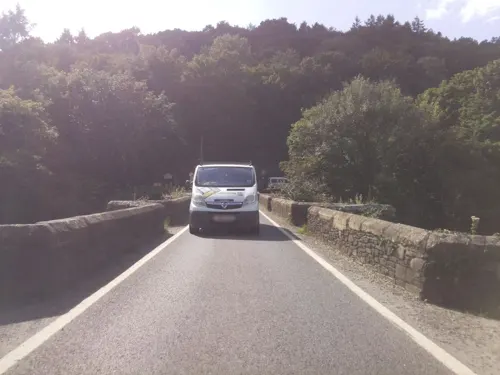
New Bridge
Bridge · 3.3 mi
Grade I listed bridge in Cornwall/Devon, England

The Pimple
Scenic view · 0.8 mi
Triangular building with benches, once providing access to the disused water reservoir below.
Museums and landmarks6


Parks, trails and playgrounds6



Restaurants and cafes36


Stannary Brewing Company & Taproom
Brewery and winery · 0.4 mi
Unit 6, Pixon Trading Centre, Tavistock



Granito Lounge
Restaurant · British, Italian, Brunch
55 Brook Street, Tavistock
Su-Th 09:00-23:00; Fr-Sa 09:00-00:00

24 more on the map.
History
The area around Tavistock (formerly Tavistoke), where the River Tavy runs wide and shallow allowing it to be easily crossed, and near the secure high ground of Dartmoor, was inhabited long before historical records. The surrounding area is full of archaeological remains from the Bronze and Iron Ages.
The abbey of Saint Mary and Saint Rumon was founded in 961 by Ordgar, Earl of Devon. After destruction by Danish raiders in 997 it was restored, and at the time of the Conquest ranked as the wealthiest house in Devon, including the hundred and manor of Tavistock among its possessions. Among its famous abbots was Aldred, who crowned Harold II and William I, and died Archbishop of York.
In 1105 a royal charter was granted by Henry I to the monks of Tavistock to run a weekly "Pannier Market" (so called after the baskets used to carry goods) on a Friday, which still takes place today. In 1116 a three-day fair was also granted to mark the feast of Saint Rumon, another tradition that is still maintained in the shape of the annual "Goosey" fair on the second Wednesday in October.
Read more of the history
By 1185 Tavistock had achieved borough status, and in 1295 it became a parliamentary borough, sending two members to parliament. The abbey church was rebuilt in 1285. In 1305, with the growing importance of the area as one of Europe's richest sources of tin, Tavistock was one of the four stannary towns appointed by charter of Edward I, where tin was stamped and weighed and monthly courts were held for the regulation of mining affairs.
The St Eustachius' Church (named after the Roman centurion who became a Christian) was dedicated by Bishop Stapledon in 1318 though there are very few remains of that building today. It was rebuilt and enlarged into its current form between 1350 and 1450, at which time the Clothworkers' Aisle (an outer south aisle) was included, an indication of the growing importance of the textile industry to the local economy—the trade was protected by a 1467 statute. The whole is in the Perpendicular style and consists of a nave and chancel; both with two aisles, tower and outer south aisle.
It possesses a lofty tower supported on four open arches, one of which was reputedly added to accommodate the 19th-century "tinners" or tin miners. Within are monuments to the Glanville and Bourchier families, besides some fine stained glass, one window being the work of William Morris and another of Charles Eamer Kempe. It also has a roof boss featuring one of the so-called 'Tinners' Hares', a trio of rabbits/hares joined at and sharing three ears between them. The font is octagonal and dates from the 15th century.
The greater part of the abbey was rebuilt in 1457–1458. The town continued to prosper in the charge of the abbots, acquiring one of England's first printing presses in 1525. Tavistock remained an important centre of both trade and religion until the dissolution of the monasteries—the abbey was demolished in 1539, leaving the ruins still to be seen around the centre of the town. From that time on, the dominant force in the town became the Russell family, Earls and later Dukes of Bedford, who took over much of the land following the Dissolution. In 1552 two fairs on 23 April and 28 November were granted by Edward VI to the Earl of Bedford, then lord of the manor.
In the 17th century great quantities of cloth were sold at the Friday market, and four fairs were held at the feasts of Saint Michael, Epiphany, Saint Mark, and the Decollation of John the Baptist. The charter of Charles II instituted a Tuesday market, and fairs on the Thursday after Whitsunday and at the feast of Saint Swithin.
Tavistock is tied from late medieval times with the Russells, the family name of the Earls of Bedford and since 1694, the Dukes of Bedford. This is clearly seen from the history of the town. The second title of the Duke of Bedford is the Marquess of Tavistock, taken as the courtesy title of the eldest son and heir to the dukedom, it illustrates the importance of this Devon town, its hinterland and the minerals beneath it to the family's fortunes. It is believed that the Russell family retains considerable interests in the locality. Most recently, Robin, the short-lived 14th Duke, as Marquess of Tavistock, was a frequent visitor to the town along with his wife, Henrietta. Andrew Russell is the 15th Duke of Bedford and Marquess of Tavistock.
It is this Russell family connection through the Bedford Estates which gives the name by ownership to Russell Square and Tavistock Square in London, famously home to the Tavistock Clinic, and the bus-bombing of 7 July 2005.
Around 1540 (some sources state 1542 as the exact year), Sir Francis Drake was born at Crowndale Farm, just to the west of what is now Tavistock College. A Blue Plaque is mounted on the current farmhouse, behind which Drake is believed to have been born, the original farmhouse having been dismantled and the stone transported for use in Lew Trenchard. He became a prominent figure of his age, a champion of Queen Elizabeth, the first Englishman to circumnavigate the world from 1577 to 1580 and one of the English commanders in the victory against the Spanish Armada in 1588.
The famous statue of Drake on Plymouth Hoe is a copy of that on a roundabout on the A386 at the western end of the town, with panels not replicated on the Hoe copy. Drake later made his home at Buckland Abbey, about eight miles (13 km) away towards Plymouth, jointly owned/run by Plymouth City Council and the National Trust, and now a museum to Drake.
Mines of copper, manganese, lead, silver and tin were previously in the neighbourhood and the town played host to a considerable trade of cattle and corn, and industries in brewing and iron-founding.
By the 17th century, tin mining was on the wane and the town relied more heavily on the cloth trade. Under the stewardship of the Russells the town remained prosperous, surviving the Black Death in 1625 (though 52 townspeople died).
From the History section of Tavistock on Wikipedia, under CC BY-SA 4.0.
More about Tavistock
Geography
Tavistock lies on the edge of Dartmoor, around 24 kilometres (14.9 mi) north of Plymouth on the A386, with a population of 11,018. The town is centred on the paved amenity of Bedford Square, around which are found St. Eustachius' Church and the abbey ruins, to the west, the Grade II listed town hall, the disused former Guildhall/magistrates' court buildings, and Pannier Market buildings behind the town hall. Abbey Bridge crosses the River Tavy to the south, while West Street and Duke Street, on either side of the north end of the square, form the main shopping areas, with the indoor [Pannier] market running behind Duke Street.
Plymouth Road, the A386 heading west from the centre of the square, is home to much of the town's tourist trade, with many hotels and bed and breakfast establishments, as well as the town's bus station. Between Plymouth Road and the Tavy is the park, known locally as the Meadows, along with car parks, the Wharf theatre, cinema and culture centre, and a public recreation pool. West of the Meadows are found the substantial playing fields and buildings of Tavistock College, reached by an underpass below the A386. Further south along the Plymouth Road/A386 lie industrial estates, supermarkets and other large retail outlets. To the north and east of town lies Whitchurch Down, where Dartmoor begins immediately.
Arts and culture
Tavistock's coat of arms is blazoned "Per pale, gules and azure, a fleece banded; a chief, dexter a lion passant gardant, sinister a fleur-de-lys, all or". The earliest record of these arms is in 1684. The fleece refers to the wool trade and the fleur-de-lys probably to Our Lady, joint patron of Tavistock Abbey. The town's motto is "Crescit sub pondere virtus", meaning "virtue flourishes under a burden".
Bigbury Mint Ltd, medal makers based near Plymouth in Devon, produce a semi-reproduction of the Tavistock Penny Token which is distinguished from the original by the Bigbury Mint mark stamped on both sides of the coin. There is an example of the original coin held in the Science Museum Collection. The Bigbury Mint reproduction coin is struck in copper as a celebration of the proud mining history of the town, the obverse of the coin features the Tavistock fleur-de-lys and the reverse of the coin has a carving of the mine, along with the words "Devon Mines, 1811".
Education
Most secondary education is provided by Tavistock College- a state-funded specialist Language College with approximately 2,000 pupils, drawn from a catchment area of about 20 km (12 mi) radius. The college has links with Japan, Uganda, Spain and India where staff exchanges and student visits and projects take place.
Some children who pass the optional Eleven-Plus exam at a high level travel to one of the three remaining grammar schools in Plymouth. Others who leave school at 16 attend the City College C of F E there. Tavistock has a choice of primary schools: Church of England St Peter's and also St Rumon's, together with Devon County Council's Tavistock Community Primary and Whitchurch Primary.
Mount Kelly School is the independent school in Tavistock. It has two main sites, the college which is situated on Parkwood Road and the Preparatory School which is situated on Mount Tavy Road. The school has 570 pupils between the ages of 3 and 18. Mount Kelly was formed in 2014 after two independent schools, Kelly College and Mount House School merged.
From the Wikipedia article Tavistock, under CC BY-SA 4.0.
Notable people from Tavistock
 Francis DrakeEnglish sailor and privateer (c. 1540 – 1596)Photo: Marcus Gheeraerts the Younger, Public domain
 David McKeeBritish children's book author and illustrator (1935–2022)Photo: Thesupermat, CC BY-SA 3.0
 Andy HicksEnglish snooker playerPhoto: Benutzer:Bill da Flute, CC BY-SA 3.0
 John SurmanBritish saxophonist and clarinetistPhoto: bagoum, CC BY-SA 2.0
 James WithycombeGovernor of Oregon (1854-1919)Photo: The original uploader was Richard..., Public domain
 John MaynardEnglish lawyer and politician; (1604-1690)Photo: Unknown author, Public domain
- Pete QuaifeEnglish musician, artist and author
- William BrowneEnglish poet (1590–1645)
- Angela MudgeSkyrunner
- Ada HitchinsEnglish nuclear research assistant
- William Weekes FowlerEnglish entomologist
- Jack HillmanEnglish footballer (1871-1955)
Born in Tavistock, according to Wikidata (CC0). Each name links to its Wikipedia article.
Where to stay3
Churches and places of worship9
Tavistock United Reformed Church
Church · United Reformed
Russell Street, Tavistock
Shopping20
Gas and EV charging1
Schools, colleges and libraries8
Healthcare2
Map of Tavistock
93 places. The map loads OpenStreetMap tiles when you open it.
Getting there and nearby towns
Exeter Airport (EXT) is the nearest airport with scheduled flights listed in OpenStreetMap, 34 miles away.
- Lamerton 3 mi northwest, about 4 min by car
- Horrabridge 3 mi southeast, about 6 min by car
- Gunnislake 3 mi southwest, about 6 min by car
- Mary Tavy 3 mi north, about 5 min by car
- Buckland Monachorum 4 mi south, about 6 min by car
- Plymouth 12 mi south, about 20 min by car
- Teignmouth 28 mi east, about 46 min by car
- Exeter 30 mi northeast, about 48 min by car
- Tiverton 38 mi northeast, about 1 h by car
- Truro 45 mi southwest, about 1 h 15 min by car
Drive times are estimates from straight-line distance, not routes.
Towns near Tavistock


Keep exploring
Local news
Headlines from INDB.
Reviews, tips and questions
Loading what members have shared...
Sources and licences
- GeoNames (CC BY 4.0): population, coordinates, regions and time zone
- Mapillary (see each image): photos
- OpenStreetMap contributors (ODbL 1.0): places, airports, map data
- Wikidata (CC0 1.0): elevation, founding date, time zone, website, landmarks and historic places
- Wikimedia Commons (see each image): photos
- Wikipedia (CC BY-SA 4.0): overview and history text
Photo credits
- Tavistock town centre, Ron Strutt, CC BY-SA 2.0
- Tavistock - panoramio (1), JCNazza, CC BY 3.0
- Tavistock - panoramio (4), JCNazza, CC BY 3.0
- Tavistock War Memorial, Devon, The wub, CC BY-SA 4.0
- Tavistock - panoramio, JCNazza, CC BY 3.0
- Tavistock - panoramio (2), JCNazza, CC BY 3.0
- Ice-cream van, Bedford Square, Tavistock, Devon - May 2025, Mutney, CC BY 4.0
- St Eustachius' Church, Tavistock, Andrewrabbott, CC BY-SA 4.0
- Tavistock (2023-07-02) 021, Simon Cobb, CC0
- Tavistock (2023-07-03) 180, Simon Cobb, CC0
- Tavistock (2023-07-02) 033, Simon Cobb, CC0
- Tavistock (2023-07-02) 074, Simon Cobb, CC0
- Tavistock (2023-07-02) 099, Simon Cobb, CC0
- DrakeStatueTavistock, Lobsterthermidor at en.wikipedia, CC0
- Tavistock (2023-07-03) 145, Simon Cobb, CC0
- Tavistock (2023-07-02) 076, Simon Cobb, CC0
- Tavistock (2023-07-03) 138, Simon Cobb, CC0
- Tavistock (2023-07-02) 009, Simon Cobb, CC0
- Street-level photo, WaggyDog, CC BY-SA 4.0
- Street-level photo, WaggyDog, CC BY-SA 4.0
- Street-level photo, WaggyDog, CC BY-SA 4.0
- Street-level photo, southglos, CC BY-SA 4.0
- Street-level photo, unicorn101, CC BY-SA 4.0
- Street-level photo, WaggyDog, CC BY-SA 4.0
- Street-level photo, WaggyDog, CC BY-SA 4.0
- Street-level photo, WaggyDog, CC BY-SA 4.0
- Street-level photo, WaggyDog, CC BY-SA 4.0
- Street-level photo, WaggyDog, CC BY-SA 4.0
- Street-level photo, WaggyDog, CC BY-SA 4.0
- Street-level photo, WaggyDog, CC BY-SA 4.0
- Street-level photo, WaggyDog, CC BY-SA 4.0
- Street-level photo, WaggyDog, CC BY-SA 4.0
- Street-level photo, mrgoldencarratt, CC BY-SA 4.0
- Street-level photo, WaggyDog, CC BY-SA 4.0
- Street-level photo, WaggyDog, CC BY-SA 4.0
- Street-level photo, WaggyDog, CC BY-SA 4.0
- Street-level photo, WaggyDog, CC BY-SA 4.0
- Street-level photo, WaggyDog, CC BY-SA 4.0


Page built November 10, 2026. Spotted a mistake? Tell us or suggest a place.