


Hinckley, United Kingdom
Hinckley is a town of 50,712 people in England, United Kingdom.
Why visit Hinckley
Townapedia lists 6 museums and landmarks, 16 parks and trails, 105 places to eat, 5 places to stay and 2 attractions in and around town.
Highlights include Concordia Theatre, Cineworld, Nuneaton Museum and Art Gallery and War Memorial.
Weather in Hinckley
Forecast from MET Norway (CC BY 4.0). Full forecast
About Hinckley
Hinckley is a market town in south-west Leicestershire, England, administered by Hinckley and Bosworth Borough Council. Hinckley is the third largest settlement in Leicestershire, after Leicester and Loughborough, and is about halfway between Leicester and Coventry, close to Nuneaton and Watling Street, on the border with Warwickshire. The town is part of an urban area with the large village of Burbage to the south.
From the Wikipedia article Hinckley (this version), under CC BY-SA 4.0.
Travel tips from other travellers: Hinckley on Wikivoyage (CC BY-SA 4.0).
Photos of Hinckley


Things to do2

Museums and landmarks6

Nuneaton Museum and Art Gallery
Museum · 4.0 mi
Museum and gallery in Riversley Park, Nuneaton, England, United Kingdom



Parks, trails and playgrounds16




4 more on the map.
Restaurants and cafes105
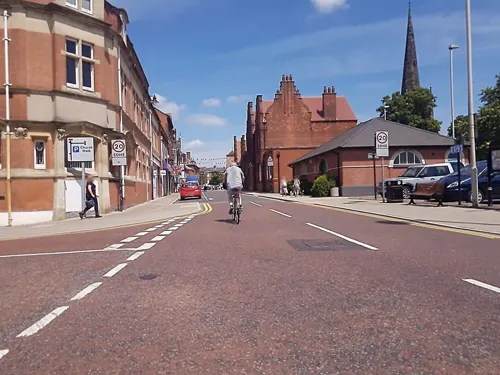
Bikaneri Bar & Restaurant
Restaurant · Indian
1 Lancaster Road, Hinckley
Tu-Th 15:00-22:00; Fr 15:00-23:00; Sa 14:00-23:00; Su 14:00-21:00
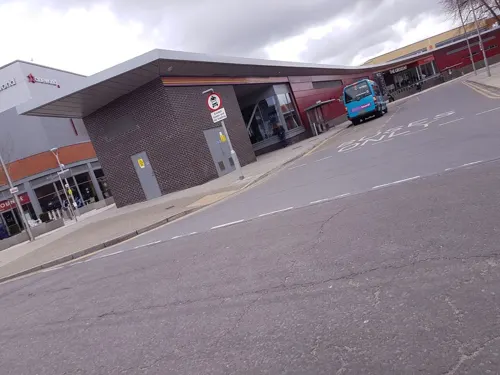
Coffee#1
Cafe · Coffee Shop
6 The Crescent, Hinckley
Mo-Fr 08:00-17:30; Sa 08:00-18:00; Su 08:30-16:30
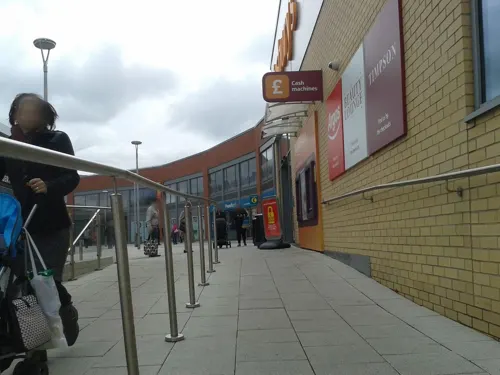
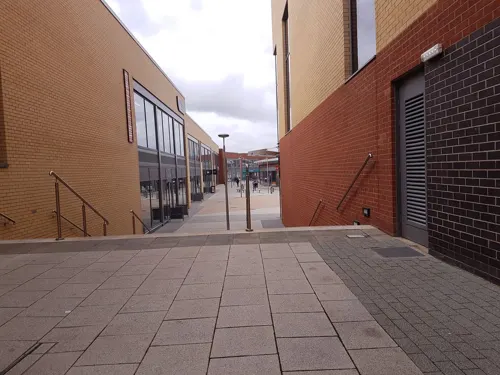
Wildwood
Restaurant · Grill, Pasta, Pizza
3-4 The Crescent, Hinckley
Mo-Th,Su 11:30-21:00; Fr-Sa 11:30-22:00
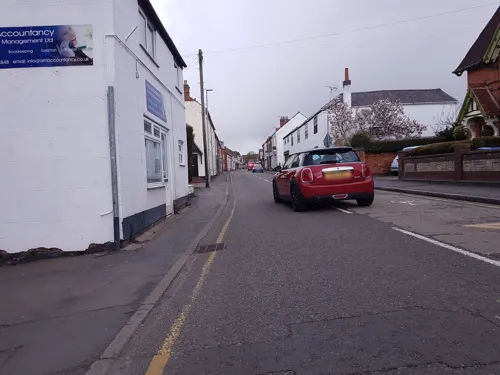

Three Pots Pantry and Cafe
Cafe · 1.3 mi
98 Wolvey Road, Hinckley
Mo-Fr 07:30-14:30; Sa 07:30-14:00; Su 08:00-12:30

93 more on the map.
History
In 2000, archaeologists from Northampton Archaeology discovered evidence of Iron Age and Romano-British settlement on land near Coventry Road and Watling Street.
Hinckley has a recorded history going back to Anglo-Saxon times; the name Hinckley is Anglo-Saxon: "Hinck" is a personal name and "ley" is a clearing in a wood. By the time of the Domesday Book in 1086, Hinckley was quite a large village, and it grew over the following 200 years into a small market town—a market was first recorded there in 1311. There is evidence of an Anglo-Saxon church—the remnants of an Anglo-Saxon sundial being visible on the diagonal buttress on the south-east corner of the chancel.
Hinckley is around four miles (six kilometres) south of what is believed to be the location of the Battle of Bosworth, the last significant battle of the Wars of the Roses, which occurred in 1485, and resulted in Henry Tudor's forces defeating those of King Richard III.
Read more of the history
In the 17th century, the town developed a hosiery industry, producing stockings and similar items. Hinckley played a prominent part in the English Civil War. Its proximity to several rival strongholds—the royalist garrisons at Caldicote, Ashby de la Zouch and Leicester, and those of the Parliamentarians at Tamworth and Coventry—and the presence of parties of troops or brigands occupying several fortified houses in nearby Warwickshire, led to frequent visits by the warring parties. The local townsfolk were forced to decide whether to declare their allegiances openly or attempt to remain neutral—with the risk of having to pay levies, ransoms, and fines to both sides.
In March 1644, Hinckley was occupied by a group of Royalist troops, though they were soon driven out by a force of Parliamentarians, who took many prisoners.
The Civil War years were a particularly unsettled time for the clergy in and around Hinckley. Parsons with parliamentary leanings like Thomas Cleveland, the vicar of Hinckley, suffered sequestration by the Leicester County Committee, like some of his "malignant" neighbours accused of visiting royalist garrisons or preaching against Parliament.
The town was visited by both parliamentary and royalist troops from the rival garrisons, particularly parliamentary troops from Tamworth, Coventry and Astley Castle in Warwickshire. Troops from Coventry garrison were particularly active in the town, taking horses and "free quarter" and availing themselves of 'dyett and Beere', and taking some of the inhabitants hostage for ransom. Royalist troops raided the town to threaten those with parliamentary sympathies. The notorious Lord Hastings of Ashby de la Zouch is recorded to have "coursed about the country as far as Dunton and Lutterworth and took near upon a hundred of the clergymen and others, and carried them prisoners … threatening to hang all them that should take the Parliament's Covenant".
Parliamentary newssheets record that on the night of 4 March 1644, Hastings's men brought in "26 honest countrymen from several towns" intending to take them to Ashby de la Zouch, along with a huge herd of cattle, oxen and horses from the country people and a minister named Warner. These prisoners were herded into Hinckley church and asked "in a jeering manner, 'Where are the Round-heads your brethren at Leicester? Why come they not to redeem you?'"
The Parliamentarians responded in a memorable "Skirmish or Great Victory for Parliament". Colonel Grey with 120 foot-soldiers and 30 troopers from Bagworth House rushed to Hinckley and retook the town, routed the Royalists, rescued the cattle and released their imprisoned countrymen. No doubt the inhabitants of the town were as relieved as any when Ashby finally surrendered, as Vicars records, "a great mercy and mighty preservation of the peace and tranquility of all those adjacent parts about it."
At the time of the first national census in 1801, Hinckley had a population of 5,158: twenty years later it had increased by about a thousand. The largest industry in the early 19th century was the making of hosiery and only Leicester had a larger output of stockings. In the district, it was estimated around 1830 that 6,000 persons were employed in this work.
Between 1816 and 1822, Ada Byron, the only legitimate daughter of the poet, Lord Byron, lived at Kirby House, Kirkby Mallory six miles (ten kilometres) from Hinckley. She was cared for by her grandmother, while running their midland estates and necessitating frequent visits to the bank in Hinckley. Ada would go with her, and it is recorded, Ada "loved Hinckley". If she misbehaved, her grandmother would leave her at home. Ada was christened at Kirkby Mallory Parish Church and a significant memorial stands in the churchyard to her. Hinckley is recognised as Ada's childhood home town. She was known latterly as Ada Lovelace and when working with Charles Babbage, she foresaw computerisation, writing the first computer programme.
Joseph Hansom built the first Hansom cab in Hinckley in 1835.
In 1899 a cottage hospital was built to celebrate the Diamond Jubilee of Queen Victoria two years earlier. Money was raised by the local townspeople and factory owners, notably John and Thomas Atkins who also had a hand in building many of the key buildings of Hinckley. The cornerstone was laid by Sir John Fowke Lancelot Rolleston.
This hospital was central to the people of Hinckley and supported by local workers who donated one penny a week for its upkeep until it was adopted by the NHS in 1948. Over the years it expanded to align with the town. The hospital now appears dilapidated in some areas and is threatened with closure, sale and demolition by West Leicestershire Clinical Commissioning Group and NHS Properties Ltd.
On 16 May 1941 eleven people were killed, which was the worst attack in the county, outside Leicester. Nearby Nuneaton was heavily bombed that night. In Merevale Avenue, four men, six women and one child were killed. Numbers 5 and 7 had a direct hit.
From the History section of Hinckley on Wikipedia, under CC BY-SA 4.0.
More about Hinckley
Geography
Hinckley's suburban districts include Hollycroft, Middlefield, Stoneygate, Wykin, Forest View, West Hinckley, Saxon Paddock and Druid Quarter. The suburbs of Burbage, Sketchley and Lash Hill are separated from the rest of Hinckley by the railway line.
Arts and culture
Simon de Montfort's banner, described as the 'Arms of Honour of Hinckley', per pale indented argent and gules, is shown in stained glass in Chartres Cathedral, and is used in Hinckley's coat of arms, local sports teams and other organisations. Combined with Montfort's personal coat of arms, it forms part of the club crest for the town's football club Hinckley A.F.C.
Concordia Theatre, of 400 seats and regular productions, is near the centre of the town in Stockwell Head. The local council holds an annual 'Proms in The Park' event.
French organist and composer Louis Vierne gave a recital and stayed one night in Hinckley while on a tour of England, and later wrote a carillon piece for organ called "The Bells of Hinckley", inspired by a carillon of bells he heard there. It is the last movement of his fourth suite of Vingt-quatre pièces de fantaisie.
The town is mentioned in Shakespeare's Henry IV, Part 2 (Act 5, Scene 1):
Davy: Now, sir, a new link to the bucket must need be had: and, sir, do you mean to stop any of William's wages, about the sack he lost the other day at Hinckley fair?
Hinckley is mentioned in the Monty Python sketch "Olympic Hide and Seek Final" as the home town of one of the competitors.
Education
The main primary schools in the area are Battling Brook CP, Richmond, Hinckley Parks, St. Peter's Catholic, St. Mary's Church of England, Westfield Infant and Junior Schools, Burbage Infant and Junior Schools and Sketchley Hill Primary School (in Burbage). The high (secondary) schools include Redmoor, St Martin's Catholic Academy (in Stoke Golding), Hastings (in Burbage) and The Hinckley School. The Hinckley School also operates a sixth form. North Warwickshire & Hinckley College, a Further Education college, is also in the town. The only other major college in the area is Heath Lane Academy (Earl Shilton). The closest universities are the University of Leicester, Leicester De Montfort University and Coventry University, all approximately 12 miles (19 kilometres) from central Hinckley. There are also many pre-schools (nurseries) such as St Peters Pre school little explorers, St Bernards, Flutterbies Hinckley, Smiles PreSchool, etc. Within Hinckley there is also Dorothy Goodman Special School that caters for both juniors and seniors with disabilities, with units integrated within other local schools, most notably the Fusion Academy in neighbouring Barwell.
From the Wikipedia article Hinckley, under CC BY-SA 4.0.
Notable people from Hinckley
 Geoffrey Richardson (musician)British musicianPhoto: Copyright holder: Geoffrey Richardson, CC BY-SA 3.0
 Andy LeeEnglish and later Hong Kong snooker playerPhoto: Benutzer:Bill da Flute, CC BY-SA 3.0
 Robert James LeesBritish spiritualist, medium, preacher, writer and healer (1849-1931)Photo: Fisher & Potter, Leicester, Public domain
- Davey GrahamBritish guitarist (1940–2008)
- Charlotte Mary BrameBritish novelist (1836-1884)
- Lesley McNaughtSwiss equestrian (1964–2023)
- Alan TaylorEnglish footballer (born 1953)
- Richard Hillfootballer and manager (born 1963)
- Nat LanghamBritish boxer (1820–1871)
- William Ewart PrattEnglish cricketer (1895-1974)
- Martine CroxallBritish journalist and news presenter
- Barry EvansEnglish rugby union player
Born in Hinckley, according to Wikidata (CC0). Each name links to its Wikipedia article.
Where to stay5
Leonardo Hotel and Conference Venue Hinckley Island
Motel and hotel · 2.0 mi
Watling Street, Hinckley
Churches and places of worship24
Shopping19
Gas and EV charging8
Schools, colleges and libraries22
Healthcare4
Map of Hinckley
211 places. The map loads OpenStreetMap tiles when you open it.
Getting there and nearby towns
Birmingham Airport (BHX) is the nearest airport with scheduled flights listed in OpenStreetMap, 17 miles away.
- Nuneaton 4 mi west, about 6 min by car
- Earl Shilton 4 mi northeast, about 6 min by car
- Bedworth 6 mi southwest, about 9 min by car
- Hartshill 6 mi west, about 10 min by car
- Atherstone 8 mi west, about 12 min by car
- Leicester Forest East 9 mi northeast, about 14 min by car
- Glen Parva 9 mi east, about 15 min by car
- Braunstone 10 mi northeast, about 16 min by car
- Coventry 11 mi southwest, about 17 min by car
- Leicester 12 mi northeast, about 20 min by car
Drive times are estimates from straight-line distance, not routes.
Towns near Hinckley


Keep exploring
Local news
Headlines from INDB.
Reviews, tips and questions
Loading what members have shared...
Sources and licences
- GeoNames (CC BY 4.0): population, coordinates, regions and time zone
- Mapillary (see each image): photos
- OpenStreetMap contributors (ODbL 1.0): places, airports, map data
- Wikidata (CC0 1.0): elevation, founding date, time zone, website, landmarks and historic places
- Wikimedia Commons (see each image): photos
- Wikipedia (CC BY-SA 4.0): overview and history text
Photo credits
- Hinckley Town Centre, Crazeman, CC BY-SA 3.0
- Centrebus J126DUV Hinckley, Ed Webster, CC BY 2.0
- Sun above Hinckley August 3 2021, Rubbish computer, CC BY-SA 4.0
- Nuneaton Museum and Art Gallery Riversley Park, © Copyright Stephen Pointer and licensed for reuse under this Creative Commons Licence., CC BY-SA 2.0
- Aston Flamville church, Oosoom, CC BY-SA 3.0
- Our Lady of the Angels Catholic Church, Nuneaton, JThomas, 5313233, JThomas, CC BY-SA 2.0
- St Mary's Church, Barwell, Leicestershire 01, Michael Patterson, CC BY-SA 2.0
- Hinckley United Mainstand, DJhinckley at English Wikipedia, CC BY-SA 3.0
- Burbage, St Catherine, Poliphilo, CC0
- Hinckley war Memorial view 1, Oaktree, CC BY-SA 3.0
- St Marys church, St Mary's Church Hinckley, CC BY-SA 4.0
- Nuneaton, Riversley Park (1) 6.19, G-13114, CC BY-SA 4.0
- Bus img 0022 (16309965935), Ed Webster, CC BY 2.0
- Centrebus Leyland Olympian (16284035756), Ed Webster, CC BY 2.0
- Hollycroft Park Hinckley 25 November 2021 02, Rubbish computer, CC BY-SA 4.0
- Street-level photo, cyclestreets, CC BY-SA 4.0
- Street-level photo, cyclestreets, CC BY-SA 4.0
- Street-level photo, cyclestreets, CC BY-SA 4.0
- Street-level photo, cyclestreets, CC BY-SA 4.0
- Street-level photo, cyclestreets, CC BY-SA 4.0
- Street-level photo, cyclestreets, CC BY-SA 4.0
- Street-level photo, cyclestreets, CC BY-SA 4.0
- Street-level photo, cyclestreets, CC BY-SA 4.0
- Street-level photo, southglos, CC BY-SA 4.0
- Street-level photo, cyclestreets, CC BY-SA 4.0
- Street-level photo, cyclestreets, CC BY-SA 4.0
- Street-level photo, cyclestreets, CC BY-SA 4.0
- Street-level photo, cyclestreets, CC BY-SA 4.0
- Street-level photo, southglos, CC BY-SA 4.0
- Street-level photo, cyclestreets, CC BY-SA 4.0
- Street-level photo, cyclestreets, CC BY-SA 4.0
- Street-level photo, cyclestreets, CC BY-SA 4.0
- Street-level photo, cyclestreets, CC BY-SA 4.0
- Street-level photo, cyclestreets, CC BY-SA 4.0
- Street-level photo, cyclestreets, CC BY-SA 4.0
- Street-level photo, cyclestreets, CC BY-SA 4.0
- Street-level photo, darrenosm, CC BY-SA 4.0
- Street-level photo, southglos, CC BY-SA 4.0
- Street-level photo, southglos, CC BY-SA 4.0
- Street-level photo, cyclestreets, CC BY-SA 4.0
- Street-level photo, cyclestreets, CC BY-SA 4.0
- Street-level photo, cyclestreets, CC BY-SA 4.0
- Street-level photo, darrenosm, CC BY-SA 4.0


Page built November 10, 2026. Spotted a mistake? Tell us or suggest a place.