
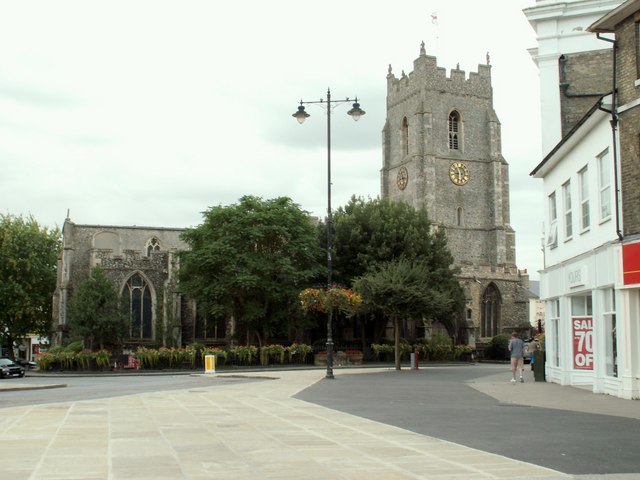


Why visit Sudbury
Townapedia lists 12 museums and landmarks, 11 parks and trails, 75 places to eat, 3 places to stay and 5 attractions in and around town.
Highlights include Quay Theatre, Gainsborough's House, Melford Hall and Sudbury Common Lands.
Weather in Sudbury
Forecast from MET Norway (CC BY 4.0). Full forecast
About Sudbury
Sudbury (, locally ) is a market town and civil parish in the south west of Suffolk, England, on the River Stour near the Essex border, 60 miles (97 km) north-east of London. It is the largest town in the Babergh local government district and part of the South Suffolk constituency. In 2021, the built-up area had a population of 23,912 and the parish had a population of 13,619.
From the Wikipedia article Sudbury, Suffolk (this version), under CC BY-SA 4.0.
Travel tips from other travellers: Sudbury on Wikivoyage (CC BY-SA 4.0).
Things to do5



Museums and landmarks12

Gainsborough's House
Museum
Museum in Sudbury, United Kingdom, birthplace of the leading English painter Thomas Gainsborough
46 Gainsborough Street, Sudbury

Melford Hall
Monument and historic site · 3.0 mi
Grade I listed house in Long Melford, Suffolk, England, UK


Parks, trails and playgrounds11

Sudbury Common Lands
Park · 0.5 mi
Local nature reserve in Suffolk, England



Restaurants and cafes75
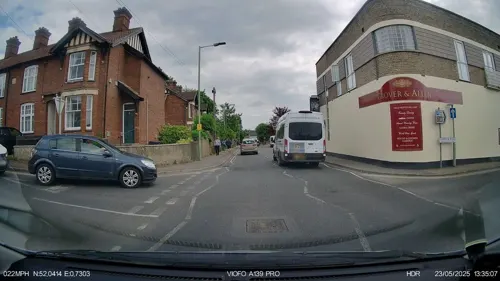
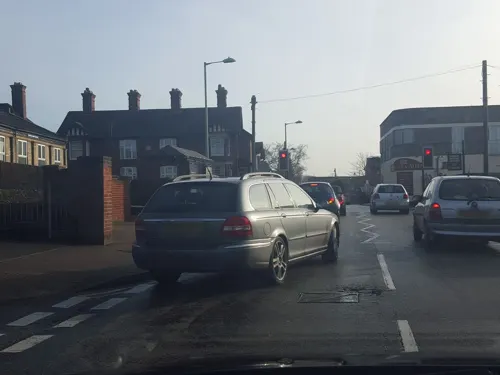
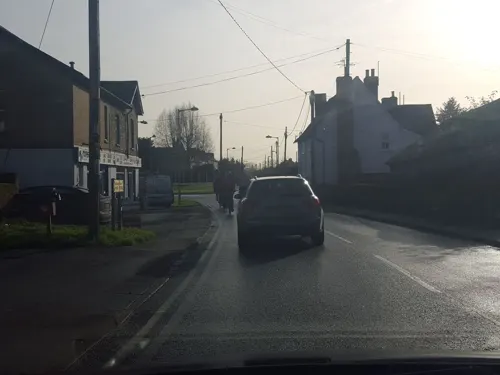
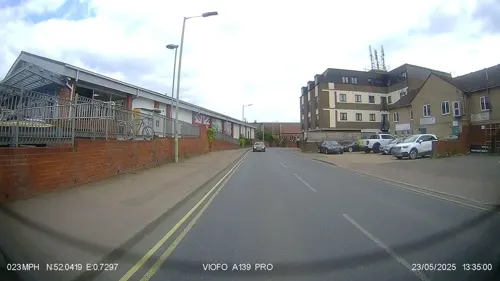
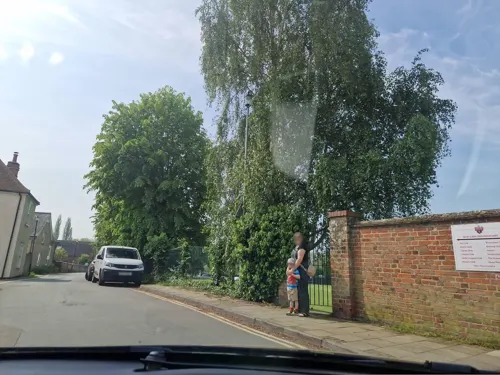


63 more on the map.
History
Sudbury's history dates back into the age of the Saxons. The town's earliest mention is in circa 799, when Ælfhun, Bishop of Dunwich, died in the town. The Anglo-Saxon Chronicle records the town as Suðberie ("south-borough"), presumed to distinguish it from Norwich or Bury St Edmunds, to the north, and c. 995 is recorded as Suðbyrig. The town is also mentioned in the Domesday Book of 1086, as a market town where the local people came to barter their goods. The market was established in 1009. During this period the town was surrounded by a defensive ditch and a diverted section of the River Stour.
The Church of All Saints was established in the 12th century before being bought by Adam the Monk, who then passed the church and its lands to the Abbey of St Albans. St Bartholemew's Benedictine Priory and the Chapel of Holy Sepulchre were also established in the 12th century.
A community of Dominicans established Sudbury Priory in the mid-13th century and gradually extended the size of their priory, which was one of three Dominican priories in the county of Suffolk. A leper hospital was founded on the outskirts of the town in 1272.
Read more of the history
Sudbury was one of the first towns in which Edward III settled the Flemings, allowing the weaving and silk industries to prosper for centuries during the Late Middle Ages. As the main town in the area, Sudbury prospered too, and many great houses and churches were built, giving the town a major historical legacy. The Woolsack in the House of Lords was originally stuffed with wool from the Sudbury area, a sign of both the importance of the wool industry and of the wealth of the donors.
One citizen of Sudbury, Archbishop Simon Sudbury showed that not even the Tower of London guarantees safety. On 14 June 1381, guards opened the Tower's doors and allowed a party of rebellious peasants to enter. Sudbury, who had introduced an unpopular poll tax, was dragged to Tower Hill and beheaded. His body was afterwards buried in Canterbury Cathedral, but his skull is kept in St Gregory's Church, one of the three medieval churches in Sudbury. Simon's concerns for his native town are reflected in the founding of St Leonard's Hospital in 1372, a place of respite, towards Long Melford, for lepers. For the College of St Gregory, which he founded in 1375 to support eight priests, he used his father's former house and an adjoining plot.
From the 16th to 18th century. the weaving industry was less consistently profitable and Sudbury experienced periods of varying prosperity. By means of the borough court, the mayor and corporation directed the affairs of the town. They built a house of correction (1624) for 'rogues, vagabonds and sturdy beggars' and tried to finance the reconstruction of Ballingdon Bridge, which disappeared during a storm on 4 September 1594. Among theatrical companies that they paid to visit Sudbury were Lord Strange's Men (1592) and the King's Men (1610). Minor infringements, such as not attending church, were punished by fines; for worse offenders there was a stocks or a whipping. During the Civil War, a 12-strong band of watchmen was created to prevent the town's enemies, presumed to be Royalists, burning it down.
Sudbury and the surrounding area, like much of East Anglia, was a hotbed of Puritan sentiment during much of the 17th century. Sudbury was among the towns called "notorious wasps' nests of dissent." During the 1630s, many families departed for the Massachusetts Bay Colony as part of the wave of emigration that occurred during the Great Migration.
In 1706, the River Stour Navigation Act 1705 (4 & 5 Ann. c. 2) was passed in Parliament, and work was undertaken to make the river navigable all the way from Manningtree.
By the 18th century, the fees charged to become a freeman, with voting rights, were exorbitant and the borough of Sudbury, along with 177 other English towns, was reformed by the Municipal Corporations Act 1835.
During the 18th century, Sudbury became famous for its local artists. John Constable painted in the area, especially the River Stour. Painter Thomas Gainsborough was born in Sudbury in 1727, and was educated at Sudbury Grammar School. His birthplace, now named Gainsborough's House, is a museum to his work and is open to the public. It houses many valuable pictures and some of his family possessions. A statue of Gainsborough was unveiled in the town centre outside St Peter's Church on Market Hill in 1913.
The Reform Act 1832 (2 & 3 Will. 4. c. 45) saw the villages of Ballingdon and Brundon appended to the town. In the 1841 general election Sudbury became the first place in the UK to elect a member of an ethnic minority to parliament, with David Ochterlony Dyce Sombre, the son of an Indian queen, winning the seat. However, he was not allowed to take his place in parliament as he was subsequently declared insane.
From 1836-1889 Sudbury had its own police force. Sudbury was one of the six Suffolk boroughs required by the Municipal Corporations Act 1835 to form a police force, as the old parish constable system was considered ineffective to deal with rising crime and growing public disorder. The Council’s new Watch Committee was put in charge of the force.
A new workhouse was built in 1836 off Walnut Tree Lane, close to St Gregory's church. From 1946, with the foundation of the National Health Service, it became the local cottage hospital.
Sudbury's Catholic Church, Our Lady Immaculate and St. John the Evangelist, was designed by Leonard Stokes and erected in 1893. The shrine of Our Lady of Sudbury sits within its nave.
From the History section of Sudbury, Suffolk on Wikipedia, under CC BY-SA 4.0.
More about Sudbury
Arts and culture
Once a busy and important river port the last industrial building on the riverside in Sudbury has been converted into the town's Quay Theatre. The River Stour Trust, formed in 1968, has its headquarters in Sudbury, and a purpose built visitor centre located at Cornard Lock. The trust operates electric-powered boats from the Granary in Quay Lane, to Great Henny, a few miles downstream. Each September, the 24 mi (39 km) stretch of the River Stour hosts hundreds of canoe and small boat enthusiasts in a weekend event called Sudbury to the Sea, which finishes at Cattawade.
St Peter's Church, Sudbury a former church crowning the top of the Market Hill in the centre of Sudbury is now used as a cultural venue for live music and other performances, art exhibitions, and markets. St Peter's is currently in the delivery phase of a major regeneration project to conserve and refurbish the building, led by The Churches Conservation Trust.
Valley Walk cycle route and footpath, starts at the Sudbury water meadows and continues along the disused railway track, finishing close to Long Melford Country Park, and then connects to Melford Walk.
Commencing in 2006 the town has hosted the charity fundraising pop music festival, Leestock.
From the Wikipedia article Sudbury, Suffolk, under CC BY-SA 4.0.
Notable people from Sudbury
 Thomas GainsboroughEnglish portrait and landscape painter (1727-1788)Photo: Thomas Gainsborough, Public domain
 Simon SudburyBishop of London; Archbishop of Canterbury; Lord Chancellor (1317-1381)Photo: Unknown author, Public domain
 Maggi HamblingBritish artist (born 1945)Photo: StOuen, CC BY-SA 3.0
 Anthea BellEnglish translator (1936-2018)Photo: German Embassy London, CC BY 2.0
 John PenroseBritish politician (born 1964)Photo: Richard Townshend, CC BY 3.0
 George Murray HumphryanatomistPhoto: G. Jerrard, CC BY 4.0
 Stuart SlaterEnglish footballer (born 1969)Photo: Egghead06 ( talk ), CC BY-SA 3.0
- Anne Seymour, Duchess of SomersetDuchess of Somerset
- Harry StiffBritish tug of war competitor (1881–1939)
- Harold MattinglyBritish classicist, numismatist, author (1884–1964)
- Olga TufnellBritish archaeologist (1905-1985)
- Arthur George PerkinEnglish chemist and Professor of Colour Chemistry and Dyeing at the University of Leeds
Born in Sudbury, according to Wikidata (CC0). Each name links to its Wikipedia article.
Where to stay3
Churches and places of worship22
Shopping22
Gas and EV charging4
Schools, colleges and libraries13
St Gregory Church of England Voluntary Controlled Primary School
School · Anglican · 0.4 mi
Church Street, Sudbury
Tudor Church of England Primary School, Sudbury
School · Anglican · 0.5 mi
Tudor Road, Sudbury
Healthcare5
Map of Sudbury
172 places. The map loads OpenStreetMap tiles when you open it.
Getting there and nearby towns
RAF Honington (BEQ) is the nearest airport with scheduled flights listed in OpenStreetMap, 21 miles away.
- Colchester 13 mi southeast, about 20 min by car
- Witham 17 mi south, about 27 min by car
- Ipswich 18 mi east, about 29 min by car
- Chelmsford 24 mi southwest, about 38 min by car
- Woodbridge 25 mi east, about 41 min by car
- Thetford 26 mi north, about 42 min by car
- Walton-on-the-Naze 26 mi southeast, about 42 min by car
- Cambridge 28 mi northwest, about 46 min by car
- Wickford 31 mi south, about 50 min by car
- Southend-on-Sea 35 mi south, about 56 min by car
Drive times are estimates from straight-line distance, not routes.
Towns near Sudbury


Keep exploring
Local news
Headlines from INDB.
Reviews, tips and questions
Loading what members have shared...
Sources and licences
- GeoNames (CC BY 4.0): population, coordinates, regions and time zone
- Mapillary (see each image): photos
- OpenStreetMap contributors (ODbL 1.0): places, airports, map data
- Wikidata (CC0 1.0): elevation, founding date, time zone, website, landmarks and historic places
- Wikimedia Commons (see each image): photos
- Wikipedia (CC BY-SA 4.0): overview and history text
Photo credits
- Sudbury - Church of St Peter, Robert Edwards, CC BY-SA 2.0
- Gainsboroughs house Sudbury, Oxyman, CC BY 2.5
- Long Melford - Melford Hall, PAUL FARMER, CC BY-SA 2.0
- Parish church of Borley Essex, Oxyman, CC BY 2.5
- Sudbury - Church of St Gregory, Oxyman, CC BY-SA 2.0
- St. Mary's Church, Chilton, Suffolk - view from northwest, William Henderson, CC BY-SA 3.0
- The Quay and Quay Theatre at Sudbury and River Stour, Suffolk, UK - 52079842457, kitmasterbloke, CC BY 2.0
- Stour Valley Path, Sudbury Common Lands. - panoramio, Maarten Sepp, CC BY-SA 3.0
- Street-level photo, IpswichEdits, CC BY-SA 4.0
- Street-level photo, adam2, CC BY-SA 4.0
- Street-level photo, IpswichEdits, CC BY-SA 4.0
- Street-level photo, smsm1, CC BY-SA 4.0
- Street-level photo, IpswichEdits, CC BY-SA 4.0
- Street-level photo, IpswichEdits, CC BY-SA 4.0
- Street-level photo, IpswichEdits, CC BY-SA 4.0
- Street-level photo, IpswichEdits, CC BY-SA 4.0
- Street-level photo, edloach, CC BY-SA 4.0
- Street-level photo, edloach, CC BY-SA 4.0
- Street-level photo, IpswichEdits, CC BY-SA 4.0
- Street-level photo, edloach, CC BY-SA 4.0
- Street-level photo, IpswichEdits, CC BY-SA 4.0
- Street-level photo, adam2, CC BY-SA 4.0
- Street-level photo, edloach, CC BY-SA 4.0
- Street-level photo, edloach, CC BY-SA 4.0
- Street-level photo, adam2, CC BY-SA 4.0
- Street-level photo, edloach, CC BY-SA 4.0
Page built November 10, 2026. Spotted a mistake? Tell us or suggest a place.