


Why visit Cottbus
Townapedia lists 124 museums and landmarks, 39 parks and trails, 217 places to eat, 18 places to stay and 17 attractions in and around town.
Highlights include Tierpark Cottbus, Staatstheater Cottbus, Kunstmuseum Dieselkraftwerk Cottbus and Stadtmuseum Cottbus.
Weather in Cottbus
Forecast from MET Norway (CC BY 4.0). Full forecast
About Cottbus
Cottbus (German pronunciation: [ˈkɔtbʊs] ) or Chóśebuz (Lower Sorbian pronunciation: [ˈxɨɕɛbus]) is a university city and the second-largest city in the German state of Brandenburg after the state capital, Potsdam. With around 100,000 inhabitants, Cottbus is the most populous city in Lusatia. Cottbus lies in the Sorbian settlement area (Serbski sedleński rum) of Lower Lusatia, and is the second-largest city on the River Spree after Berlin, which is situated around 125 km (78 mi) downstream. The city is located on the shores of Germany's largest artificial lake, the Cottbuser Ostsee (Chóśebuski pódzajtšny jazor).
From the Wikipedia article Cottbus (this version), under CC BY-SA 4.0.
Travel tips from other travellers: Cottbus on Wikivoyage (CC BY-SA 4.0).
Photos of Cottbus


Things to do17

Tierpark Cottbus
Zoo and aquarium · 2.2 km
German zoo
5 Kiekebuscher Straße, Cottbus
Jan-Feb: 09:00-17:00; Mar: 09:00-17:30; Apr: 09:00-18:30; May-Sep:...


Theaterscheune Ströbitz
Cinema and theater · 2.0 km
39 Ströbitzer Hauptstraße, Cottbus
BioLaden Schömmel
Farm and orchard · 0.6 km
Wer viel Wert auf gesunde Ernährung und einen umweltgerechten Alltag legt, ist bei uns genau richtig.
62 Franz-Mehring-Straße, Cottbus
Mo-Fr 08:00-19:00; Sa 08:00-16:00

Piccolo Theater und Puppenbühne Cottbus
Cinema and theater
2 Erich-Kästner-Platz, Cottbus
Mo-Th 10:00-12:00,13:00-17:00; Fr 10:00-12:00
Cottbus State Theatre
Cinema and theater
Theatre and opera house in Cottbus, Brandenburg, Germany

5 more on the map.
Museums and landmarks124


Raumflugplanetarium „Juri Gagarin“
Monument and historic site · 1.1 km
21 Lindenplatz, Cottbus
Mo-Tu 08:00-16:00; We 08:00-16:30; Th 08:00-16:00

Historisches Elektrizitätswerk
Monument and historic site · 0.8 km
Das Elektrizitätswerk wurde 1901 bis 1903 in neugotischer Industriearchitektur errichtet. Es diente mit...
1 Am Spreeufer, Cottbus



112 more on the map.
Parks, trails and playgrounds39


Lagune
Sports field and stadium · 1.5 km
19 Sielower Landstraße, Cottbus
Mo-Fr 09:00-21:00; Sa,Su,PH 10:00-20:00
Wasserspielplatz im Eliaspark, Die Spree - von der Quelle bis zur Mündung
Playground · 1.5 km
May-Sep: Mo-Su 10:00-18:00
27 more on the map.
Restaurants and cafes217
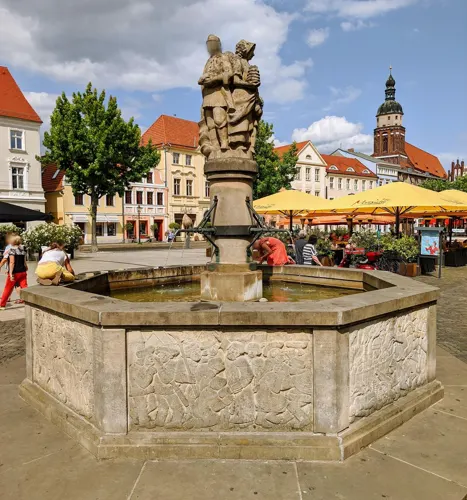
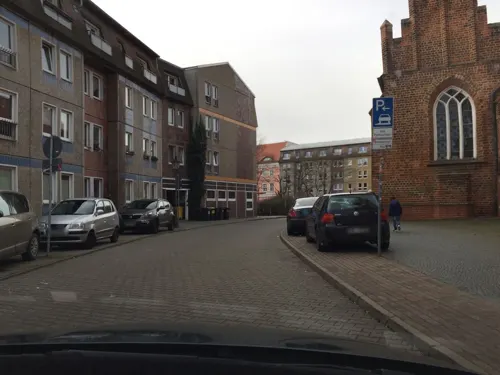
Klosterkeller
Restaurant · Regional · 0.6 km
5 Klosterplatz, Cottbus
Tu-Sa,PH 12:00-15:00,17:00-23:00; Oct-Apr: Su 12:00-15:00
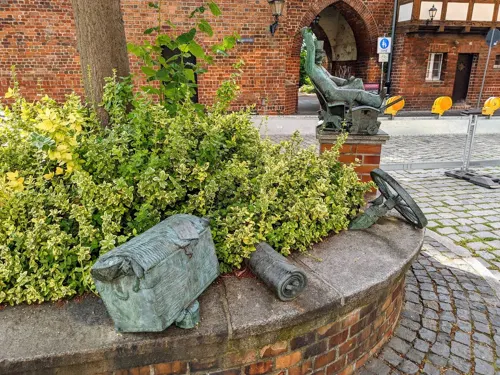
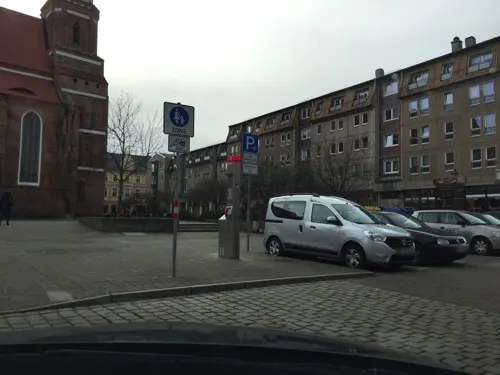
Shiva
Restaurant · Italian, Indian · 0.6 km
5 Oberkirchplatz, Cottbus
Tu-Su,PH 11:00-14:00,17:00-22:00

Bay’s Asianfood & Sushi
Restaurant · Asian, Sushi · 0.6 km
3 Sandower Straße, Cottbus
Mo-Sa 11:00-22:30; Su,PH 12:00-22:30
Mythos- Griechisches Restaurant
Restaurant · Greek · 0.6 km
Mo - Th 17:00 - 00:00; Fr - Su 11:30 - 14:30, 17:00 - 00:00; PH...

DaNando
Restaurant · Italian · 1.0 km
10 Deffkestraße, Cottbus
Mo-Th 17:30-23:00; Fr-Su,PH 11:30-14:30, 17:30-23:00
Bellessa
Restaurant · 0.8 km
36 Friedrich-Ebert-Straße, Cottbus
Mo-Th 11:00-14:00, 17:00-22:00; Fr,Sa 11:00-14:00, 17:00-23:00
205 more on the map.
History
The settlement was established in the tenth century, when Sorbs erected a castle on a sandy island in the River Spree. It was captured by the March of Lusatia in 965, then it passed to Poland under Bolesław I the Brave in 1002. During the German–Polish War of 1003–1005, near Chociebuż, the Veleti joined the allied forces of the Holy Roman Empire, Bavaria and Bohemia to jointly attack Poland. During the German–Polish War of 1015–1018, it was an important defensive stronghold of Poland against the Germans, and it was further reinforced from the west by additional field fortifications. It passed again to the March of Lusatia in 1032.
Read more of the history
The first recorded mention of the town's name was in 1156. In the 13th century German settlers came to the town and thereafter lived side by side with the Sorbs. In the Middle Ages Cottbus was known for wool, and the town's drapery was exported throughout Brandenburg, Bohemia and Saxony. It was also located on an important trade route, called the "Salt Road", which was used to transport salt from Halle to Lusatia and further east to Poland. It was part of the Margraviate of Lusatia and later Lower Lusatia, which was held by the House of Wettin until it became a Bohemian Crown Land in 1367. In 1445 Cottbus was acquired by the Margraviate of Brandenburg from Bohemia. It was an exclave almost completely surrounded by Bohemian Lower Lusatia (with a short border with the Electorate of Saxony to the south-west).
In 1514 Jan Rak founded the Universitas Serborum, a Sorbian gymnasium, in the city. In 1635 Lower Lusatia was ceded by Bohemia to Saxony, thereby making Cottbus an enclave of Saxony. Since the 1690s, French, Walloons and Palatines settled in the city. In 1701 Brandenburg-Prussia became the Kingdom of Prussia.
In 1807, following the War of the Fourth Coalition, Cottbus was ceded by Prussia to the Kingdom of Saxony by the Treaty of Tilsit, reuniting it with Lower Lusatia. Cottbus was returned to Prussia by the Congress of Vienna in 1815 after the Napoleonic wars. Lower Lusatia was also ceded to Prussia and both became part of the Prussian Province of Brandenburg (and Regierungsbezirk Frankfurt), where they remained until 1947. In the 19th century, the Bramborski Serbski Casnik Sorbian newspaper was published in the city, and in 1880, the first Lower Lusatian department of the Maćica Serbska organization was established there.
Up to 142 French prisoners of war were held in the town by the Prussians during the Franco-Prussian War of 1870–1871. In 1871 Prussia, and therefore Cottbus, became part of the German Empire. According to the Prussian census of 1905, the city of Cottbus had a population of 46,270, of which 97% were Germans, 2% were Sorbs and 1% were Poles.
On 1 August 1914, many citizens of Cottbus greeted the outbreak of the First World War with jubilation. Emergency final examinations were held at the grammar school (Gymnasium), and a few days later Infantry Regiment No. 52 marched to the train station, cheered on by thousands of Cottbus residents.
During World War I, Germany operated two prisoner-of-war camps and a detention center for Allied privates in the city. The first captives, some 7,500 Russians, were mostly kept outdoors, which, combined with poor sanitary and medical conditions, resulted in an epidemic typhus outbreak, with 70% of the prisoners falling ill, and some 400 dying. Soon, also POWs of other nationalities, including French, British, Belgian, Serbian, Romanian, Italian, Portuguese and Australian were held in the POW camps in Cottbus. Conditions in the camps were poor due to overcrowding, filth, inadequate heating in winter, and insufficient medical supplies in the camps' lazarettes. Western Allied POWs were eventually released until mid-January 1919, whereas Russian POWs remained in the camps and were employed at local lignite mines. Many Russian POWs preferred to stay in the camp rather than leave for Soviet Russia and be forced into the Communist Party and army, and many were released to Russia only between September 1920 and January 1921, however some 600 to 1,000 Russians remained in the camp as of June 1921.
The former prisoner-of-war camp was used as a concentration camp for some 1,200 to 1,500 Polish activists, civilians and insurgents of the Silesian Uprisings of 1919–1921, who were often subjected to harassment, beatings and tortures, with their deportation from Upper Silesia to Cottbus being a breach of the Treaty of Versailles. Among the prisoners were dozens of women with children, and elderly men, and camp conditions remained poor. It was also the site of a concentration camp for unwanted Jewish refugees from Eastern Europe. Since late 1922, also Polish laborers and their families were detained in the camp before their deportation to Poland. The camp was eventually closed in December 1923.
After the First World War, the textile industry continued to dominate the economy, although unemployment was at times high. In the 1932 elections, the NSDAP already won a majority of the votes. In 1934, the "Cottbus gold find" attracted public attention. Between 1934 and 1937, the city received a new town hall, as the old building on the Altmarkt was no longer able to handle the growing administrative workload. During the National Socialist era, the old Prussian prison was first used as a men's prison starting in early 1937, and then as a women's prison from August 1937 onward. In January 1939, the prison was converted into a women's penitentiary (Frauenzuchthaus). During World War II, it had multiple forced labour subcamps located both in the city and other places in the region. From 1938, the Phänomen Works in Zittau produced the ZKW tracked vehicle for the Wehrmacht. In 1939, the Focke-Wulf aircraft works relocated parts of their production to Cottbus. In addition, a German Air Transport School (Deutsche Verkehrsfliegerschule) and a hydrogenation plant (Hydrierwerk) were established. For the antisemitic persecution, see below.
From the History section of Cottbus on Wikipedia, under CC BY-SA 4.0.
More about Cottbus
Economy
In 2016, Cottbus generated a gross domestic product (GDP) of €3.308 billion within its city limits. The GDP per capita in the same year was €33,067 (Brandenburg: €26,887, Germany: €38,180), thus above the regional but below the national average. GDP per employed person amounted to €52,747. In 2016, the city's GDP grew nominally by 2.5 percent, compared to 4.3 percent in the previous year. In 2016, about 62,700 people were employed in the city. With €158.9 million in 2020, Cottbus had the highest debt of all municipalities in Brandenburg.
A variety of companies are based in Cottbus. The largest employer is LEAG, which manages open-pit mines and power plants in eastern Germany from its Cottbus headquarters. The second-largest employer is Carl-Thiem-Klinikum Cottbus gGmbH. The electrical engineering group ABB is also based in Cottbus. The regional energy and communications provider Envia Mitteldeutsche Energie AG also has a location in the city. Deutsche Post AG operates one of its 82 mail centers in Germany here. In addition, the Sparkasse Spree-Neiße and VR Bank Lausitz are headquartered in Cottbus.
Arts and culture
The city of Cottbus has a wide variety of theaters, stages, and ensembles. The most famous is probably the State Theater Cottbus, built to designs by the architect Bernhard Sehring. It is the only state theater in Brandenburg and presents drama, musical theater, and ballet. In addition, the Cottbus City Hall can accommodate around 2,000 people. This venue regularly hosts international ensembles such as the Chinese National Circus, the Russian State Ballet, as well as stars from pop, folk, and schlager music, including Harry Belafonte, Rosenstolz, and Gitte Hænning. The small private theater TheaterNative C, founded in 1989, has become a major presence in the Cottbus arts scene. It offers plays, cabaret, boulevard theater, as well as children's theater and experimental productions. Since 1991, the piccolo Theater has been a theater for children and young people. The audience of the Puppenbühne Regenbogen puppet stage consists mainly of children between the ages of four and ten, for whom the visit is often their first theater experience, leaving lasting impressions.
Musically, the city is home to the Philharmonic Orchestra Cottbus, the Singakademie Cottbus, the Cottbus Children's Musical, and, among ensembles, the children's and youth ensemble Pfiffikus, the student theater Bühne 8, as well as the Theater an der Wendeschleife in the Gladhouse.
From the Wikipedia article Cottbus, under CC BY-SA 4.0.
Notable people from Cottbus
 Tony MartinGerman professional road bicycle racerPhoto: Geof Sheppard, CC BY-SA 4.0
 Robert HartingGerman discus thrower (born 1984)Photo: André Zehetbauer, CC BY-SA 2.0
 Carl BlechenGerman painter (1798–1840)Photo: Carl Blechen, Public domain
 Trixi WorrackGerman road racing cyclistPhoto: Nicola, CC BY-SA 4.0
 Max KanterGerman cyclistPhoto: Nicola, CC BY-SA 4.0
 Stephanie PohlGerman cyclistPhoto: Nicola, CC BY-SA 4.0
 Martin ReimerGerman racing cyclistPhoto: Jérémy-Günther-Heinz Jähnick, CC BY-SA 3.0
 Willi WillwohlGerman bicycle racerPhoto: Jérémy-Günther-Heinz Jähnick, CC BY-SA 3.0
- Christoph HartingGerman athletics competitor
- Rudi FinkEast German boxer
- Kerstin FörsterEast German rower
- Reinhold PlatzGerman aircraft designer (1886–1966)
Born in Cottbus, according to Wikidata (CC0). Each name links to its Wikipedia article.
Where to stay18
Churches and places of worship18
Zinzendorfkirche
Church · Protestant · 2.6 km
16 Walther-Rathenau-Straße, Cottbus
Islamische Gemeinde Cottbus e. V.
Place of worship · 0.8 km
3 Friedrich-Ludwig-Jahn-Straße, Cottbus
Shopping62
Gas and EV charging21
Schools, colleges and libraries32
Informations-, Kommunikations- und Medienzentrum der BTU Cottbus-Senftenberg
Library · 1.1 km
2 Platz der Deutschen Einheit, Cottbus
Brandenburg University of Technology Cottbus-Senftenberg
School · 3.5 km
Healthcare24
Map of Cottbus
250 places. The map loads OpenStreetMap tiles when you open it.
Getting there and nearby towns
Dresden Airport (DRS) is the nearest airport with scheduled flights listed in OpenStreetMap, 79 km away.
- Kolkwitz 5 km west, about 5 min by car
- Lubnjow 28 km northwest, about 28 min by car
- Großräschen 29 km southwest, about 29 min by car
- Guben 34 km northeast, about 34 min by car
- Senftenberg 34 km southwest, about 34 min by car
- Hoyerswerda 36 km south, about 36 min by car
- Weißwasser 35 km southeast, about 35 min by car
- Lubin 36 km northwest, about 36 min by car
- Schipkau 40 km southwest, about 40 min by car
- Finsterwalde 45 km west, about 45 min by car
Drive times are estimates from straight-line distance, not routes.
Towns near Cottbus


Keep exploring
Local news
Headlines from INDB.
Reviews, tips and questions
Loading what members have shared...
Sources and licences
- GeoNames (CC BY 4.0): population, coordinates, regions and time zone
- Mapillary (see each image): photos
- OpenStreetMap contributors (ODbL 1.0): places, airports, map data
- Wikidata (CC0 1.0): elevation, founding date, time zone, website, landmarks and historic places
- Wikimedia Commons (see each image): photos
- Wikipedia (CC BY-SA 4.0): overview and history text
Photo credits
- Paul-Werner-Oberschule, Bahnhofstraße 11 in Cottbus (schoolyard), Trio3D, CC BY-SA 4.0
- Karlliebknechtstr130 cottbus1, Z thomas, CC BY-SA 3.0
- Karlliebknechtstr127 cottbus, Z thomas, CC BY-SA 3.0
- Karlliebknechtstr9a cottbus, Z thomas, CC BY-SA 3.0
- Karlliebknechtstr130 cottbus2, Z thomas, CC BY-SA 3.0
- Stadtwerke Cottbus, Karl-Liebknecht-Straße 130, Trio3D, CC BY-SA 4.0
- Karl-Liebknecht-Strasse 123 & 124 in Cottbus (2025), JoachimKohler-HB, CC BY-SA 4.0
- Karl-Liebknecht-Strasse 122 - 125 in Cottbus (2025), JoachimKohler-HB, CC BY-SA 4.0
- Karl-Liebknecht-Strasse 124 & 125 in Cottbus (2025), JoachimKohler-HB, CC BY-SA 4.0
- Bahnhofstrasse (Ecke Karl-Liebknecht-Strasse) mit Commerzbank in Cottbus (2025), JoachimKohler-HB, CC BY-SA 4.0
- Karlliebknechtstr9 cottbus, Z thomas, CC BY-SA 3.0
- Cottbus Karl-liebknechtstraße 18 Blattmaske, Clemensfranz, CC BY-SA 3.0
- Cottbus bahnhofstr11, Z thomas, CC BY 3.0
- Karlliebknechtstr18 cottbus, Z thomas, CC BY-SA 3.0
- Cottbus, Schwanstraße 11 (1), Tommes, CC BY-SA 4.0
- Paul-Werner-Oberschule, Bahnhofstraße 11 in Cottbus (information 2 of 2), Trio3D, CC BY-SA 4.0
- Paul-Werner-Oberschule, Bahnhofstraße 11 in Cottbus (information 1 of 2), Trio3D, CC BY-SA 4.0
- Cottbus, Schwanstraße 11 (2), Tommes, CC BY-SA 4.0
- Bahnhofstraße, Cottbus-Mitte (air quality monitoring station, close-up), Trio3D, CC BY-SA 4.0
- Bahnhofstraße, Cottbus-Mitte (air quality monitoring station), Trio3D, CC BY-SA 4.0
- Cottbus, Karl-Liebknecht-Straße 6 (5), Tommes, CC BY-SA 4.0
- Agentur für Arbeit Cottbus, Bahnhofstraße 10, Trio3D, CC BY-SA 4.0
- Cottbus, Schwanstraße 11 (5), Tommes, CC BY-SA 4.0
- Cottbus, Schwanstraße 11 (4), Tommes, CC BY-SA 4.0
- Cottbus, Schwanstraße 11 (3), Tommes, CC BY-SA 4.0
- Cottbus, Schwanstraße 11 (9), Tommes, CC BY-SA 4.0
- Cottbus, Schwanstraße 11 (7), Tommes, CC BY-SA 4.0
- Cottbus, Schwanstraße 11 (8), Tommes, CC BY-SA 4.0
- Cottbus, Schwanstraße 11 (6), Tommes, CC BY-SA 4.0
- Cottbus, Karl-Liebknecht-Straße 6 (4), Tommes, CC BY-SA 4.0
- Cottbus, Karl-Liebknecht-Straße 6 (3), Tommes, CC BY-SA 4.0
- Cottbus, Galeria Kaufhof after closure, Trio3D, CC BY-SA 4.0
- Cottbus, Karl-Liebknecht-Straße 6 (6), Tommes, CC BY-SA 4.0
- Cottbus Theater von Osten, Clemensfranz, CC BY-SA 3.0
- Cottbus, Karl-Liebknecht-Straße 6 (1), Tommes, CC BY-SA 4.0
- Cottbus, Karl-Liebknecht-Straße 6 (2), Tommes, CC BY-SA 4.0
- Cottbus Tierpark Eingang, Bild aufgenommen am 21.6.2006 von Olaf Meister, CC BY-SA 3.0
- Nsg-cottbus, Maximilian Hartig, Public domain
- Wendisches Museum-Cottbus, Alexandru.giurca, Public domain
- Carl-Thiem-Klinikum, Thiemstraße 111 (main building and driveway), Trio3D, CC BY-SA 4.0
- Christuskirche Cottbus Straße der Jugend, Tourist Cottbus, CC BY-SA 3.0
- Radstadion Cottbus, Nicola, CC BY-SA 3.0
- Cottbus St Nikolai 16, Jan-Herm Janßen, CC BY-SA 4.0
- Flugplatzmuseum Cottbus, Trio3D, CC BY-SA 4.0
- 141. Karlstraße 82, Dies irae011, CC BY-SA 3.0
- Max-Steenbeck-Gymnasium, Tourist Cottbus, CC BY-SA 3.0
- Cottbus, Spremberger Turm, Trio3D, CC BY-SA 4.0
- Turm des Max-Reimann-Stadions, Trio3D, CC BY-SA 4.0
- Gefängnis Cottbus, Tourist Cottbus, CC BY-SA 3.0
- Erich Kaestner Grundschuler, Alexandru Giurca, Public domain
- Blechen carré cottbus, Lobedan, CC BY-SA 4.0
- IKMZ, Stormfighter, CC BY 3.0
- Cottbus Stadt 55, Presse03 ( talk ), CC BY-SA 3.0
- Cottbus ehem. Malzdarre 2022, Rheinlausitzer, CC BY-SA 4.0
- Zinzendorfkirche, Tourist Cottbus, CC BY-SA 3.0
- DKWCottbus, JaySef, CC BY-SA 3.0
- Bahnhofstrasse 52, Tourist Cottbus, CC BY-SA 3.0
- Spreewehrmühle, Tourist Cottbus, CC BY-SA 3.0
- CottbusBahnhofstr57, Global Fish, CC BY-SA 4.0
- Land Pyramid and pond, Branitzer Park, Cottbus, Germany, 20230812 1141 7606, Jakub Hałun, CC BY-SA 4.0
- Cottbus Branitzer Park 10, Presse03 ( talk ), CC BY-SA 3.0
- Raumflugplanetarium Juri Gagarin Cottbus2, svolks, CC BY-SA 3.0
- Marienkirche 1, Dies irae011, CC BY-SA 3.0
- Cottbus Altes Elektrizitaetswerk 22, Jan-Herm Janßen, CC BY-SA 4.0
- Staatstheater Cottbus (State Theater, Cottbus) - geo.hlipp.de - 19532, Gregory Smith on geo.hlipp.de, CC BY-SA 2.0
- Cottbus Weltspiegel, Clemensfranz, CC BY-SA 3.0
- Kammerbühne Cottbus, svolks, CC BY-SA 3.0
- Theaterscheune Ströbitz (Cottbus), Trio3D, CC BY-SA 4.0
- Brandenburgisches Apothekenmuseum 03, Derbrauni, CC BY 4.0
- Street-level photo, cavdng, CC BY-SA 4.0
- Street-level photo, km2bp, CC BY-SA 4.0
- Street-level photo, km2bp, CC BY-SA 4.0
- Street-level photo, cavdng, CC BY-SA 4.0
- Street-level photo, cavdng, CC BY-SA 4.0
- Street-level photo, moenk, CC BY-SA 4.0
- Street-level photo, moenk, CC BY-SA 4.0
- Street-level photo, km2bp, CC BY-SA 4.0
- Street-level photo, moenk, CC BY-SA 4.0
- Street-level photo, ramap, CC BY-SA 4.0
- Street-level photo, ramap, CC BY-SA 4.0
- Street-level photo, km2bp, CC BY-SA 4.0
- Street-level photo, km2bp, CC BY-SA 4.0
- Street-level photo, dsmm, CC BY-SA 4.0
- Street-level photo, mbit, CC BY-SA 4.0
- Street-level photo, moenk, CC BY-SA 4.0
- Street-level photo, ramap, CC BY-SA 4.0
- Street-level photo, mbit, CC BY-SA 4.0
- Street-level photo, naturauf, CC BY-SA 4.0
- Street-level photo, dsmm, CC BY-SA 4.0
- Street-level photo, atpl_pilot, CC BY-SA 4.0
- Street-level photo, dsmm, CC BY-SA 4.0


Page built November 9, 2026. Spotted a mistake? Tell us or suggest a place.