


Kenilworth, United Kingdom
Kenilworth is a town of 22,413 people in England, United Kingdom.
Why visit Kenilworth
Townapedia lists 21 museums and landmarks, 12 parks and trails, 71 places to eat, 6 places to stay and 3 attractions in and around town.
Highlights include Priory Theatre, Talisman Theatre, Kenilworth Castle and Stoneleigh Abbey.
Weather in Kenilworth
Forecast from MET Norway (CC BY 4.0). Full forecast
About Kenilworth
Kenilworth is a market town and civil parish in the Warwick District of Warwickshire, England, 5.5 miles (9 km) southwest of Coventry and 4.5 miles (7 km) north of both Warwick and Leamington Spa. Situated at the centre of the county, the town lies on Finham Brook, a tributary of the River Sowe, which joins the River Avon 2 miles (3 km) north-east of the town. At the 2021 Census, its population was 22,538. The town is home to the ruins of Kenilworth Castle and Kenilworth Abbey.
From the Wikipedia article Kenilworth (this version), under CC BY-SA 4.0.
Travel tips from other travellers: Kenilworth on Wikivoyage (CC BY-SA 4.0).
Photos of Kenilworth


Things to do3
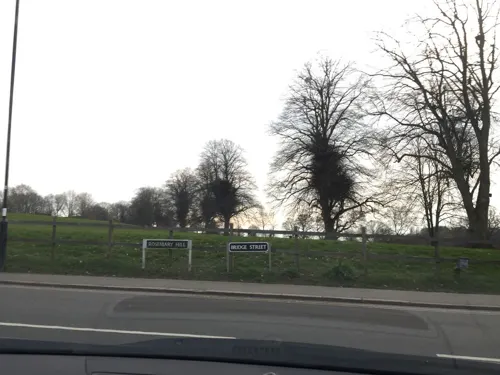
Priory Theatre
Cinema and theater
Amateur theatre building and company in Kenilworth, UK
Rosemary Hill

Warwick Arts Centre
Cinema and theater · 2.3 mi
Arts centre of the University of Warwick, Coventry, England
Museums and landmarks21

Kenilworth Castle
Monument and historic site · 0.4 mi
Castle ruin in the town of Kenilworth, Warwickshire, England, UK

Stoneleigh Abbey
Museum · 2.2 mi
Country house in Stoneleigh, Warwickshire, England, UK



9 more on the map.
Parks, trails and playgrounds12





Restaurants and cafes71


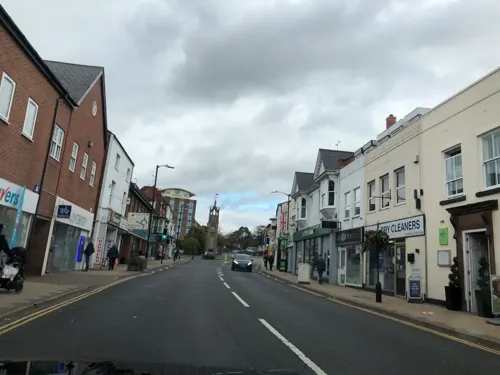
Morning Sunshine
Cafe · British, Brunch, Sandwich, Breakfast, Chicken, Pancake, English · 0.5 mi
46 The Square, Kenilworth
Mo-Sa 07:00-17:00; Su 07:00-16:00

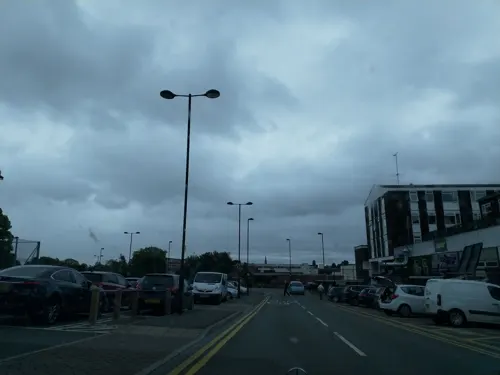
Sunam
Restaurant · Indian · 0.4 mi
55-57 Abbey End, Kenilworth
Mo-Th 17:00-23:30; Fr,Sa 17:00-24:00; Su 17:00-23:30

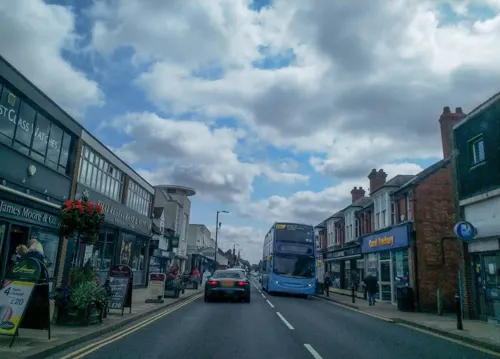
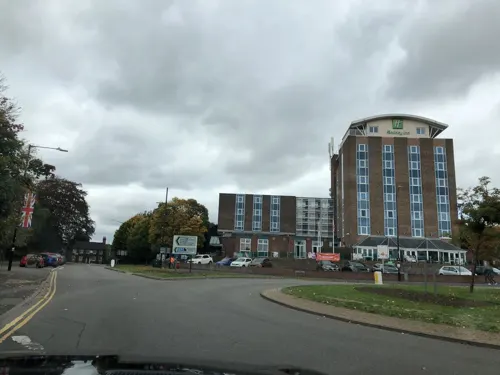
The Dictum of Kenilworth
Bar and pub · 0.5 mi
18-24 The Square, Kenilworth
Su-Th 08:00-23:00; Fr-Sa 08:00-00:00


59 more on the map.
History
The name Kenilworth derives from the Old English cynehildworð meaning 'Cynehild's enclosure'.
A settlement existed at Kenilworth by the time of the 1086 Domesday Book, which records it as Chinewrde.
Geoffrey de Clinton (died 1134) initiated the building of an Augustinian priory in 1122, which coincided with his initiation of Kenilworth Castle. The priory was raised to the rank of an abbey in 1450 and suppressed with the Dissolution of the Monasteries in the 1530s. Thereafter, the abbey grounds next to the castle were made common land in exchange for what Robert Dudley, 1st Earl of Leicester, used to enlarge the castle. Only a few walls and a storage barn of the original abbey survive.
Read more of the history
During the Middle Ages, Kenilworth played a significant role in the history of England: Between June and December 1266, as part of the Second Barons' War, Kenilworth Castle underwent a six-month siege, when baronial forces allied to Simon de Montfort, were besieged in the castle by the Royalist forces led by Prince Edward, this is thought to be the longest siege in Medieval English history. Despite numerous efforts at taking the castle, its defences proved impregnable. Whilst the siege was ongoing King Henry III held a Parliament at Kenilworth in August that year, which resulted in the Dictum of Kenilworth; a conciliatory document which set out peace terms to end the conflict between the barons and the monarchy. The barons initially refused to accept, but hunger and disease eventually forced them to surrender, and accept the terms of the Dictum.
During the Wars of the Roses in the 15th century, Kenilworth Castle served as an important Lancastrian base in the Midlands: The Lancastrian King Henry VI and his wife, Margaret of Anjou, spent much time here.
Elizabeth I visited Robert Dudley, 1st Earl of Leicester, at Kenilworth Castle several times, the last in 1575. Dudley entertained the Queen with pageants and banquets costing some £1,000 per day that surpassed anything seen in England before. These included fireworks.
Near the castle there is a group of thatched cottages called 'Little Virginia': According to local legend they gained this name because the first potatoes brought to England by Sir Walter Raleigh from the New World were planted and grown here in the 16th century. Modern historians however consider this unlikely, and have suggested that the name may have originated from early colonists to America returning to England from Virginia.
During the English Civil War, Kenilworth Castle, was occupied by Parliamentarians, after the Royalist garrison was withdrawn. After the end of the war, the castle's defences were slighted on the orders of Parliament in 1649, after which the castle became a ruin.
In 1778 Kenilworth windmill was built. In 1884, it was converted into a water tower, by the addition of a large water tank on the top of the tower in the place of the sails. It continued to be the town's main water supply until 1939, and finally became disused in 1960. It is still a local landmark, but is now a private home.
With the demise of the defensive role of the castle, Kenilworth had ceased to be a place of national significance, but Sir Walter Scott's 1821 novel Kenilworth brought it back to public attention, and helped establish the ruins of the castle as a major tourist attraction.
In the early 19th century Kenilworth was known for its horn comb making industry, which peaked in the 1830s.
Kenilworth was revolutionised by the arrival of the railway to the town in 1844, when the London and Birmingham Railway opened the Coventry to Leamington Line, including Kenilworth railway station. The station was rebuilt in 1884 and a new link line was opened between Kenilworth and Berkswell to bypass Coventry. This closed to all traffic on 3 March 1969. The railway station was located to the south of the Finham Brook valley, and this caused the focus of settlement at Kenilworth to move south, away from the castle, and nearer to the railway station. Industrialists from Birmingham and Coventry arrived, developing the area around the town's railway station with residential and commercial buildings. In the 19th century Kenilworth had some fine large mansions with landscaped gardens; these were demolished after the First World War and Second World War to make way for housing developments. The railway also brought a number of new industries to Kenilworth, such as tanning, brick making, and chemicals, and also caused substantial growth in Kenilworth's market gardening, which became known for producing crops such as tomatoes and strawberries.
The town's growth occasioned the addition of a second Church of England parish church, St John's, which is on Warwick Road in Knights Meadow. It was designed by Ewan Christian and built in 1851–1852 as a Gothic Revival building with a south-west bell tower and broach spire. By the 1870s Kenilworth's population had exceeded 4,000.
In 1869, local whitesmith and engineer Edward Langley Fardon demonstrated the first bicycle with wire-spoked wheels and rubber tyres, riding from Warwick Road to Leek Wootton.
During The Blitz in World War II on the night of 21 November 1940, a German aircraft dropped two parachute mines on Kenilworth; the large explosions in the Abbey End area demolished a number of buildings, killing 25 people, and injuring 70 more. The bomb damaged area of the town was redeveloped in the 1960s.
In May 1961, the Kenilworth Society was formed over concerns about protecting a group of 17th-century listed cottages adjacent to Finham Brook in Bridge Street. The Society sets out to promote awareness of Kenilworth's character and encourage its preservation.
From the History section of Kenilworth on Wikipedia, under CC BY-SA 4.0.
More about Kenilworth
Geography
Kenilworth has several suburbs, including Borrowell, Castle Green, Crackley, Ladyes Hill, Mill End, Park Hill, St Johns, Whitemoor and Windy Arbour. The town has good transport links to Coventry, Warwick, Leamington Spa and Birmingham.
Education
Kenilworth is close to the University of Warwick at Gibbet Hill in Coventry 2.5 miles (4.0 km) to the north.
The principal secondary school is the Kenilworth School and Sixth Form. There are also a number of schools for primary age children.
From the Wikipedia article Kenilworth, under CC BY-SA 4.0.
Notable people from Kenilworth
 Robert Dudley, 1st Earl of LeicesterEnglish nobleman and the favourite and close friend of Queen Elizabeth I (1532-1588)Photo: Steven van der Meulen, Public domain
 Tim FlowersEnglish footballer and managerPhoto: Barnet Football Club, CC BY 3.0
 Julia SlingoBritish meteorologistPhoto: Royal Society uploader, CC BY-SA 4.0
 John Bird SumnerArchbishop of Canterbury; Bishop of Chester; British Anglican bishop (1780-1862)Photo: Margaret Sarah Carpenter, Public domain
 Peter MarlowBritish photographer (1952–2016)Photo: Barbicanf, CC BY-SA 4.0
- Basil HeatleyBritish athlete (1933–2019)
- Claude WhittindaleBritish rugby union player (1881–1907)
- Raymond WhittindaleBritish rugby union player (1883–1915)
- Samuel ButlerEnglish classical scholar and schoolmaster (1774-1839)
- Magdalena SauerSouth African architect
- Charles SumnerBishop of Winchester; Bishop of Llandaff (1790-1874)
- Alan GreenBritish politician (1911-1991)
Born in Kenilworth, according to Wikidata (CC0). Each name links to its Wikipedia article.
Where to stay6
Churches and places of worship10
Shopping14
Gas and EV charging2
Schools, colleges and libraries10
Healthcare5
Map of Kenilworth
154 places. The map loads OpenStreetMap tiles when you open it.
Getting there and nearby towns
Birmingham Airport (BHX) is the nearest airport with scheduled flights listed in OpenStreetMap, 10 miles away.
- Coventry 5 mi northeast, about 8 min by car
- Knowle 7 mi west, about 11 min by car
- Solihull 9 mi northwest, about 15 min by car
- Stratford-upon-Avon 12 mi southwest, about 19 min by car
- Birmingham 16 mi northwest, about 26 min by car
- Sutton Coldfield 18 mi northwest, about 29 min by car
- West Bromwich 21 mi northwest, about 34 min by car
- Streetly 21 mi northwest, about 33 min by car
- Walsall 23 mi northwest, about 38 min by car
- Dudley 24 mi northwest, about 38 min by car
Drive times are estimates from straight-line distance, not routes.
Towns near Kenilworth


Keep exploring
Local news
Headlines from INDB.
Reviews, tips and questions
Loading what members have shared...
Sources and licences
- GeoNames (CC BY 4.0): population, coordinates, regions and time zone
- Mapillary (see each image): photos
- OpenStreetMap contributors (ODbL 1.0): places, airports, map data
- Wikidata (CC0 1.0): elevation, founding date, time zone, website, landmarks and historic places
- Wikimedia Commons (see each image): photos
- Wikipedia (CC BY-SA 4.0): overview and history text
Photo credits
- Kenilworth ClockTower SSE, Motacilla, CC BY-SA 4.0
- 21 High Street, Kenilworth, Jack Fitzsimons, CC BY-SA 4.0
- 15-19 High Street, Kenilworth, Jack Fitzsimons, CC BY-SA 4.0
- WTC Steve Walton IMG 9613WarwickArtsCentre edit, Steve Walton, CC BY 3.0
- Kenilworth Castle 2016, DeFacto, CC BY-SA 4.0
- Stoneleigh abbey 27j08, Snowmanradio, CC BY-SA 4.0
- Kenilworth Abbey Fields, David Hunt, Public domain
- Kenilworth StNicholas south, Motacilla, CC BY-SA 4.0
- Kenilworth St Johns - panoramio, Tanya Dedyukhina, CC BY 3.0
- Kenilworth Castle (9660), Nilfanion, CC BY-SA 4.0
- Bear and Ragged Staff Inn, Henryrothery, CC BY-SA 4.0
- St Augustine's Church, Beehive Hill, Kenilworth (NHLE Code 1035333) (August 2024) (8), User:Hassocks5489, CC0
- Queen and Castle, Kenilworth, Jack Fitzsimons, CC BY-SA 4.0
- 42 Castle Hill, Kenilworth, Jack Fitzsimons, CC BY-SA 4.0
- Kenilworth Virgins & Castle, Brianboru100, CC BY-SA 3.0
- The Clarendon Arms 2, Castle Hill, Kenilworth, Jack Fitzsimons, CC BY-SA 4.0
- Stoneleigh park entrance 12n06, The original uploader was Snowmanradio at English Wikipedia . ( Original text: snowmanradio ), CC BY-SA 3.0
- Long shot of the bench (OpenBenches 6178-1), Anonymous Unknown author, CC BY-SA 4.0
- View from the bench (OpenBenches 6178-2), Anonymous Unknown author, CC BY-SA 4.0
- View from the bench (OpenBenches 6179-2), Anonymous Unknown author, CC BY-SA 4.0
- Long shot of the bench (OpenBenches 6179-1), Anonymous Unknown author, CC BY-SA 4.0
- Close-up of the inscription (OpenBenches 6179), Anonymous Unknown author, CC BY-SA 4.0
- Street-level photo, laye, CC BY-SA 4.0
- Street-level photo, laye, CC BY-SA 4.0
- Street-level photo, laye, CC BY-SA 4.0
- Street-level photo, laye, CC BY-SA 4.0
- Street-level photo, laye, CC BY-SA 4.0
- Street-level photo, laye, CC BY-SA 4.0
- Street-level photo, adam2, CC BY-SA 4.0
- Street-level photo, laye, CC BY-SA 4.0
- Street-level photo, laye, CC BY-SA 4.0
- Street-level photo, laye, CC BY-SA 4.0
- Street-level photo, laye, CC BY-SA 4.0
- Street-level photo, laye, CC BY-SA 4.0
- Street-level photo, adam2, CC BY-SA 4.0
- Street-level photo, laye, CC BY-SA 4.0
- Street-level photo, laye, CC BY-SA 4.0
- Street-level photo, laye, CC BY-SA 4.0
- Street-level photo, adam2, CC BY-SA 4.0
- Street-level photo, laye, CC BY-SA 4.0
- Street-level photo, laye, CC BY-SA 4.0
- Street-level photo, adam2, CC BY-SA 4.0
- Street-level photo, laye, CC BY-SA 4.0
- Street-level photo, laye, CC BY-SA 4.0
- Street-level photo, adam2, CC BY-SA 4.0
- Street-level photo, laye, CC BY-SA 4.0
- Street-level photo, laye, CC BY-SA 4.0
- Street-level photo, laye, CC BY-SA 4.0
- Street-level photo, laye, CC BY-SA 4.0
- Street-level photo, laye, CC BY-SA 4.0


Page built November 10, 2026. Spotted a mistake? Tell us or suggest a place.