


Newton Abbot, United Kingdom
Newton Abbot is a town of 36,474 people in England, United Kingdom.
Why visit Newton Abbot
Townapedia lists 9 museums and landmarks, 17 parks and trails, 63 places to eat, 4 places to stay and 3 attractions in and around town.
Highlights include Teign Bridge, Alexandra Cinema, Newton Abbot Museum and Bradley.
Weather in Newton Abbot
Forecast from MET Norway (CC BY 4.0). Full forecast
About Newton Abbot
Newton Abbot is a market town and civil parish on the River Teign in the Teignbridge District of Devon, England. It lies near the River Teign and Whitelake, approximately 26 miles (42 km) southwest of Plymouth, 13 miles (21 km) southwest of Exeter, and 40 miles (64 km) north-northeast of Taunton. It had a population of 26,746 at the 2021 census, which was previously estimated at 26,655 in 2019.
From the Wikipedia article Newton Abbot (this version), under CC BY-SA 4.0.
Travel tips from other travellers: Newton Abbot on Wikivoyage (CC BY-SA 4.0).
Photos of Newton Abbot


Things to do3
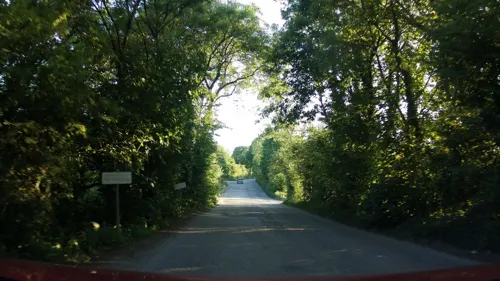
Teign Bridge
Bridge · 1.5 mi
Bridge in Teigngrace, Teignbridge, Devon, England, UK

Alexandra Theatre
Cinema and theater
Cinema in Newton Abbot, Devon, England, UK
Museums and landmarks9


Bradley
Museum · 0.6 mi
National Trust medieval manor house near Newton Abbot, Devon, England, UK



Berry's Wood
Monument and historic site · 0.7 mi
Iron Age hill fort in south Devon, England, UK
Parks, trails and playgrounds17


Hackney Marshes
Park · 1.2 mi
Local nature reserve in Devon, England, UK
Stover Country Park
Park · 2.9 mi
Woodland park in Teigngrace, Devon, England



5 more on the map.
Restaurants and cafes63
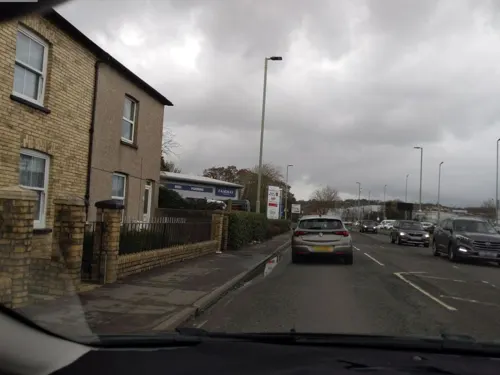
Starbucks
Cafe · Coffee Shop · 1.1 mi
Newton Road, Kingsteignton
Mo-Fr 07:30-18:00; Sa 08:00-17:30; Su 08:30-17:00
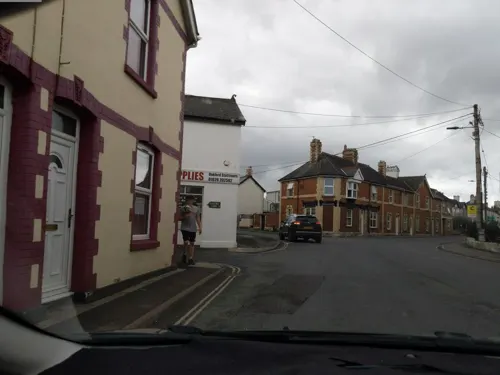



The Bell Inn
Bar and pub · 1.5 mi
29 Fore Street, Kingsteignton
11:00-22:00; Fr,Sa 11:00-00:00
Indulgence
Cafe · Tea, Cake, Breakfast, Coffee Shop
41 Devon Square
Mo-Fr 09:30-16:00
51 more on the map.
History
Traces of Neolithic inhabitants have been found at Berry's Wood Hill Fort near Bradley Manor. This was a contour hill fort that enclosed about 11 acres (4.5 ha). Milber Down camp was built before the 1st century BC and later occupied briefly by the Romans, whose coins have been found there.
Highweek Hill has the remains of a Norman motte-and-bailey castle, known as Castle Dyke. A village grew up around the castle, first called Teignwick, and later Highweek, implying a village on the high ground. Another settlement developed on the low ground around the River Lemon and would become part of Wolborough Manor.
There has been a thriving market in Newton Abbot for over 750 years – the first market charter was granted in 1220.
The New Town of the Abbots (of Torre Abbey) was given the right some time between 1247 and 1251 to hold a weekly market on Wednesdays. By 1300 the two settlements were renamed as Newton Abbot (taking the low ground) and Newton Bushel (taking the high ground). On the strength of the market, it quickly became a thriving town and a good source of income for the Abbots.
Read more of the history
Over the river, on the Highweek side, another weekly market was created. This one was on Tuesdays; and because the Bushel family were the landowners this community became known as Newton Bushel. Over the next 200 years Newton Bushel ran more annual fairs, a number of mills were set up, and the leather and wool trades started. Newton Bushel was also a convenient place for travellers to stay. Torre Abbey was dissolved in 1539 and ownership of Wolborough was granted to John Gaverock, who built himself a new house at Forde.
The twin markets of Newton Abbot and Newton Bushel continued until they were merged in 1633 as a Wednesday weekly market under the control of Bradley Manor. By 1751 it had been joined by a smaller Saturday market and three annual fairs: a cattle fair on 24 June, a cheese and onion fair in September, and a cloth fair on 6 November. The markets continued to expand, and in 1826 a new market place was built. But over the next 50 years the buildings became dilapidated, and a new corn exchange (now the Alexandra Theatre) and market hall were completed in 1871.
In medieval times Devon was an important sheep-rearing county. Many towns had their own wool and cloth industries and Newton Abbot had woollen mills, fullers, dyers, spinners, weavers and tailors. In particular, fellmongering (where wool is completely removed from the sheepskin) was well established in the town. In 1724 Daniel Defoe wrote that Newton Abbot had a thriving serge industry that sent goods to Holland via Exeter. The annual cloth fair was the town's busiest fair. Over the 19th century, Vicary's mills became an important employer in the town and by the 1920s was employing over 400 men. However, by 1972 business had declined and the works closed down.
Associated with the woollen industry was the leather business. Hides left after the fell-mongering process were made into leather. Tanners, boot and shoemakers, glovers and saddlers were all in business in Newton Abbot. As with the wool industry, business flourished over 600 years until after the Second World War.
In 1583 Humphrey Gilbert, a local adventurer landed at St. John's in Newfoundland and claimed the area as an English colony. The fisheries quickly developed. Between 1600 and 1850 there was a steady trade between Newton Abbot and the cod fisheries off Newfoundland. Every year men from the town would gather at the Dartmouth Inn or Newfoundland Inn in East Street in the hope of being hired for a season's work. In the autumn the dried cod was stored in depots and sometimes used as payment. There was a considerable economic spin-off from this trade. Fish hooks, knives, waterproof boots and rope were all made in the town. The Rope Walk in East Street just a few yards from the Cider Bar still exists, together with the names Newfoundland Way and St John's Street.
Just 2 miles (3.2 km) north-west of Newton Abbot lie the large ball clay workings of the Bovey Basin. The main workings are on the eastern outcrop of the deposits at Kingsteignton, which can lay claim to being the centre of Britain's ball-clay industry. The Bovey Basin took millions of years to fill from rivers that flowed out of Dartmoor. The sediments included clay derived from the decomposed granite. The natural deposition has resulted in clay that is purer and more refined than many others. Clay is used in a wide range of products such as bricks, tyres, porcelain, medicines and toothpaste.
Kingsteignton clay was being used to make pipes around 1680. By 1700, it was being shipped from Teignmouth, and its utilisation by the famous potter Josiah Wedgwood bred success. The clay was extracted by simply digging out the lumps on courses; rather like peat cutting. The bulky clay was transported by packhorse to Hackney Quay at Kingsteignton, then loaded onto barges for shipment down the Teign Estuary, where it was transferred to small ships bound for Liverpool and other ports.
From the History section of Newton Abbot on Wikipedia, under CC BY-SA 4.0.
More about Newton Abbot
Education
Coombeshead Academy is a comprehensive school in Coombeshead Road. It is a trust school and a specialist media and arts college for some 1,442 pupils aged 11 to 18.
Newton Abbot College, also a comprehensive school in Old Exeter Road. It came into being on 1 September 2008 as a renaming of Knowles Hill School. It is a specialist Technology College for around 1,200 pupils aged 11 to 18.
South Devon UTC is a university technical college in Kingsteignton Road, established on 1 September 2015 for pupils aged 14 to 19.
The local primary schools include St Joseph's Roman Catholic Primary, Highweek Community Primary and Nursery school, Decoy Primary, as well as Bearnes Primary, Canada Hill Primary, Wolborough C of E Primary, Bradley Barton Primary, Haytor View Primary and All Saints Marsh CofE Academy.
From the Wikipedia article Newton Abbot, under CC BY-SA 4.0.
Notable people from Newton Abbot
 Serge PizzornoBritish musician and singerPhoto: Antje Naumann (AllSystemsRed), CC BY-SA 3.0
 Peter Truscott, Baron TruscottBritish politician (born 1959)Photo: ©House of Lords / photography by Roger Harris, CC BY 3.0
 Peter RichardsonEnglish director, screenwriter, comedian, actor (b. October 1951)Photo: Humbledaisy, CC BY-SA 4.0
 John Baptist Lucius NoelBritish mountain climberPhoto: Book author w:Charles Granville..., Public domain
 Leslie RundleBritish Army general (1856–1934)Photo: Bain News Service, Public domain
 John AngelAmerican artist (1881-1960)Photo: John Angel, CC BY-SA 3.0
- William Knox D'Arcyoil entrepreneur magnate, one of the founders of British Oil (1849–1917)
- Norah BaringEnglish actress (1905-1985)
- Mark Mylodfilm director
- Alfred PowleslandBritish cricketer (1875-1941)
- Charles CampbellBritish sailor (1881-1948)
- Rupert NeveAudio engineer and entrepreneur
Born in Newton Abbot, according to Wikidata (CC0). Each name links to its Wikipedia article.
Where to stay4
Churches and places of worship18
Kingdom Hall of Jehovah's Witnesses
Church · Jehovahs Witness
Queen Street, Newton Abbot
Shopping9
Gas and EV charging4
Oakford Service Station
Gas station · 1.4 mi
8 Oakford, Kingsteignton, Newton Abbot
Schools, colleges and libraries19
Healthcare7
Map of Newton Abbot
153 places. The map loads OpenStreetMap tiles when you open it.
Getting there and nearby towns
Exeter Airport (EXT) is the nearest airport with scheduled flights listed in OpenStreetMap, 17 miles away.
- Kingsteignton 2 mi northeast, about 3 min by car
- Teignmouth 5 mi east, about 8 min by car
- Cockington 5 mi southeast, about 8 min by car
- Torquay 6 mi southeast, about 10 min by car
- Paignton 7 mi south, about 11 min by car
- Dawlish 7 mi northeast, about 12 min by car
- Brixham 10 mi southeast, about 16 min by car
- Exeter 14 mi north, about 22 min by car
- Ivybridge 17 mi southwest, about 27 min by car
- Sidmouth 20 mi northeast, about 32 min by car
Drive times are estimates from straight-line distance, not routes.
Towns near Newton Abbot


Keep exploring
Local news
Headlines from INDB.
Reviews, tips and questions
Loading what members have shared...
Sources and licences
- GeoNames (CC BY 4.0): population, coordinates, regions and time zone
- Mapillary (see each image): photos
- OpenStreetMap contributors (ODbL 1.0): places, airports, map data
- Wikidata (CC0 1.0): elevation, founding date, time zone, website, landmarks and historic places
- Wikimedia Commons (see each image): photos
- Wikipedia (CC BY-SA 4.0): overview and history text
Photo credits
- Newtonmiasto, Kicior99, Public domain
- Flickr - …trialsanderrors - The Tower, Newton Abbot, Devon, England, ca. 1895, …trialsanderrors, CC BY 2.0
- West Ogwell Church, Guy Wareham, CC BY-SA 2.0
- Bradley Manor, Newton Abbot, Devon, Smalljim, CC BY-SA 3.0
- Coombesheadacamdey, Coombesheadacademy, CC BY-SA 3.0
- Kingsteignton church. - panoramio, tormentor4555, CC BY-SA 3.0
- Courtenay Park (2021-08-22) 18, Simon Cobb, CC0
- Newton Abbot (2026-01-04) 061, Simon Cobb, CC0
- Renault Megane Coupe front 04-03-2009, John Blackmore from Bristol, United Kingdom, CC BY 2.0
- Renault Megane Coupe rear 04-03-2009, John Blackmore from Bristol, United Kingdom, CC BY 2.0
- Benchmark, St. Leonard's Tower, Partonez, CC BY-SA 4.0
- St Leonard's Tower (30165546562), Phil Gayton from Totnes, UK, CC BY 2.0
- Tucker's Maltings, Newton Abbot, Derek Harper, CC BY-SA 2.0
- Street-level photo, WaggyDog, CC BY-SA 4.0
- Street-level photo, WaggyDog, CC BY-SA 4.0
- Street-level photo, southglos, CC BY-SA 4.0
- Street-level photo, southglos, CC BY-SA 4.0
- Street-level photo, southglos, CC BY-SA 4.0
- Street-level photo, WaggyDog, CC BY-SA 4.0
- Street-level photo, southglos, CC BY-SA 4.0
- Street-level photo, WaggyDog, CC BY-SA 4.0
- Street-level photo, WaggyDog, CC BY-SA 4.0
- Street-level photo, WaggyDog, CC BY-SA 4.0
- Street-level photo, WaggyDog, CC BY-SA 4.0
- Street-level photo, WaggyDog, CC BY-SA 4.0
- Street-level photo, WaggyDog, CC BY-SA 4.0
Page built November 10, 2026. Spotted a mistake? Tell us or suggest a place.