


Why visit Overton
Townapedia lists 4 museums and landmarks, 6 parks and trails, 14 places to eat and 2 attractions in and around town.
Highlights include Ashe House, Laverstoke House and Town Meadow Golf Course.
Weather in Overton
Forecast from MET Norway (CC BY 4.0). Full forecast
About Overton
Overton is a village and parish in Hampshire, England, west of Basingstoke and east of Andover and Whitchurch. The village contains the smaller hamlets of Southington, Northington, Ashe, Polhampton, and Quidhampton, the latter two lying to the north of the village. The River Test has its source 1 mile (1.6 km) to the east in Ashe.
From the Wikipedia article Overton, Hampshire (this version), under CC BY-SA 4.0.
Things to do2

Museums and landmarks4


Laverstoke House
Monument and historic site · 1.5 mi
Grade II* listed country house.
London Road, Laverstoke
Parks, trails and playgrounds6



Restaurants and cafes14
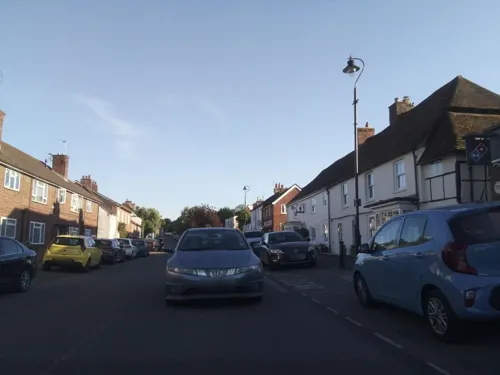
Amore
Restaurant · Italian
19 Winchester Street, Overton
Mo-Th 12:00-15:00,17:00-22:00; Fr-Sa 12:00-22:30, Su 12:00-21:00
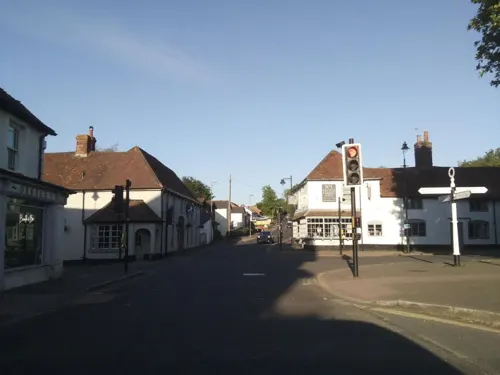
Honesty at Overton
Cafe · Coffee Shop, Deli, Wine, Cheese
9 Winchester Street, Overton
Mo-Sa 08:00-16:00; Su 10:00-15:30
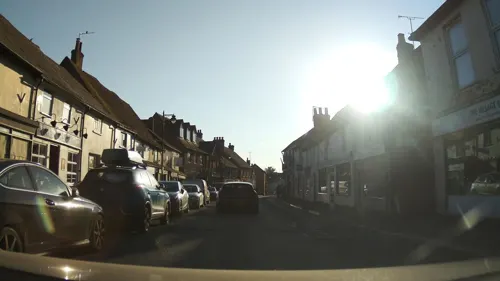
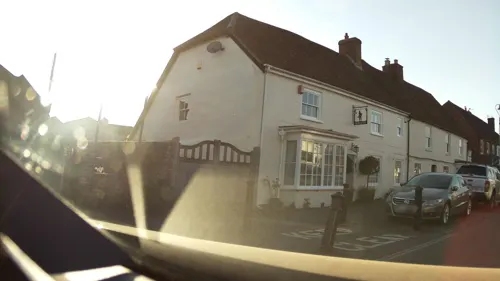

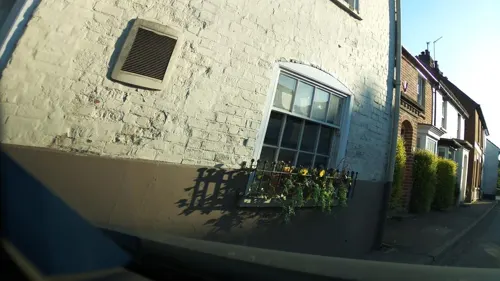
The Red Lion
Bar and pub
High Street, Overton
Mo 15:00-17:00; Tu-We 14:00-23:00; Th 12:00-23:00; Fr 12:00-24:00;...
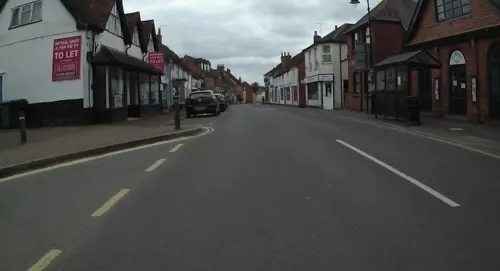
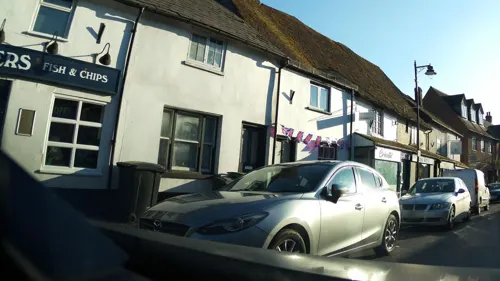
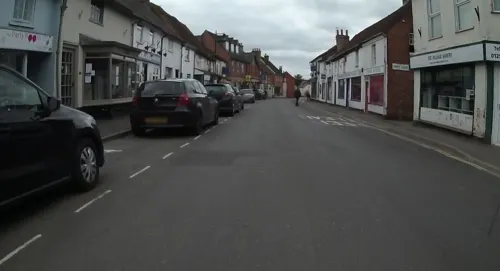
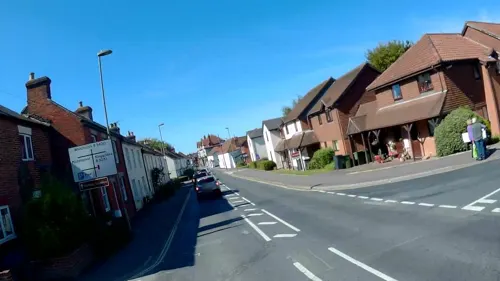
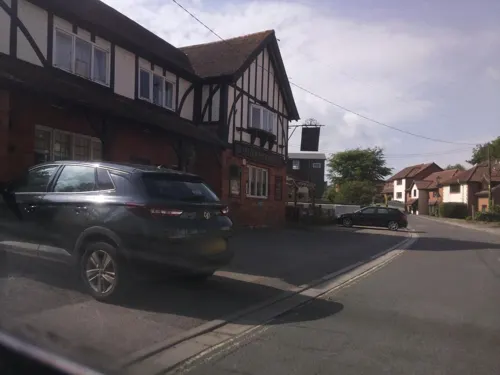

2 more on the map.
History
The area around Overton has been inhabited for millennia with evidence of Stone Age, Bronze Age and Celtic occupation scattered across the parish and surrounding countryside, including tumuli at Popham Beacons at the southern tip of the parish; Abra Barrow on the boundary south west of Overton; a long barrow to the west of Willesley Warren Farm in the north of the parish; strip lynchets on Rotten Hill and the Harrow Way, an ancient track which runs across the parish north of the village.
Roman occupation in the area is shown by the discovery of Roman pottery shards in Little Meadow and the Port Way Roman Road marks the northern boundary of the parish.
Read more of the history
The development of the village began in earnest during the 10th century when Frithstan, the Bishop of Winchester, in a chartership dated 909, was granted "Uferantun" by King Edward the Elder. Overton developed over the next century and by the time of Domesday Book the settlement included a large number of dwellings, the Church of St Mary and several corn mills primarily due to its location on the River Test. By the 12th century Overton was a significant location with a royal residence, Tidgrove Kings House, being developed just north of Overton. The residence was built for Henry II for use on journeys between Windsor and either Winchester or Hamwych (Southampton) which was the customary port for travel to and from his French possessions. The importance and expansion continued throughout the 12th and 13th centuries facilitated in 1218 by Henry III providing a royal grant to the bishop of Winchester for a market in "his manor of Overton" when burgage tenure was introduced. By this period Overton was becoming a major settlement on the north–south route to and from Winchester.
In 1246 Henry III granted a fair on the "eve, feast and morrow of the Translation of St. Thomas of Canterbury" which can be considered as the first "official" sheep fair and by the late 13th century Overton had grown to such a size that in 1295 two representatives were sent to Parliament and by the early 14th century the town was providing a rent of £12 0s 9½d to the bishopric (equivalent to £2.75 million in 2015).
Overton was significantly impacted by the Black Death, rents fell by over a half, parliamentary representatives were withdrawn to save costs, the tourns (medieval courts) were not held and the population stagnated. Despite this stagnation Overton survived by consolidating farms and by support from the bishopric though the effects lasted until the end of the 14th century.
By the 15th century trade began to increase enough to support an inn and the White Hart, the oldest inn in Overton, was first recorded in 1442. In this period a new fulling mill was built and there was a large increase in population. It was in this period that Thomas Wolsey, Bishop of Winchester, obtained licence in 1519 to hold an additional fair at Overton on the "eve, the feast and the morrow of the Feast of St. George the Marty".
By the start of the 16th century a period of growth was established with expansion westward along the River Test. The economy in the area was still primarily agricultural based around sheep and corn; with the sheep fair recording 30,000 average sheep penned. The economy was also being bolstered by the increase of mills along the River Test including corn mills, fulling mills and silk mills.
With the increase in prosperity came a desire for greater power, the freeholders began to choose their own officers; port reeve, constable, bailiffs, beer-tasters and leather sealers at the court leet of the borough.
Despite this in 1587 the Court of Chancery deemed that Overton should lose its charter as a town 'through neglect' and it reverted to being a village.
A significant impact on Overton was the development of papermaking within the area by Henry Portal a French Huguenot who took the lease on Bere Mill on the River Test, between Overton and Whitchurch, in 1712.
By this time the focus of the village was the west–east route from London to the West Country and in 1754 the road was turnpiked and what is now the High Street had a large number of inns to service the Stagecoach Passengers.
In 1805 Overton was one of the changes of horses for the post chaise of Lieutenant Lapenotiere, HMS Pickle who carried the historic dispatches of Lord Nelson's victory and death in the Battle of Trafalgar on 21 October 1805. This event is commemorated by the Trafalgar Way, the plaque being located on the village library.
The major impact on the village in the Victorian era was the arrival of the railways with the London and South Western Railway opening the West of England Main Line and Overton railway station in 1854. The railway caused problems for the local inns and the New Inn, which had only been built in 1770 was sold and demolished in 1860.
The vacant site of the New Inn was donated by George Lamb for the building of the new village school. Lamb paid for the building of the school and land for a separate infants school in Red Lion Lane. These two schools, opened in 1868 and 1871 served the town for nearly a hundred years when the junior and infants schools were combined at a new school in Court Drove.
From the History section of Overton, Hampshire on Wikipedia, under CC BY-SA 4.0.
More about Overton
Geography
The civil parish of Overton covers 3,471 hectares – an area about seven miles north to south (from Polhampton to the A303) and two and a half miles east to west (Ashe Park Lodge to Southington Lodge at Laverstoke Park) and is located in the County of Hampshire. Most of Overton parish is entirely rural with the north of the parish being in the North Wessex Downs Area of Outstanding Natural Beauty.
The River Test, a chalk stream world-famous for its trout fishing, rises about a mile east of Overton at Ashe during normal rainfall conditions though the source can migrate eastwards as far as Oakley in a period of very heavy rainfall. The river flows westwards through the village, historically powering a number of mills, towards Whitchurch before it meanders southwards through Hampshire, eventually reaching the sea at Eling near Southampton.
From the Wikipedia article Overton, Hampshire, under CC BY-SA 4.0.
Notable people from Overton
- James WilliamsBishop of Quebec; British-Canadian Anglican bishop and educator
- Winifred Griffiths[née Rutley]] (1895–1982), politician's wife and autobiographer
- Michael FordBritish artist born 1920 (1920–2005)
Born in Overton, according to Wikidata (CC0). Each name links to its Wikipedia article.
Churches and places of worship4
Shopping1
Schools, colleges and libraries2
Healthcare1
Map of Overton
34 places. The map loads OpenStreetMap tiles when you open it.
Getting there and nearby towns
RAF Odiham (ODH) is the nearest airport with scheduled flights listed in OpenStreetMap, 14 miles away.
- Sherborne St John 7 mi northeast, about 12 min by car
- Basingstoke 8 mi east, about 12 min by car
- Highcoems 8 mi northwest, about 13 min by car
- Tadley 9 mi northeast, about 15 min by car
- Andover 10 mi west, about 17 min by car
- Thatcham 11 mi north, about 18 min by car
- Newbury 11 mi north, about 18 min by car
- Abbotts Ann 12 mi west, about 20 min by car
- Winchester 13 mi south, about 20 min by car
- Alton 14 mi southeast, about 23 min by car
Drive times are estimates from straight-line distance, not routes.
Towns near Overton


Keep exploring
Local news
Headlines from INDB.
Reviews, tips and questions
Loading what members have shared...
Sources and licences
- GeoNames (CC BY 4.0): population, coordinates, regions and time zone
- Mapillary (see each image): photos
- OpenStreetMap contributors (ODbL 1.0): places, airports, map data
- Wikidata (CC0 1.0): elevation, founding date, time zone, website, landmarks and historic places
- Wikimedia Commons (see each image): photos
- Wikipedia (CC BY-SA 4.0): overview and history text
Photo credits
- 1, Winchester Street, Overton, Dave.Dunford, CC BY-SA 4.0
- 2, London Road, Overton, Dave.Dunford, CC BY-SA 4.0
- Ashe Church, Gammock, CC BY-SA 4.0
- The Greyhound Overton 2022-04-23 15.21.28, Chris j wood, CC BY-SA 4.0
- Ashe House, Dave.Dunford, CC BY-SA 4.0
- Street-level photo, southglos, CC BY-SA 4.0
- Street-level photo, southglos, CC BY-SA 4.0
- Street-level photo, southglos, CC BY-SA 4.0
- Street-level photo, southglos, CC BY-SA 4.0
- Street-level photo, southglos, CC BY-SA 4.0
- Street-level photo, southglos, CC BY-SA 4.0
- Street-level photo, southglos, CC BY-SA 4.0
- Street-level photo, jpennycook, CC BY-SA 4.0
- Street-level photo, southglos, CC BY-SA 4.0
- Street-level photo, southglos, CC BY-SA 4.0
- Street-level photo, jpennycook, CC BY-SA 4.0
- Street-level photo, jpennycook, CC BY-SA 4.0
- Street-level photo, southglos, CC BY-SA 4.0
Page built November 10, 2026. Spotted a mistake? Tell us or suggest a place.