


Tillicoultry, United Kingdom
Tillicoultry is a town of 5,160 people in Scotland, United Kingdom.
Why visit Tillicoultry
Townapedia lists 11 museums and landmarks, 4 parks and trails, 25 places to eat and 3 attractions in and around town.
Weather in Tillicoultry
Forecast from MET Norway (CC BY 4.0). Full forecast
About Tillicoultry
Tillicoultry ( TIL-ee-KOO-tree; Scottish Gaelic: Tulach Cultraidh, perhaps from older Gaelic Tullich-cul-tir, or "the mount/hill at the back of the country") is a town in Clackmannanshire, Scotland. Tillicoultry is usually referred to as Tilly by the locals.
From the Wikipedia article Tillicoultry (this version), under CC BY-SA 4.0.
Photos of Tillicoultry


Things to do3

Museums and landmarks11

Parks, trails and playgrounds4


Restaurants and cafes25
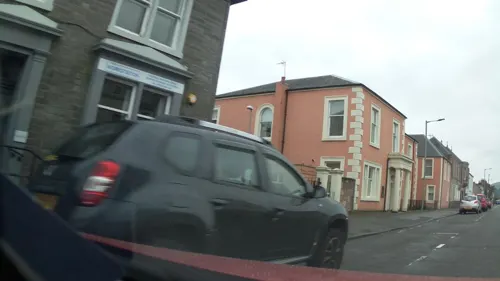
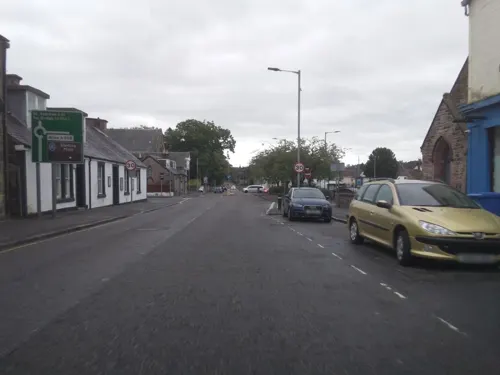
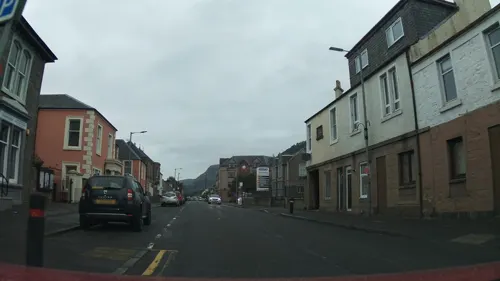
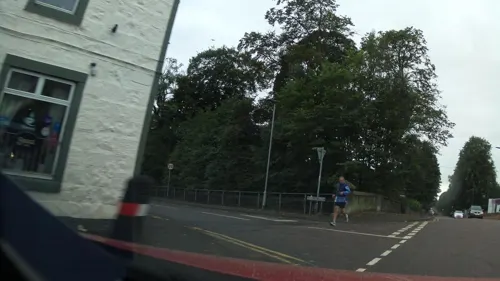
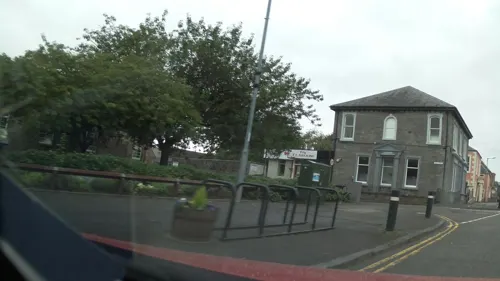
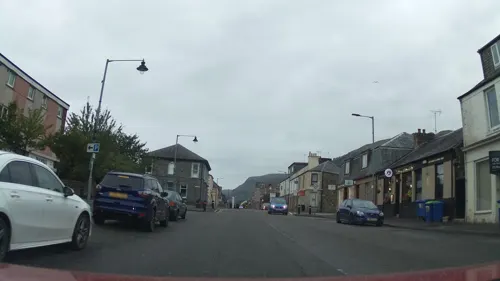
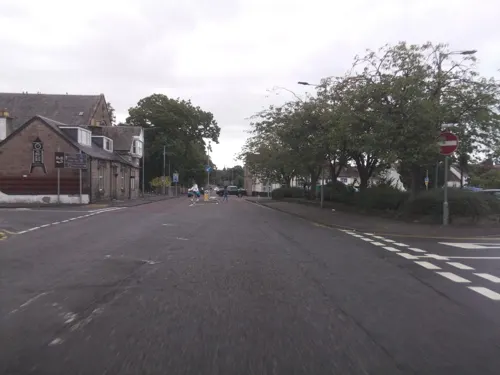


13 more on the map.
History
The estate of Tillicoultry was taken from Aleumus de Meser in 1261 by Alexander III for failure to render due feudal services. The estate had originally been received by de Meser's father, also Aleumus, from Alexander II. It was then granted to William Count of Mar and remained in possession of the Mar, and then by marriage of Margaret, Countess of Mar, to William Douglas, 1st Earl of Douglas, the Douglas family until 1483, when it changed hands to the ancestors of Lord Colville of Culross. By 1634 it was sold to Sir William Alexander of Menstrie (later, 1st Earl of Stirling). Between 1644 and 1840, ownership of the estate changed hands frequently.
The origins of the village lie in the Westertown (previously Cairnstown) area, where the road to Stirling crossed the Tillicoultry Burn. It is thought that the centre of Westertown was probably in the area now known as Shillinghill.
Read more of the history
There are records of a Parish church existing in Tillicoultry from 1639, and knowledge of cloth manufacture dating from the 1560s. Traces of a Druid circle, sixty feet in diameter, were found in the eastern area of the parish at the end of the 18th century. A Pictish fortress stood upon the Castle Craig, near the current site of Craigfoot Quarry on Wood Hill, to the west of Tillicoultry Glen. This has long since been ruined, however legend has it that the stone of the fortress was employed in the building of Stirling Castle.
Due to the rapid growth of the village during the 19th century, there were problems with overcrowding, poor housing, high infant mortality, water supply and drainage. In an attempt to address these problems, Tillicoultry Burgh was created in 1871. It lasted until 1975 when it disappeared as a result of local government reorganisation.
Around 1930, one of the first bus stations in the country was built at Murray Square to serve the eight bus services which terminated in the town. The original glass and cast iron shelters were replaced by modern shelters some time ago. Despite the growth in car ownership and the corresponding decline in public transport, Tillicoultry, and indeed all the Hillfoots villages, retain a regular bus service.
The old Harviestoun estate, where Archibald Tait (1811–82), Archbishop of Canterbury, spent much of his boyhood, lies East-North-East of the village. Robert Burns visited the estate in the summer of 1787, during his stay he wrote The Banks of the Devon and Fairest Maid on Devon Banks. A commemorative cairn at the roadside, near the east lodge to Harviestoun, marks this event.
The burn which runs off the Ochils and down through the glen into west of the village provided an attractive source of water for the early textile industry in Tillicoultry, being used for the washing and dying of wool. During the early 18th century a cloth known as Tillicoultry Serge was manufactured by weaving worsted with linen.
By the time of the Industrial Revolution the burn was a recognised source of power, with the first mill being established in the 1790s. Many more textile mills were built along the burnside, by the 1830s, steam powered mills were introduced and by 1870 there were 12 mills employing over 2000 people. As the industry expanded, more workers were attracted to the village. The population of the parish, which had stood less than 1,000 at the turn of the 19th century, had grown to over 4,500 by the early 1850s.
Textile mills and coal mines remained the biggest employers of the local population until the first half of the 20th century. In the 1950s the most recent colliery to be worked, on the south bank of the River Devon, set new productivity records due to a high level of mechanisation. Its impressive adit entrance, now safely bricked up, can still be seen. In 1851, due to the importance of Tillicoultry as an industrial centre, it became the first Hillfoots village to have a rail connection.
In 1921 Samuel Jones Limited established a paper mill at Devonvale, the current site of Sterling Furniture. In 1926, 33 people were employed at the site and the firm returned its first profit. By 1936, 238 staff were employed by the company. Sydney Platfoot was appointed Managing Director of the Devonvale works in 1922, he later went on to become town provost from 1930 to 1936. In 1964, the company merged with Wiggins Teape and by 1967 employed a fifth of the working population.
Tillicoultry Quarries Ltd, as the name suggests, was established in 1930 by R.W. Menzies at Craigfoot Quarry Tillicoultry, and remains 100% owned by the Menzies family. Quarrying no longer takes places in Tillicoultry; the company's Head office is based in nearby Kincardine.
Quartz-dolerite was first extracted in 1930 from the now inoperative Craigfoot Quarry (map), however quarrying had taken place on a smaller scale at the site since 1880. On 26 January 1949 the quarry was the site of a tragic explosion when a magazine containing 150 lb of explosive detonated killing quarryman Alexander Honeyman and blowing out doors and windows in the Shillinghill and Upper Mill Street area.
Following a particularly wet summer and torrential rainfall over a 12-hour period, Tillicoultry Burn burst its banks on the morning of 28 August 1877. Flooding was widespread throughout Strathdevon, both Alloa Railway station and Alloa Brewery were submerged, crops were destroyed around Tullibody and there was extensive property damage in Dollar also. The Alloa Advertiser described the rainfall as 'not simply heavy rain; it was a terrific downpour- persistent, incessant, it fell in bucketfuls- to use our expressive vernacular it came down like "hale water"'.
Workers in mills to the west side of the burn were trapped in their workplaces, unable to cross Mill Street due to the flood water. By breakfast time the houses and shops of High Street were under three feet of water.
From the History section of Tillicoultry on Wikipedia, under CC BY-SA 4.0.
Notable people from Tillicoultry
- David HorneScottish composer, pianist and teacher
- Eddie HunterScottish footballer (1928-2002)
- Sam FisherScottish footballer (born 2001)
- Charles Frearson YoungerScottish cricketer and British Army officer
- Alec Garden FraserSri Lankan educator (1873–1962)
- James Lennox DawsonScottish military officer (1891–1967); recipient of the Victoria Cross
- Jackie HinchliffeBritish association football player (born 1938)
- James Dalgleish PollockScottish military officer (1890–1958); recipient of the Victoria Cross
- Danny HerringtonScottish rugby union footballer (1960-2005)
- Harvey Carmichaelassociation football player (1881-1940)
Born in Tillicoultry, according to Wikidata (CC0). Each name links to its Wikipedia article.
Churches and places of worship4
Shopping8
Schools, colleges and libraries2
Healthcare2
Map of Tillicoultry
59 places. The map loads OpenStreetMap tiles when you open it.
Getting there and nearby towns
Edinburgh Airport (EDI) is the nearest airport with scheduled flights listed in OpenStreetMap, 21 miles away.
- Alloa 3 mi southwest, about 5 min by car
- Airth 6 mi south, about 9 min by car
- Stirling 8 mi west, about 13 min by car
- Grangemouth 10 mi south, about 16 min by car
- Falkirk 11 mi south, about 17 min by car
- Bo’ness 11 mi southeast, about 17 min by car
- Westquarter 11 mi south, about 18 min by car
- Dunfermline 12 mi southeast, about 20 min by car
- Reddingmuirhead 12 mi south, about 19 min by car
- Linlithgow 13 mi southeast, about 21 min by car
Drive times are estimates from straight-line distance, not routes.
Towns near Tillicoultry


Keep exploring
Local news
Headlines from INDB.
Reviews, tips and questions
Loading what members have shared...
Sources and licences
- GeoNames (CC BY 4.0): population, coordinates, regions and time zone
- Mapillary (see each image): photos
- OpenStreetMap contributors (ODbL 1.0): places, airports, map data
- Wikidata (CC0 1.0): elevation, founding date, time zone, website
- Wikimedia Commons (see each image): photos
- Wikipedia (CC BY-SA 4.0): overview and history text
Photo credits
- 08325 Tillicoultry Baptist Church, Tillicoultry 007, WeeHolly, CC BY-SA 4.0
- 08325 Tillicoultry Baptist Church, Tillicoultry 006, WeeHolly, CC BY-SA 4.0
- 08325 Tillicoultry Baptist Church, Tillicoultry 005, WeeHolly, CC BY-SA 4.0
- 08325 Tillicoultry Baptist Church, Tillicoultry 002, WeeHolly, CC BY-SA 4.0
- 08325 Tillicoultry Baptist Church, Tillicoultry 003, WeeHolly, CC BY-SA 4.0
- 08325 Tillicoultry Baptist Church, Tillicoultry 001, WeeHolly, CC BY-SA 4.0
- 08325 Tillicoultry Baptist Church, Tillicoultry 004, WeeHolly, CC BY-SA 4.0
- 06306 Tillicoultry Evangelical Union Church, Tillicoultry 005, WeeHolly, CC BY-SA 4.0
- 06306 Tillicoultry Evangelical Union Church, Tillicoultry 008, WeeHolly, CC BY-SA 4.0
- 06306 Tillicoultry Evangelical Union Church, Tillicoultry 002, WeeHolly, CC BY-SA 4.0
- 06306 Tillicoultry Evangelical Union Church, Tillicoultry 003, WeeHolly, CC BY-SA 4.0
- 06306 Tillicoultry Evangelical Union Church, Tillicoultry 001, WeeHolly, CC BY-SA 4.0
- 06306 Tillicoultry Evangelical Union Church, Tillicoultry 004, WeeHolly, CC BY-SA 4.0
- 06306 Tillicoultry Evangelical Union Church, Tillicoultry 007, WeeHolly, CC BY-SA 4.0
- 06306 Tillicoultry Evangelical Union Church, Tillicoultry 006, WeeHolly, CC BY-SA 4.0
- 06306 Tillicoultry Evangelical Union Church, Tillicoultry 009, WeeHolly, CC BY-SA 4.0
- 07742 Hillfoot Evangelical Church, Tillicoultry 004, WeeHolly, CC BY-SA 4.0
- 07742 Hillfoot Evangelical Church, Tillicoultry 002, WeeHolly, CC BY-SA 4.0
- 07742 Hillfoot Evangelical Church, Tillicoultry 001, WeeHolly, CC BY-SA 4.0
- 07742 Hillfoot Evangelical Church, Tillicoultry 003, WeeHolly, CC BY-SA 4.0
- Street-level photo, southglos, CC BY-SA 4.0
- Street-level photo, southglos, CC BY-SA 4.0
- Street-level photo, southglos, CC BY-SA 4.0
- Street-level photo, southglos, CC BY-SA 4.0
- Street-level photo, southglos, CC BY-SA 4.0
- Street-level photo, southglos, CC BY-SA 4.0
- Street-level photo, southglos, CC BY-SA 4.0
- Street-level photo, southglos, CC BY-SA 4.0
- Street-level photo, southglos, CC BY-SA 4.0
- Street-level photo, southglos, CC BY-SA 4.0
- Street-level photo, southglos, CC BY-SA 4.0
- Street-level photo, southglos, CC BY-SA 4.0
- Street-level photo, southglos, CC BY-SA 4.0
- Street-level photo, southglos, CC BY-SA 4.0
- Street-level photo, southglos, CC BY-SA 4.0
- Street-level photo, southglos, CC BY-SA 4.0
- Street-level photo, southglos, CC BY-SA 4.0
- Street-level photo, southglos, CC BY-SA 4.0
- Street-level photo, southglos, CC BY-SA 4.0
- Street-level photo, southglos, CC BY-SA 4.0
- Street-level photo, southglos, CC BY-SA 4.0
- Street-level photo, southglos, CC BY-SA 4.0


Page built November 10, 2026. Spotted a mistake? Tell us or suggest a place.