



Why visit Bo’ness
Townapedia lists 32 museums and landmarks, 12 parks and trails, 24 places to eat, 3 places to stay and 5 attractions in and around town.
Highlights include The Hippodrome, Avon Viaduct, Museum of Scottish Railways and Bo'ness Motor Museum.
Weather in Bo’ness
Forecast from MET Norway (CC BY 4.0). Full forecast
About Bo’ness
Borrowstounness, commonly known as Bo'ness, is a town and former burgh and seaport on the south bank of the Firth of Forth in the Central Lowlands of Scotland. Historically part of the county of West Lothian, it now lies within the Falkirk council area, 17 miles (27 kilometres) northwest of Edinburgh and 6+3⁄4 miles (11 kilometres) east of Falkirk. At the 2011 census, the population of Bo'ness was 15,100.
From the Wikipedia article Bo'ness (this version), under CC BY-SA 4.0.
Travel tips from other travellers: Bo’ness on Wikivoyage (CC BY-SA 4.0).
Photos of Bo’ness


Things to do5

Avon Viaduct
Bridge · 3.0 mi
Railway viaduct in West Lothian, Scotland
Hippodrome Cinema, Bo'ness
Cinema and theater
Cinema in Bo'ness, Scotland

Museums and landmarks32

Museum of Scottish Railways
Museum · 0.7 mi
Railway museum in Falkirk, Scotland, United Kingdom
Union Street

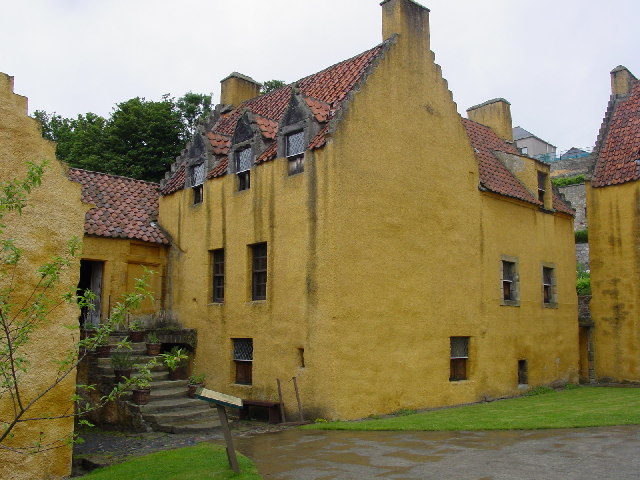
Culross Palace
Museum · 2.8 mi
Remains of a mansion complex in Fife, Scotland, UK

SS Orsova
Monument and historic site · 2.9 mi
Ocean liner of the Orient Line



20 more on the map.
Parks, trails and playgrounds12
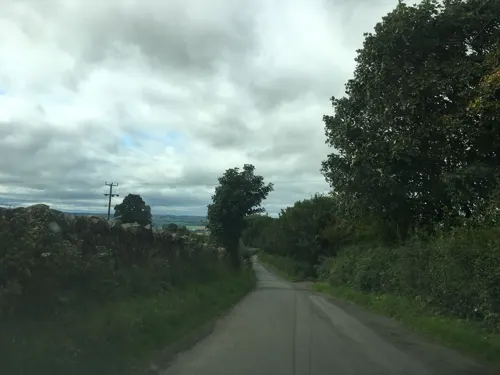


Cenotaph Grounds
Park
Site of Bo'ness War Memorial & Plaque for Victoria Cross recipient Harcus Strachan


Restaurants and cafes24
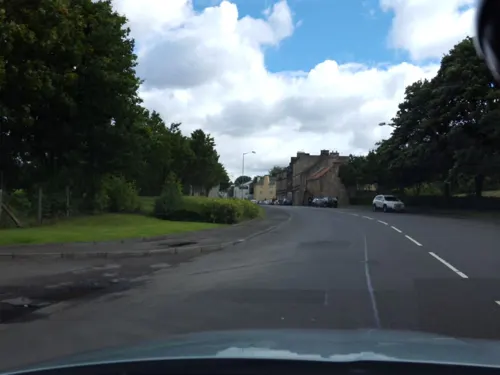
The Corbie Inn
Bar and pub · Burger, Chicken, Coffee Shop, Fish And Chips, Local, Regional
84 Corbiehall, Bo'ness
Mo-We 12:00-21:00; Th 12:00-22:00; Fr,Sa 12:00-23:00; Su 12:30-21:00
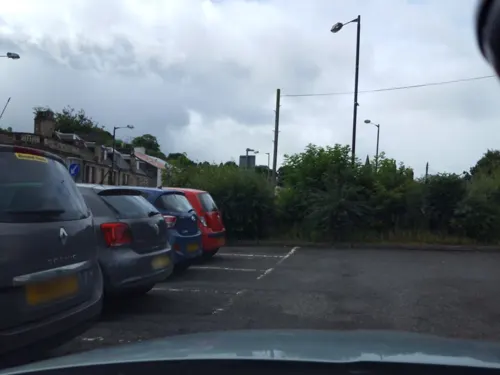
The Junction
Cafe · Coffee Shop
A warm welcoming space to meet friendly folk and connect with local help and support of you need it.
Mo,We,Fr-Su off; Tu,Th 12:30-15:00



12 more on the map.
History
Bo'ness has important historical links to the Roman period and marks the eastern extent of the Antonine Wall (at Carriden in the north-east of Bo'ness) which stretched from Bo'ness to Old Kilpatrick on the west coast of Scotland. The Antonine Wall was named as an extension to the Frontiers of the Roman Empire World Heritage Site by UNESCO in July 2007. A Roman fortlet can still be seen at Kinneil to the west of Bo'ness.
Roman artefacts, some with inscriptions, have been found in the eastern part of the town at Carriden. A Roman fort called Veluniate, long since lost to history, once stood on the site now occupied by the grounds of Carriden House. Indeed, it is said that stones from the fort were used in the building of the mansion house.
Several artefacts have been uncovered over the years by the local farming community, including the Bridgeness Slab with many of them now on display in the National Museum of Scotland or at the Hunterian Museum in Glasgow. A replica was unveiled by Bo'ness Community Council and Falkirk Council on 7 September 2012 in Kinningars Park. A video about its history and manufacture is available online. Other Roman sites have been identified at Muirhouses (known locally as 'The Murrays') and Kinglass on the south-east side of the town.
Read more of the history
The town was a recognised port from the 16th century. Coal was shipped from Bo'ness to supply Edinburgh Castle in 1548. A harbour was authorised by an Act of Parliament in 1707. The harbour, built in stages in the 18th century, was extended and complemented by a dry dock in 1881 (works designed by civil engineers Thomas Meik and Patrick Meik). The commercial port (heavily used for the transport of coal and pit props) eventually closed in 1959, badly affected by silting and the gradual downturn of the Scottish coal mining industry.
Plans currently exist for the regeneration of the docks area including reopening the port as a marina though these are on hold indefinitely. Shipowning and maritime businesses in the town is evidenced by the ownership of Kinneil, a ship owned by the Lovart Company of Bo’ness, that later sank in a collision off Denmark. Bo'ness was granted the right of exports and customs dues in 1672 and the office was transferred from Blackness. A large Customs House for the harbour was completed in 1880 on Union Street and still stands today as private dwellings.
Bo'ness was a site for coal mining from medieval times. Clay mining was carried out on a smaller scale. The shore was the site of industrial salt making, evaporating seawater over coal fires. The ruins of several fisheries (fish storage houses) along the shoreline evidences long gone commercial fishing activity. The town was also home to several sizable potteries, one product being the black 'wally dugs' which sat in pairs over many fireplaces. Metalworking is still carried out, and examples of the Bo'ness Iron Company's work are to be found in many places.
Kinneil Colliery was a large coal mine on the western edge of the town, that at its peak employed over 1,200 people. Production at the mine began in the late 19th century, expanded significantly after 1951 and was eventually merged with the Valleyfield Colliery via a tunnel underneath the Forth, connecting the two collieries. The mine closed in 1982 due to ‘severe geological conditions’. Today the above ground site is a nature reserve open to the public.
When the town's commissioners bought the land for the Bo'ness Town Hall and park in the 1890s, the town's prosperity was on the rise. By its completion, the story was not so encouraging. Plans for the town hall and original library were approved however by the Dean of Guild Court on 14 October 1902. The building was officially opened on 14 September 1904. As part of the ceremony, a memorial stone was laid beneath which was placed a glass jar containing a copy of The Scotsman, The Glasgow Herald, Bo'ness Journal and Linlithgow Gazette, a list of councillors and a copy of the council minutes.
In the twentieth century Bo'ness was one of several Scottish ports involved in the shipbreaking industry. The shipbreaking yard was established by the Forth Ship Breaking Company (1902–20), which was then taken over by P&W Maclellan who continued operating until about 1970. On a high spring tide the ship destined to be broken up would be manoeuvred to the far (north) side of the river and then steamed across with all speed to drive her as far as possible up the beach. A fo’c’stle crew would lower the ship's anchors as soon as she came to rest to stop her sliding back into the river. The bows would come almost up to Bridgeness Road. Among many ships scrapped at the yard were the ocean liners Belgenland and Metagama, cargo ship Empire Advocate, and warships HMS Lagos, Liverpool, Newark, Petard, Ramsey, Scorpion and Wheatland.
The Bo'ness Journal and Linlithgow Gazette was a newspaper published in the town. It is now The Linlithgow Journal and Gazette. The newspaper officers were at 37–43 North Street which was built in 1884 and today is a category B listed building in the town.
From the History section of Bo'ness on Wikipedia, under CC BY-SA 4.0.
More about Bo’ness
Economy
Ballantine Bo'ness Iron Company and Ballantine Engineering is an ironworks company in Bo’ness. The company was founded in 1856 and has produced ironworks for bridges in the UK, including the fascia panels of Westminster Bridge and North Bridge in Edinburgh. The company went into administration in 2013 but was revived with government support as ‘Ballantine Castings’ in 2014. In 2019, the company produced ironwork replacements for the roof of the Palace of Westminster and Elizabeth Tower. Other industry in the town includes Walker timberyard and sawmill which is in Bo'ness beside the Forth on the Carriden Industrial Estate.
One of the main local employers is the Ineos petrochemical facility (formerly BP) in nearby Grangemouth.
Kinneil House is a historic house to the west of Bo'ness now in the care of Historic Scotland. It sits within a public park, which also incorporates a section of the Roman Antonine Wall. Kinneil was mentioned by Bede, who wrote that it was named Pennfahel ('Wall's end') in Pictish and Penneltun in Old English. It was also Pengwawl in old Welsh. In the grounds of Kinneil House is the ruin of the small cottage where James Watt worked on his experimental steam engine and the steam cylinder of a Newcomen engine. The remains of an engine house are in Kinningars Park, off Harbour Road.
Arts and culture
Bo'ness is now primarily a commuter town, with many of its residents travelling to work in Edinburgh, Glasgow or Falkirk. Present-day attractions in the town include the Bo'ness and Kinneil Railway, the Birkhill Fireclay Mine and the local motor museum. Kinneil House, built by the powerful Hamilton family in the 15th century, lies on the western edge of the town.
Bo'ness is also home to the recently refurbished Hippodrome Cinema, which is the oldest picture house in Scotland. The building, along with many other buildings in Bo'ness, was designed by Matthew Steele, a local resident and architect. The Hippodrome was built in 1912. Some footage of it survives from 1950 during the Bo'ness Children's Fair Festival. The Bo'ness Children's Fair Festival continues to this day, covered by Valley FM, a local radio station that broadcasts for a limited number of days each year to cover the festival.
The town's war memorial is on a hill overlooking the Forth on Stewart Avenue. The war memorial is in the form of a large granite obelisk and was unveiled on 12 July 1924, with later plaques added after the Second World War. The town also has a commemorative clock and lantern, erected in 1985 through donations from the Linlithgow and Bo'ness Rotary Club.
Education
Bo'ness has a single secondary school, Bo'ness Academy. There are five primary schools: Kinneil, Deanburn, Bo'ness Public School, St Mary's, and the Grange School.
From the Wikipedia article Bo'ness, under CC BY-SA 4.0.
Notable people from Bo’ness
 James Brunton StephensAustralian poet (1835-1902)Photo: Poul C. Poulsen, Public domain
 George Husband BairdministerPhoto: Stephencdickson, CC BY-SA 4.0
 George W. EastonScottish footballer (1883-1966)Photo: Unknown author Unknown author, Public domain
- Alec McNairScottish footballer (1883–1951)
- Alexander RatcliffeBritish opinion journalist (1888-1947)
- Bobby McFarlaneScottish footballer (1897-1971)
- Tom BennettScottish footballer (born 1969)
- Henrietta Elizabeth MarshallBritish writer
- James MartinBritish association football player (1893-1940)
- Stewart ScullionScottish professional footballer
- William GrantScottish footballer (1905-1994)
- Duncan McDonaldScottish footballer
Born in Bo’ness, according to Wikidata (CC0). Each name links to its Wikipedia article.
Where to stay3
Churches and places of worship13
Craigmailen United Free Church
Church · United Free Church Of Scotland · 0.4 mi
12 Braehead, Bo'ness
St Peter's Episcopal Church, High Street, Linlithgow
Church · 2.8 mi
St Catharine's Church
Church · Scottish Episcopal · 0.4 mi
24 Cadzow Crescent, Bo'Ness
Shopping13
Gas and EV charging2
Schools, colleges and libraries7
Healthcare4
Map of Bo’ness
115 places. The map loads OpenStreetMap tiles when you open it.
Getting there and nearby towns
Edinburgh Airport (EDI) is the nearest airport with scheduled flights listed in OpenStreetMap, 11 miles away.
- Linlithgow 3 mi south, about 5 min by car
- Grangemouth 4 mi west, about 7 min by car
- Falkirk 7 mi west, about 11 min by car
- Dunfermline 7 mi northeast, about 12 min by car
- Rosyth 7 mi east, about 11 min by car
- Broxburn 8 mi southeast, about 13 min by car
- Livingston 9 mi southeast, about 14 min by car
- Whitburn 11 mi south, about 17 min by car
- Cowdenbeath 12 mi northeast, about 20 min by car
- Stirling 14 mi northwest, about 23 min by car
Drive times are estimates from straight-line distance, not routes.
Towns near Bo’ness


Keep exploring
Local news
Headlines from INDB.
Reviews, tips and questions
Loading what members have shared...
Sources and licences
- GeoNames (CC BY 4.0): population, coordinates, regions and time zone
- Mapillary (see each image): photos
- OpenStreetMap contributors (ODbL 1.0): places, airports, map data
- Wikidata (CC0 1.0): elevation, founding date, time zone, website, landmarks and historic places
- Wikimedia Commons (see each image): photos
- Wikipedia (CC BY-SA 4.0): overview and history text
Photo credits
- Museum of Scottish Railways exterior, Macfack, CC BY-SA 4.0
- Culross Palace, Lyall Duffus, CC BY-SA 2.0
- Slwa b3293551 1, Unknown author Unknown author, Public domain
- Linlithgow, St Michael's Church, Ammienoot, CC BY-SA 4.0
- St Michaels Church Linlithgow, Stmichaelswebsite, Public domain
- Linlithgow, High Street, St Peter's Episcopal Church - 20170923133941, Ammienoot, CC BY-SA 4.0
- Bo'ness Hippodrome, Kim Traynor, CC BY-SA 3.0
- Kinneil House, Tom Sargent, CC BY-SA 2.0
- Newtown Park, Bo'ness, paul c, CC BY-SA 2.0
- Hippodrome boness, G Barr Scottishcinemas ( talk ), CC BY-SA 3.0
- Bo'ness Hospital, Unknown author Unknown author, Public domain
- Boness & Kinneil station. - panoramio - tormentor4555, tormentor4555, CC BY-SA 3.0
- Boness & Kinneil station. - panoramio - tormentor4555 (1), tormentor4555, CC BY-SA 3.0
- Boness & Kinneil station. - panoramio, tormentor4555, CC BY-SA 3.0
- Hamish at Boness & Kinneil station. - panoramio, tormentor4555, CC BY-SA 3.0
- Boness & kineil station. - panoramio, tormentor4555, CC BY-SA 3.0
- Boness & Kinneil train. - panoramio, tormentor4555, CC BY-SA 3.0
- Mini train at Boness & kinnel. - panoramio, tormentor4555, CC BY-SA 3.0
- Boness & Kinneil signal box. - panoramio, tormentor4555, CC BY-SA 3.0
- Boness & Kinneil signals. - panoramio, tormentor4555, CC BY-SA 3.0
- 193 Corbiehall , St Mary's Building, Bo'ness, Stinglehammer, CC BY-SA 4.0
- 199 Corbiehall, St Mary's Building, Bo'Ness, Stinglehammer, CC BY-SA 4.0
- 197 Corbiehall, St Mary's Building, Bo'Ness, Stinglehammer, CC BY-SA 4.0
- Street-level photo, ccbb7766, CC BY-SA 4.0
- Street-level photo, hobgoblin, CC BY-SA 4.0
- Street-level photo, hobgoblin, CC BY-SA 4.0
- Street-level photo, hobgoblin, CC BY-SA 4.0
- Street-level photo, ccbb7766, CC BY-SA 4.0
- Street-level photo, ccbb7766, CC BY-SA 4.0
- Street-level photo, pbb, CC BY-SA 4.0
- Street-level photo, hobgoblin, CC BY-SA 4.0
- Street-level photo, hobgoblin, CC BY-SA 4.0
- Street-level photo, ally447, CC BY-SA 4.0
- Street-level photo, ccbb7766, CC BY-SA 4.0
- Street-level photo, recumberic, CC BY-SA 4.0
- Street-level photo, hobgoblin, CC BY-SA 4.0
- Street-level photo, hobgoblin, CC BY-SA 4.0
- Street-level photo, smsm1, CC BY-SA 4.0
- Street-level photo, ccbb7766, CC BY-SA 4.0
- Street-level photo, smsm1, CC BY-SA 4.0
- Street-level photo, ccbb7766, CC BY-SA 4.0
- Street-level photo, hobgoblin, CC BY-SA 4.0
- Street-level photo, ccbb7766, CC BY-SA 4.0
- Street-level photo, hobgoblin, CC BY-SA 4.0
- Street-level photo, hobgoblin, CC BY-SA 4.0
- Street-level photo, smsm1, CC BY-SA 4.0
- Street-level photo, smsm1, CC BY-SA 4.0
- Street-level photo, ccbb7766, CC BY-SA 4.0
- Street-level photo, hobgoblin, CC BY-SA 4.0
- Street-level photo, hobgoblin, CC BY-SA 4.0
- Street-level photo, hobgoblin, CC BY-SA 4.0
- Street-level photo, hobgoblin, CC BY-SA 4.0
- Street-level photo, hobgoblin, CC BY-SA 4.0
- Street-level photo, hobgoblin, CC BY-SA 4.0


Page built November 10, 2026. Spotted a mistake? Tell us or suggest a place.