

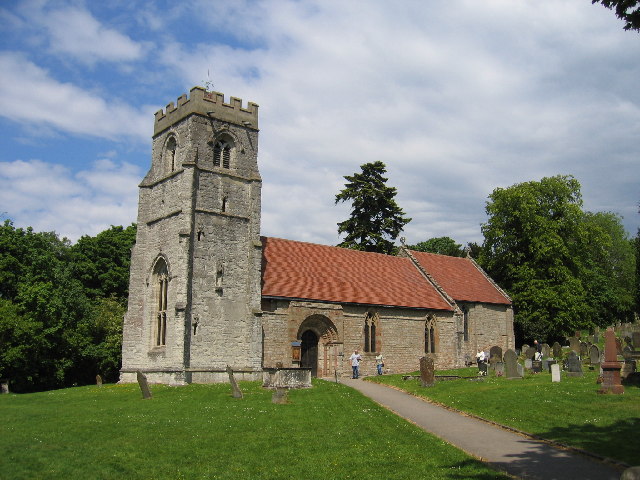


Henley in Arden, United Kingdom
Henley in Arden is a town of 2,859 people in England, United Kingdom.
Why visit Henley in Arden
Townapedia lists 3 museums and landmarks, 4 parks and trails, 15 places to eat, 2 places to stay and 1 attraction in and around town.
Highlights include Botley Hill, Beaudesert Castle, Henley-in-Arden Heritage Centre and Henley Sidings.
Weather in Henley in Arden
Forecast from MET Norway (CC BY 4.0). Full forecast
About Henley in Arden
Henley-in-Arden (also known as simply Henley) is a market town and civil parish in the Stratford-on-Avon District in Warwickshire, England. The town takes its last name from the former Forest of Arden. Henley is known for its variety of historic buildings, some of which date back to medieval times, and its wide variety of preserved architectural styles. The one-mile-long (1.6 km) High Street is a conservation area.
From the Wikipedia article Henley-in-Arden (this version), under CC BY-SA 4.0.
Travel tips from other travellers: Henley in Arden on Wikivoyage (CC BY-SA 4.0).
Photos of Henley in Arden

Things to do1

Museums and landmarks3


Henley-in-Arden Heritage Centre
Museum
150 High Street, Henley-in-Arden
Tu-Fr 12:00-16:00; Sa,Su 14:00-16:00

Parks, trails and playgrounds4



Restaurants and cafes15



Henley Mile Brewery
Bar and pub
Station Road, Henley-in-Arden
Th-Fr 16:00-22:00; Sa 12:00-22:00; Su 12:00-18:00


3 more on the map.
History
Henley-in-Arden is not listed in the Domesday Book and may not have existed until the 12th century. The first record of the town is in a legal instrument drawn during the reign of Henry II. It was originally a hamlet of Wootton Wawen, on Feldon Street, the original route out of the Forest of Arden.
In the 11th century, a Thurstan de Montfort constructed Beaudesert Castle, a motte and bailey castle, on the hill above Beaudesert. In 1140, the Empress Matilda granted the right to hold a market at the castle in 1141 and Henley soon became a prosperous market town, conveniently located on the busy Birmingham-to-Stratford road. In 1220 in the reign of Henry III, the lord of the manor, Peter de Montfort, procured the grant of a weekly Monday market and an annual fair to last two days, for the town.
Read more of the history
The initial prosperity came to an end during the Second Barons' War when, in 1265, Peter de Montfort died fighting at the Battle of Evesham. The royalist forces won, and the town and castle were burnt in reprisal. The town and castle recovered however and Henley became a borough in 1296. In 1315 all of the recorded townsfolk were freemen. The King stayed at the castle for 7 days in January 1324. By 1336 the market was so prosperous that the inhabitants were able to obtain a licence from Edward III to impose a local sales tax on all goods brought to the market, for a period of three years, in order to pay for the cost of paving the streets.
The Lord of the Manor, Peter de Montfort 3rd Baron Montfort, as Commissioner of Array for Warwickshire sent 160 archers to the Battle of Crecy during the Hundred Years' War in 1346. By the 15th century, the lords of the manor were the Boteler family. Ralph Boteler, 1st Baron Sudeley obtained a charter from Henry VI in 1449, confirming the grant of the new weekly market, and a grant for two annual fairs.
The town suffered another misfortune during the English Civil War, when in 1643 Prince Rupert who was in charge of the Royalist forces, marched his soldiers through the town in 1643 on his way to Birmingham and pillaged the neighbourhood.
As a non-chartered market town, Henley's administration was based upon a manorial court. Under the lord of the manor were a high bailiff, a low bailiff, a third-borough, a constable, and pairs of ale-tasters, chamberlains, leathersealers, brook lookers, fieldreeves, and affearors. These local borough officials were chosen annually by a meeting of former bailiffs and constables, and were members of the jury of the biannual court leet. The bailiff, accompanied by his predecessors, would formally open the annual town fair. The town hall was inherited from a medieval Guild. The records of the court leet and the court baron in Henley date from 1592 onwards. The court rolls are largely concerned with (in Dyer's words) modest problems, such as preventing the poor from migrating into the town (which burgers considered would become a burden on the rates and result in the destruction of hedges for fuel), the ringing of loose pigs, and the prevention of horses being parked in the streets. The poor were a significant problem for Henley's court leet. In the early 17th century there was a marked increase in the landless poor, squatting on commons and on wasteland in the Forest of Arden, and such people were generally regarded as violent and criminal by townsfolk. Between 1590 and 1620 there were a disproportionate number of people, relative to the size of the population, presented by the court leet for engaging in violent affray, something which Underdown states to be "surely no coincidence".
In Love's Labours Lost Rosaline says "Better wits have worn plain Statute Caps.". This is believed to be a reference to events in Henley during the writing of that play, before its publication, when the denizens of Henley were prosecuted in the court leet for being in breach of a statute (enacted with the aim of ensuring economic support for the wool industry) that required the wearing of woollen caps on Sundays and other holy days.
By 1814, Henley had a weekly market every Monday, three annual fairs (on Lady Day; on Tuesday in Whitsunday-week, for cattle; and on 29 October for horses, cattle, sheep, and hops), and a population in 1811 (according to returns made to Parliament) of 1,055 (with 242 inhabited houses and 12 uninhabited houses).
Although the castle no longer remains, several other historical buildings and structures still exist in the town, such as the parish churches of St. Nicholas and St. John the Baptist, the 15th century Guildhall (which has been restored), the medieval market cross (much of the decoration of whose shaft has been mutilated but which has three ranges of kneeling places and sculptures representing the Holy Trinity, the crucifixion of Jesus, and, it is believed, St Peter), the 16th century White Swan, and several half timbered residences along High Street, the main street of the town.
Historically, Henley has had several private lunatic asylums. The first was licensed in 1744, which housed pauper lunatics at the expense of the parish. Another was run by Thomas Burman in 1795, who charged "one guinea/week for board and medicines, the patient finding their own linen and washing. If any person chuses a servant constantly to attend on them, board and wages are separately considered.". There was still a private asylum in the town in the 1880s. page 55
From the History section of Henley-in-Arden on Wikipedia, under CC BY-SA 4.0.
More about Henley in Arden
Education
Schools serving the town include Henley-in-Arden Montessori Primary School, Henley-In-Arden CE Primary School, Henley-in-Arden School, Venture Academy and St Mary's RC Primary School.
From the Wikipedia article Henley-in-Arden, under CC BY-SA 4.0.
Notable people from Henley in Arden
 Mat JacksonBritish racing driverPhoto: Cs-wolves, CC BY-SA 4.0
- Niall TreacyBritish short track speed skater
- Charles FryEnglish cricketer (born 1940)
- William JamesEnglish lawyer, surveyor and railway promoter (1771-1837)
- Benjamin BeddomeBritish hymn writer
Born in Henley in Arden, according to Wikidata (CC0). Each name links to its Wikipedia article.
Where to stay2
Churches and places of worship4
Shopping3
Gas and EV charging1
Schools, colleges and libraries8
Healthcare1
Map of Henley in Arden
42 places. The map loads OpenStreetMap tiles when you open it.
Getting there and nearby towns
Birmingham Airport (BHX) is the nearest airport with scheduled flights listed in OpenStreetMap, 11 miles away.
- Hockley Heath 4 mi north, about 7 min by car
- Wilmcote 5 mi south, about 8 min by car
- Hatton 6 mi east, about 10 min by car
- Redditch 7 mi west, about 12 min by car
- Knowle 7 mi north, about 11 min by car
- Stratford-upon-Avon 7 mi southeast, about 12 min by car
- Warwick 8 mi east, about 13 min by car
- Solihull 9 mi north, about 14 min by car
- Kenilworth 9 mi northeast, about 15 min by car
- Royal Leamington Spa 11 mi east, about 18 min by car
Drive times are estimates from straight-line distance, not routes.
Towns near Henley in Arden


Keep exploring
Local news
Headlines from INDB.
Reviews, tips and questions
Loading what members have shared...
Sources and licences
- GeoNames (CC BY 4.0): population, coordinates, regions and time zone
- Mapillary (see each image): photos
- OpenStreetMap contributors (ODbL 1.0): places, airports, map data
- Wikidata (CC0 1.0): elevation, founding date, time zone, website, landmarks and historic places
- Wikimedia Commons (see each image): photos
- Wikipedia (CC BY-SA 4.0): overview and history text
Photo credits
- Beaudesert Castle, Chris Gunns, CC BY-SA 2.0
- St Nicholas' Church, Beaudesert, Warwickshire, David Stowell, CC BY-SA 2.0
- St John's Church, Henley-in-Arden - Tower, Elliott Brown, CC BY 2.0
- All Saints, Preston Bagot, Poliphilo, CC0
- Henley Sidings 5, Dudley Miles, CC BY-SA 4.0
- Henley-in-Arden - Carrer Major, flamenc, CC BY-SA 3.0
- 167 and Thresher, 169 High Street, Henley-in-Arden (4451086145), Elliott Brown from Birmingham, United Kingdom, CC BY 2.0
- Henley Ice Cream - 152 High Street, Henley-in-Arden - on School Road (4460294791), Elliott Brown from Birmingham, United Kingdom, CC BY 2.0
- Sans Oriental Restaurant 71a High Street and St Loes, 77 High Street, Henley-in-Arden (4444332760), Elliott Brown from Birmingham, United Kingdom, CC BY 2.0
- Street-level photo, southglos, CC BY-SA 4.0
- Street-level photo, laye, CC BY-SA 4.0
- Street-level photo, laye, CC BY-SA 4.0
Page built November 10, 2026. Spotted a mistake? Tell us or suggest a place.