


Lockerbie, United Kingdom
Lockerbie is a town of 4,190 people in Scotland, United Kingdom.
Why visit Lockerbie
Townapedia lists 7 museums and landmarks, 6 parks and trails, 7 places to eat, 3 places to stay and 1 attraction in and around town.
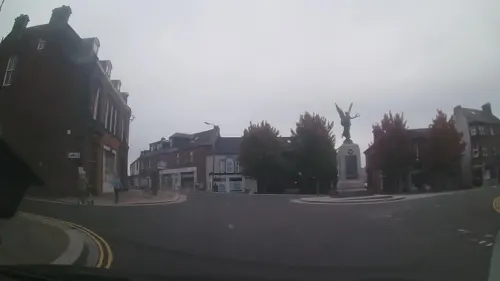
Highlights include Lochmaben Castle, Lockerbie War Memorial and Lockerbie Golf Club.
Weather in Lockerbie
Forecast from MET Norway (CC BY 4.0). Full forecast
About Lockerbie
Lockerbie (, Scottish Gaelic: Locarbaidh) is a historic market town in Dumfries and Galloway, south-western Scotland. The town lies near the River Annan, approximately 58 miles (93 km) south-southwest of Edinburgh, 62 miles (100 km) south-east of Glasgow, and 10 miles (16 km) east-northeast of Dumfries. The town had a population of 4,412 in 2022.
From the Wikipedia article Lockerbie (this version), under CC BY-SA 4.0.
Travel tips from other travellers: Lockerbie on Wikivoyage (CC BY-SA 4.0).
Photos of Lockerbie


Things to do1

Museums and landmarks7

Lochmaben Castle
Monument and historic site · 2.9 mi
Castle in Dumfries and Galloway, Scotland, UK


Lockerbie Air Disaster Memorial
Monument and historic site · 0.9 mi
Memorial to the victims of the PanAm 103 bombing
Parks, trails and playgrounds6



Restaurants and cafes7

History
Lockerbie has existed since at least the days of Viking influence in this part of Scotland in the period around 900. The name (originally "Loc-hard's by") means Lockard Town in Old Norse. It first entered recorded history in the 1190s in a charter of Robert de Brus, 2nd Lord of Annandale, granting the lands of Lockerbie to Adam de Carlyle. It appears as Lokardebi in 1306.
About two miles (three kilometres) west of Lockerbie on 7 December 1593, Clan Johnstone fought Clan Maxwell at the Battle of Dryfe Sands. The Johnstones killed many Maxwells involved in the battle and left many with sword cuts on their heads, leading to the expression "Lockerbie Lick".
Lockerbie's main period of growth started in 1730 when the landowners, the Johnstone family, made plots of land available along the line of the High Street, producing in effect a semi-planned settlement. By 1750, Lockerbie had become a significant town and it was a staging post on the carriage route from Glasgow to London from the 1780s.
Read more of the history
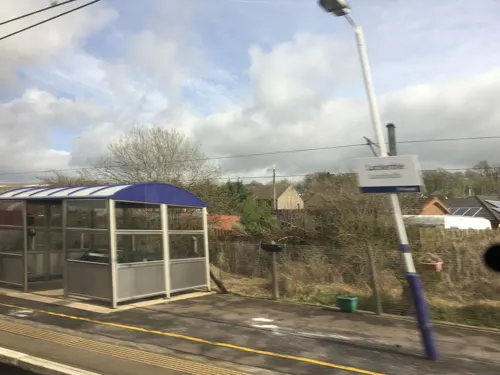
Perhaps the most important period of growth was during the 19th century. Thomas Telford's Carlisle-to-Glasgow road was built through Lockerbie from 1816. The Caledonian Railway opened the line from Carlisle to Beattock through Lockerbie in 1847 and, later, all the way to Glasgow. From 1863 until 1966, Lockerbie was also a railway junction, serving a branch line to Dumfries. Known as the Dumfries, Lochmaben and Lockerbie Railway, it was closed to passengers in 1952 and to freight in 1966. The town is served by Lockerbie railway station.
The population at the time of the 1841 census was 1,313 inhabitants.
Lockerbie had been home to Scotland's largest lamb market since the 18th century but the arrival of the Caledonian Railway increased further its role in the cross-border trade in sheep. The railway also produced a lowering in the price of coal, allowing a gas works to be built in the town in 1855.
About 1+1⁄2 miles (2.5 kilometres) south of Lockerbie, along the C92 road to Dalton, there are the remains of Hallmuir prisoner-of-war camp. After the Second World War, this camp housed Ukrainian soldiers from the Galician Division of the Waffen SS. They built a chapel from converted army huts. It was listed in 2003 as a Category B building. The chapel remains in use, currently holding Ukrainian services on the first Sunday of every alternate month.
Lockerbie is known internationally as the place where, on 21 December 1988, the wreckage of Pan Am Flight 103 crashed after a terrorist bomb on board detonated. In the United Kingdom, the event is often referred to as the "Lockerbie disaster" or the "Lockerbie bombing". Eleven residents of the town were killed in Sherwood Crescent, where the aircraft's wings and fuel tanks plummeted in a fiery explosion, destroying several houses and leaving a large crater, with debris causing damage to other buildings nearby; all 259 people on the flight also died. The 270 total victims were citizens of 20 different nations. The event remains the deadliest terrorist attack and aviation disaster in Britain.
Memorial walls are located at the field where the main plane wreckage landed in Lockerbie, Scotland, and at Syracuse University Main Campus (See, below). In addition, one passenger also landed near the firehouse in town, and a rosebush was planted for Syracuse University student Suzanne Miazga, niece of Joseph and Barbara Bien. Julie Ann Racino discovered the rosebush on her working trip to England, Wales and Scotland in 1990-1991, leading to a love story between George White (now deceased) of Lockerbie, Scotland and Anna Marie Miazga of Marcy, NY.
Lockerbie Academy, the town's high school, became the headquarters for the response and recovery effort after the Pan Am Flight 103 disaster. Subsequently, the academy, in cooperation with Syracuse University of Syracuse, New York, US, which lost 35 students in the bombing, established a scholarship at the university. Each year, two students spend one academic year at Syracuse University as Lockerbie Scholars before they begin their university study. The rector of Lockerbie Academy, Graham Herbert, was recognised in November 2003 at Syracuse University with the Chancellor's Medal for outstanding service. A former student of the academy, Helen Jones, was killed in the 7 July 2005 London bombings. In her memory, a new scholarship was set up, awarding £1000 towards further education to aspiring accounting students from the academy.
Dryfesdale Lodge Visitors' Centre, formerly a cemetery worker's cottage, was opened on 25 October 2003 after extensive renovation work funded by the Lockerbie Trust and is maintained with grant assistance from Dumfries & Galloway Council. There are two exhibition rooms in the Lodge and also the Dryfesdale Room that is used as a quiet room for visitors to reflect. A permanent exhibition room displays ten history panels depicting Lockerbie's past, stretching from its prehistoric origins to 1988's terrorist attack and beyond. In the cemetery grounds nearby is the Lockerbie Memorial Garden of Remembrance.
Steven's Croft power station opened in 2008 just to the north of the town. It is the largest biomass-powered electric generator in the UK.
From the History section of Lockerbie on Wikipedia, under CC BY-SA 4.0.
More about Lockerbie
Arts and culture
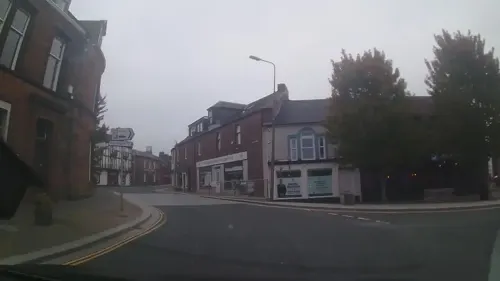
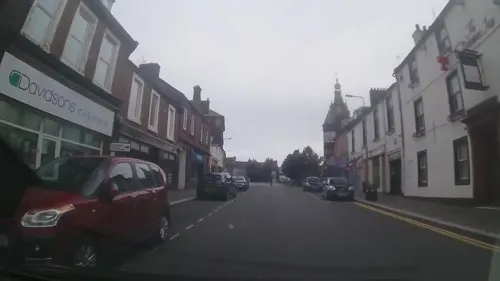
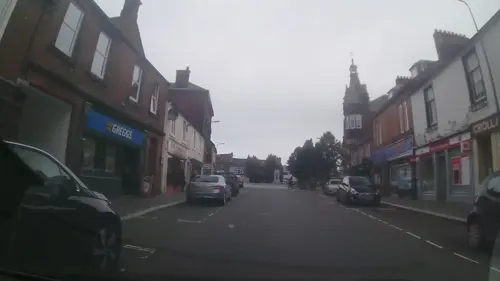
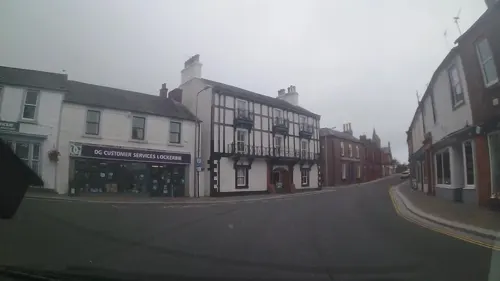
Much of Lockerbie is built from red sandstone. There are several imposing buildings near the centre, including Lockerbie Town Hall, completed in 1880.
A little to the north of the centre is the Dryfesdale Parish Church, with its brightly decorated interior. The name Dryfesdale comes from the local river, the Dryfe Water, which joins the River Annan a little to the west of the town.
Lockerbie House was built in 1814 for Sir William Douglas, 4th Baronet of Kelhead and Dame Grace Johnstone and their children: Mary, Catherine, Christian, Henry Alexander, William Robert Keith Douglas, Charles Douglas, 6th Marquess of Queensberry and John Douglas, 7th Marquess of Queensberry. It was inhabited by several different members of the Douglas family through the generations, including both Archibald Douglas, 8th Marquis of Queensberry (son of John Douglas) and his wife Caroline Margaret Clayton (daughter of General Sir William Robert Clayton MP) and their children British mountaineer Lord Francis William Bouverie Douglas, Lady Gertrude Georgiana Douglas, John Sholto Douglas, Viscount Drumlanrig and later the 9th Marquess of Queensberry, clergyman Lord Archibald Edward Douglas and the twins Lord James Douglas and Lady Florence Dixie (who married Sir Alexander Beaumont Churchill Dixie, 11th Baronet).
Education
Lockerbie has a secondary school and a primary school that are in the same building. The school previously had another secondary school that was built in the 1960’s and demolished in 2010 for a residential area. Lockerbie has a school building called Lockerbie Old School (Previously Dryfesdale Public School and Lockerbie Primary). Lockerbie Academy also has a Scholarship with Syracuse University after the Lockerbie Bombing.
From the Wikipedia article Lockerbie, under CC BY-SA 4.0.
Notable people from Lockerbie
 Claire HamiltonScottish and British curlerPhoto: Krazytea, CC BY-SA 3.0
- David JardineBritish association football player (1867-?)
- George JonesScottish cricketer, born 1907
- David KnoxBritish politician (born 1933)
- Thomas GiffordCanadian politician (1854–1935)
- John JardineCanadian politician from British Columbia (1854-1937)
- Janet GrahamScottish poet
- Jimmy JamiesonScottish footballer
Born in Lockerbie, according to Wikidata (CC0). Each name links to its Wikipedia article.
Where to stay3
Churches and places of worship5
All Saints' Scottish Episcopal Church
Church
Ashgrove Terrace, Lockerbie
Ukranian Chapel and War Memorial, Hallmuir Prisoner of War Camp, Lockerbie
Church · 1.7 mi
Shopping1
Schools, colleges and libraries2
Healthcare2
Map of Lockerbie
34 places. The map loads OpenStreetMap tiles when you open it.
Getting there and nearby towns
Carlisle Lake District Airport (CAX) is the nearest airport with scheduled flights listed in OpenStreetMap, 25 miles away.
- Dumfries 11 mi west, about 17 min by car
- Moffat 15 mi north, about 24 min by car
- Longtown 17 mi southeast, about 28 min by car
- Silloth 18 mi south, about 28 min by car
- Thornhill 18 mi northwest, about 29 min by car
- Burgh by Sands 18 mi southeast, about 29 min by car
- Carlisle 23 mi southeast, about 37 min by car
- Dalston 24 mi southeast, about 39 min by car
- Aspatria 25 mi south, about 40 min by car
- Scotby 25 mi southeast, about 40 min by car
Drive times are estimates from straight-line distance, not routes.
Towns near Lockerbie


Keep exploring
Local news
Headlines from INDB.
Reviews, tips and questions
Loading what members have shared...
Sources and licences
- GeoNames (CC BY 4.0): population, coordinates, regions and time zone
- Mapillary (see each image): photos
- OpenStreetMap contributors (ODbL 1.0): places, airports, map data
- Wikidata (CC0 1.0): elevation, founding date, time zone, website, landmarks and historic places
- Wikimedia Commons (see each image): photos
- Wikipedia (CC BY-SA 4.0): overview and history text
Photo credits
- Lockerbie from above, StaraBlazkova, Public domain
- Dumfries and Galloway - Lockerbie, Dryfesdale Parish Church - 20230206104842, Secretlondon, CC BY-SA 4.0
- Dumfries and Galloway - 7-11 High Street, Lockerbie - 20230206104622, Secretlondon, CC BY-SA 4.0
- Dumfries and Galloway - 15-17 High Street, Lockerbie - 20230206104403, Secretlondon, CC BY-SA 4.0
- Dumfries and Galloway - Lockerbie, 21-23 High Street - 20230206104417, Secretlondon, CC BY-SA 4.0
- Dumfries and Galloway - Lockerbie, 10 High Street, Dryfesdale Parish Church Hall - 20230206104947, Secretlondon, CC BY-SA 4.0
- Dumfries and Galloway - Lockerbie, Dryfesdale Parish Church - 20230206104915, Secretlondon, CC BY-SA 4.0
- Dumfries and Galloway - Lockerbie, Dryfesdale Parish Church - 20230206104908, Secretlondon, CC BY-SA 4.0
- 02716 Dryfesdale Church of Scotland, Lockerbie 005, WeeHolly, CC BY-SA 4.0
- 02716 Dryfesdale Church of Scotland, Lockerbie 020, WeeHolly, CC BY-SA 4.0
- 02716 Dryfesdale Church of Scotland, Lockerbie 011, WeeHolly, CC BY-SA 4.0
- 02716 Dryfesdale Church of Scotland, Lockerbie 002, WeeHolly, CC BY-SA 4.0
- 02716 Dryfesdale Church of Scotland, Lockerbie 027, WeeHolly, CC BY-SA 4.0
- 02716 Dryfesdale Church of Scotland, Lockerbie 001, WeeHolly, CC BY-SA 4.0
- 02716 Dryfesdale Church of Scotland, Lockerbie 006, WeeHolly, CC BY-SA 4.0
- 02716 Dryfesdale Church of Scotland, Lockerbie 014, WeeHolly, CC BY-SA 4.0
- 02716 Dryfesdale Church of Scotland, Lockerbie 023, WeeHolly, CC BY-SA 4.0
- 02716 Dryfesdale Church of Scotland, Lockerbie 021, WeeHolly, CC BY-SA 4.0
- 02716 Dryfesdale Church of Scotland, Lockerbie 030, WeeHolly, CC BY-SA 4.0
- 02716 Dryfesdale Church of Scotland, Lockerbie 019, WeeHolly, CC BY-SA 4.0
- 02716 Dryfesdale Church of Scotland, Lockerbie 003, WeeHolly, CC BY-SA 4.0
- 02716 Dryfesdale Church of Scotland, Lockerbie 012, WeeHolly, CC BY-SA 4.0
- 02716 Dryfesdale Church of Scotland, Lockerbie 008, WeeHolly, CC BY-SA 4.0
- 02716 Dryfesdale Church of Scotland, Lockerbie 022, WeeHolly, CC BY-SA 4.0
- 02716 Dryfesdale Church of Scotland, Lockerbie 029, WeeHolly, CC BY-SA 4.0
- 02716 Dryfesdale Church of Scotland, Lockerbie 024, WeeHolly, CC BY-SA 4.0
- Lochmaben Castle 01, Otter, CC BY-SA 3.0
- All Saints Church, Lockerbie, Chris Newman, CC BY-SA 2.0
- Dumfries and Galloway - Lockerbie, High Street, War Memorial - 20230206102347, Secretlondon, CC BY-SA 4.0
- Dumfries and Galloway - King's Arms Hotel, 29 High Street, Lockerbie - 20230206104113, Secretlondon, CC BY-SA 4.0
- Street-level photo, laye, CC BY-SA 4.0
- Street-level photo, laye, CC BY-SA 4.0
- Street-level photo, laye, CC BY-SA 4.0
- Street-level photo, toho, CC BY-SA 4.0
- Street-level photo, trigpoint, CC BY-SA 4.0
- Street-level photo, trigpoint, CC BY-SA 4.0
- Street-level photo, trigpoint, CC BY-SA 4.0
- Street-level photo, trigpoint, CC BY-SA 4.0
- Street-level photo, trigpoint, CC BY-SA 4.0
- Street-level photo, trigpoint, CC BY-SA 4.0
- Street-level photo, toho, CC BY-SA 4.0


Page built November 10, 2026. Spotted a mistake? Tell us or suggest a place.