


Oxford, United Kingdom
Oxford is a city of 162,100 people in England, United Kingdom, founded in 1000.
Why visit Oxford
Townapedia lists 96 museums and landmarks, 73 parks and trails, 147 places to eat, 37 places to stay and 61 attractions in and around town.
Highlights include Oxford Playhouse, Burton Taylor Studio, Ashmolean Museum and Modern Art Oxford.
Weather in Oxford
Forecast from MET Norway (CC BY 4.0). Full forecast
About Oxford
Oxford is a cathedral city and non-metropolitan district in Oxfordshire, England, of which it is the county town.
From the Wikipedia article Oxford (this version), under CC BY-SA 4.0.
Travel tips from other travellers: Oxford on Wikivoyage (CC BY-SA 4.0).
Photos of Oxford

Things to do61

Oxford Playhouse
Cinema and theater
Oxford Playhouse is a theatre for everyone.
11-12 Beaumont Street, Oxford
unknown


The Ultimate Picture Palace
Cinema and theater · 0.8 mi
Small, art house cinema. We are open 7 days a week. We open the cinema and box office 30 minutes before the scheduled start time of each film.
57-58 Jeune Street, Oxford
unknown

Phoenix Picturehouse
Cinema and theater · 0.7 mi
Opens 15 minutes before the first film of the day
57-58 Walton Street, Oxford
unknown


Holywell Music Room
Cinema and theater
Oxford's chamber music hall
Holywell Street, Oxford
unknown


O'Reilly Theatre
Cinema and theater · 0.5 mi
Studio theatre in Oxford, England
Blackhall Road, Oxford
49 more on the map.
Museums and landmarks96

Ashmolean Museum
Museum
Museum in Oxford, England, UK
Beaumont Street, Oxford
Mo-Su 10:00-17:00; Fr[-1] 10:00-20:00

Modern Art Oxford
Museum
Art gallery in Oxford, England
30 Pembroke Street, Oxford
Tu-Sa 11:00-18:00; Su 11:00-16:00

Pitt Rivers Museum
Museum · 0.5 mi
Museum in Oxford, England, UK
3 Parks Road, Oxford
Mo-Su 10:00-17:00


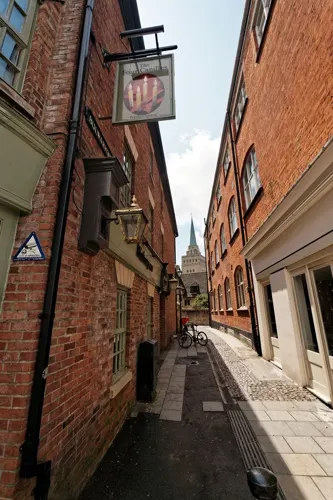

Oxford University Museum of Natural History
Museum · 0.4 mi
Museum in Oxford, United Kingdom
Parks Road, Oxford
Mo-Su 10:00-17:00


84 more on the map.
Parks, trails and playgrounds73

University of Oxford Botanic Garden
Park · 0.4 mi
Rose Lane
10:00-18:00 open, 10:00-17:00 open "last entry"





Turrill Sculpture Garden
Park · 1.9 mi
Enjoy the garden through Summertown Library
South Parade, Oxford
Mo,Fr 09:30-17:00; Tu,Th 09:30-18:30; Sa 09:30-16:00
Angel and Greyhound Meadow
Park · 0.6 mi
Mo-Sa 07:30-sunset; Su,PH 10:00-dusk
61 more on the map.
Restaurants and cafes147
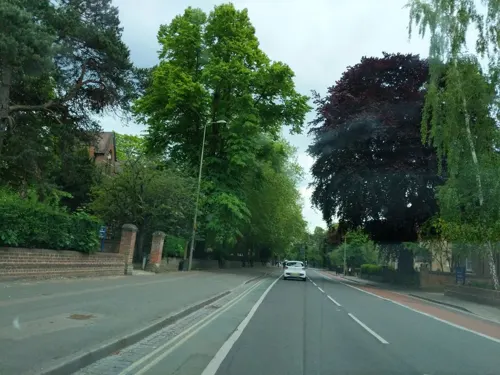
Gee's
Restaurant · Mediterranean · 0.9 mi
There is an option of Sunday Lunch
61A Banbury Road, Oxford
Mo-Su 09:00-22:30

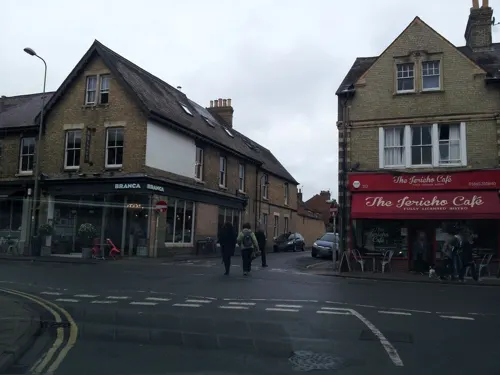
Jericho Tavern
Bar and pub · 0.7 mi
56 Walton Street, Oxford
Mo-Th 12:00-23:00, Fr,Sa 12:00-24:00, Su 12:00-23:00

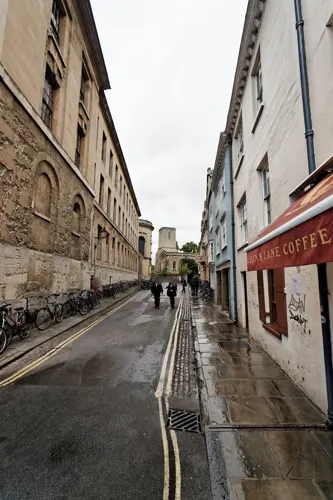
Queen's Lane Coffee House
Cafe · Coffee Shop
40 High Street, Oxford
Mo-Th 08:00-18:00; Fr 08:00-18:30; Sa 08:00-19:00; Su 08:00-18:30

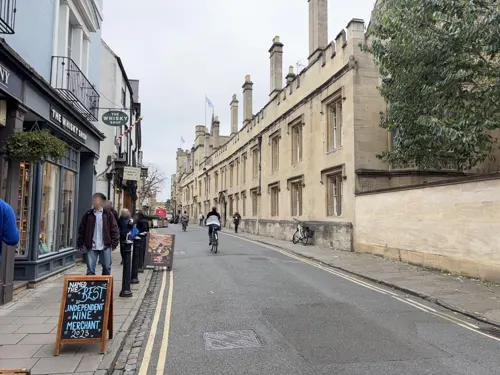
The Missing Bean
Cafe · Coffee Shop
14 Turl Street, Oxford
Mo-Fr 08:00-16:30; Sa 09:00-17:00; Su 10:00-16:00

Cherwell Boathouse
Restaurant · British · 1.2 mi
There are the options of Set Menu and Sunday Set Menu
50 Bardwell Road, Oxford
Mo,We-Th 12:00-14:00,18:00-20:45; Fr 12:00-14:15,18:00-21:00; Sa...

Love Coffee Co.
Cafe · Coffee Shop
130 High Street, Oxford
Mo-Fr 06:00-20:00; Sa 06:00-21:00; Su 07:30-20:00

The Four Candles
Bar and pub
51-53 George Street, Oxford
Mo-We 09:00-23:00; Th-Sa 09:00-01:00; Su 09:00-24:00
135 more on the map.
History
The history of Oxford dates back to its original settlement in the Saxon period. The name “Oxford” comes from the Old English Oxenaforda, meaning “ford of the oxen,” referring to a shallow crossing in the river where oxen could pass. The town was of strategic significance, because of the ford and the town's controlling location on the upper reaches of the river Thames at its confluence with the river Cherwell.
After the Norman Conquest in 1066, Norman lord Robert D’Oyly built Oxford Castle in 1071 to secure control of the area. The town grew in national importance during the early Norman period.
Teaching began in the 11th century, and by the late 12th century the town was home to the fledgling University of Oxford, the oldest university in the English-speaking world. Tensions sometimes erupted between the scholastic community and the town; in 1209, after a townsperson hanged two scholars for an alleged murder, a number of Oxford academics fled and founded Cambridge University. Town-and-gown conflicts continued, culminating in the St. Scholastica Day Riot of 1355 – a feuding that lasted days and left around 93 students and townspeople dead.
Oxford was besieged during The Anarchy in 1142. During the Middle Ages, Oxford had an important Jewish community, of which David of Oxford and his wife Licoricia of Winchester were prominent members. The university rose to dominate the town.
Read more of the history
A heavily ecclesiastical town, Oxford was greatly affected by the changes of the English Reformation. Its ecclesiastical institutions were dismantled; the city’s monasteries were closed in the 1530s. Religious strife touched Oxford directly during the Marian persecution; the Oxford Martyrs were tried for heresy here. Bishops Hugh Latimer and Nicholas Ridley were burned at the stake in Oxford in October 1555, and the former Archbishop Thomas Cranmer was executed in March 1556. A Victorian-era monument, the Martyrs’ Memorial in St Giles’, now commemorates these events.
Oxford was elevated from town to city status in 1542 when the Diocese of Oxford was created; Christ Church college chapel was made a cathedral, officially granting its city privileges.
During the English Civil War, Charles I made Oxford his de facto capital (1642–1646); he moved his court to Oxford, using the city as his headquarters after being expelled from London.
The city began to grow industrially during the 19th century and had an industrial boom in the early 20th century. Traditional industries included brewing and publishing; Oxford University Press and other print houses were major employers by the 19th century. In 1910, entrepreneur William Morris (later Lord Nuffield) founded a motor car business in Oxford, opening an assembly plant at Cowley.
The city’s population and economy grew with this industrial boom, diversifying beyond the university.
The Oxford Canal was completed to Oxford in 1790; the canal linked the city with the industrial Midlands, and allowed a steady supply of cheap coal to be transported to the city. Since the 1960s, it has been used for leisure.
Oxford has had three main railway stations. The first was opened at Grandpont in 1844, but this was a terminus, inconvenient for routes to the north; it was replaced by the present station on Park End Street in 1852 with the opening of the Birmingham route. Another terminus, at Rewley Road, was opened in 1851 to serve the Bletchley route; this station closed in 1951. There have also been a number of local railway stations, all of which are now closed. The present station opened in 1852.
In 1844, the Great Western Railway linked Oxford with London Paddington via Didcot and Reading; in 1851, the London & North Western Railway opened its own route from Oxford to London Euston, via Bicester, Bletchley and Watford Junction; in 1864, a third route, also to Paddington, running via Thame, High Wycombe and Maidenhead, was provided; this was shortened in 1906 by the opening of a direct route between High Wycombe and London Paddington by way of Denham. The distance from Oxford to London was 78 miles (125.5 km) via Bletchley; 63.5 miles (102.2 km) via Didcot and Reading; 63.25 miles (101.8 km) via Thame and Maidenhead; and 55.75 miles (89.7 km) via Denham.
Only the original Didcot route is still in use for its full length, portions of the others remain. There were also routes to the north and west. The line to Banbury was opened in 1850, and was extended to Birmingham Snow Hill in 1852; a route to Worcester Shrub Hill opened in 1853. A branch to Witney was opened in 1862, which was extended to Fairford in 1873. The line to Witney and Fairford closed in 1962, but the others remain open.
The M40 motorway approached Oxford in 1974, leading from London to Waterstock, where the A40 continued to Oxford. When the extension to Birmingham was completed in January 1991, it curved sharply north and a mile of the old motorway became a spur.
From the History section of Oxford on Wikipedia, under CC BY-SA 4.0.
More about Oxford
Geography
Carfax Tower is usually considered the centre of Oxford. The city lies 24 miles (39 km) north-west of Reading, 26 miles (42 km) north-east of Swindon, 36 miles (58 km) east of Cheltenham, 43 miles (69 km) east of Gloucester, 29 miles (47 km) south-west of Milton Keynes, 38 miles (61 km) south-east of Evesham, 54 miles (87 km) south-east of Worcester, 43 miles (69 km) south of Rugby and 51 miles (82 km) west-north-west of London. The rivers Cherwell and Thames (also known locally as the Isis, supposedly from the Latinised name Thamesis) run through Oxford and meet south of the city centre. These rivers and their flood plains constrain the size of the city centre.
Oxford has a maritime temperate climate (Köppen: Cfb). Precipitation is uniformly distributed throughout the year and is provided mostly by weather systems that arrive from the Atlantic. The lowest temperature ever recorded in Oxford was −17.8 °C (0.0 °F) on 24 December 1860; the highest was 38.1 °C (101 °F) on 19 July 2022. The average conditions below are from the Radcliffe Meteorological Station. It has the longest series of temperature and rainfall records for one site in Great Britain; these have been continuous from January 1815. Irregular observations of rainfall, cloud cover and temperature exist since 1767.
the driest year on record was 1788, with 336.7 mm (13.26 in) of rainfall
Economy
Oxford's economy includes manufacturing, publishing and science-based industries, as well as education, sport, entertainment, breweries, research and tourism.
Oxford has been an important centre of motor manufacturing since Morris Motors was established in the city in 1910. The principal production site for Mini cars, owned by BMW since 2000, is in the Oxford suburb of Cowley. The plant, which survived the turbulent years of British Leyland in the 1970s and was threatened with closure in the early 1990s, also produced cars under the Austin and Rover brands; this followed the demise of the Morris brand in 1984, although the last Morris-badged car was produced there in 1982.
Oxford University Press, a department of the University of Oxford, is based in the city, although it no longer operates its own paper mill and printing house. The city is also home to the UK operations of Wiley-Blackwell, Elsevier and several smaller publishing houses.
Arts and culture
Oxford is home to many museums, galleries, and collections, most of which are free of admission charges and are major tourist attractions. The majority are departments of the University of Oxford. The first of these to be established was the Ashmolean Museum, the world's first university museum, and the oldest museum in the UK. Its first building was erected in 1678–1683 to house a cabinet of curiosities given to the University of Oxford in 1677. The museum reopened in 2009 after a major redevelopment. It holds significant collections of art and archaeology, including works by Michelangelo, Leonardo da Vinci, Turner, and Picasso, as well as treasures such as the Scorpion Macehead, the Parian Marble and the Alfred Jewel. It also contains "The Messiah", a pristine Stradivarius violin, regarded by some as one of the finest examples in existence.
Education
There are two universities in Oxford, the University of Oxford and Oxford Brookes University, as well as the specialist further and higher education institution Ruskin College that is part of the University of West London in Oxford. The Islamic Azad University also has a campus near Oxford. The University of Oxford is the oldest university in the English-speaking world, and one of the most prestigious higher education institutions of the world, averaging nine applications to every available place, and attracting 40% of its academic staff and 17% of undergraduates from overseas. In September 2016, it was ranked as the world's number one university, according to the Times Higher Education World University Rankings. Oxford is renowned for its tutorial-based method of teaching.
The University of Oxford maintains the largest university library system in the United Kingdom, and, with over 11 million volumes housed on 120 miles (190 km) of shelving, the Bodleian group is the second-largest library in the United Kingdom, after the British Library. The Bodleian Library is a legal deposit library, which means that it is entitled to request a free copy of every book published in the United Kingdom. As such, its collection is growing at a rate of over three miles (five kilometres) of shelving every year.
From the Wikipedia article Oxford, under CC BY-SA 4.0.
Notable people from Oxford
 Richard I of EnglandKing of England from 1189 to 1199 (1157–1199)Photo: Adam Bishop, CC BY-SA 3.0
 Hugh LaurieEnglish actor, comedian, director, musician and writer (born 1959)Photo: Jeroen Komen from Utrecht, Netherlands, CC BY-SA 2.0
 Florence PughBritish actress (born 1996)Photo: Marlene Landu, CC BY-SA 4.0
 Martin AmisBritish novelist (1949–2023)Photo: Larry D. Moore, CC BY 4.0
 Dorothy L. SayersEnglish crime writer, playwright, essayist and Christian writer (1893-1957)Photo: uncredited; published by Boni and..., Public domain
 David OyelowoBritish actorPhoto: Tyler Boye, CC BY-SA 4.0
- Stephen HawkingBritish theoretical physicist, cosmologist and author (1942–2018)
- Liz TrussPrime Minister of the United Kingdom in 2022
- John KendrewEnglish biochemist and crystallographer (1917–1997)
- J.B.S. HaldaneGeneticist and evolutionary biologist (1892-1964)
- P. D. JamesEnglish crime writer (1920-2014)
- Theo JamesBritish actor and musician
Born in Oxford, according to Wikidata (CC0). Each name links to its Wikipedia article.
Where to stay37
Churches and places of worship60
Shopping71
Gas and EV charging11
Schools, colleges and libraries39
Bodleian Art, Archaeology and Ancient World Library & Griffith Institute
Library
1 St John Street, Oxford
Church Cowley St James Church of England Primary School
School · Anglican · 2.4 mi
Bartholomew Road, Oxford
Healthcare37
Map of Oxford
250 places. The map loads OpenStreetMap tiles when you open it.
Getting there and nearby towns
Oxford Airport (OXF) is the nearest airport with scheduled flights listed in OpenStreetMap, 6 miles away.
- Reading 24 mi southeast, about 38 min by car
- Swindon 26 mi southwest, about 42 min by car
- Slough 33 mi southeast, about 53 min by car
- Watford 37 mi east, about 1 h by car
- Woking 42 mi southeast, about 1 h 15 min by car
- London 51 mi east, about 1 h 30 min by car
- City of Westminster 51 mi east, about 1 h 15 min by car
- Solihull 51 mi northwest, about 1 h 15 min by car
- Worcester 51 mi northwest, about 1 h 15 min by car
- Tottenham 52 mi east, about 1 h 30 min by car
Drive times are estimates from straight-line distance, not routes.
Towns near Oxford


Keep exploring
Local news
Headlines from INDB.
Reviews, tips and questions
Loading what members have shared...
Sources and licences
- GeoNames (CC BY 4.0): population, coordinates, regions and time zone
- Mapillary (see each image): photos
- OpenStreetMap contributors (ODbL 1.0): places, airports, map data
- Wikidata (CC0 1.0): elevation, founding date, time zone, website, landmarks and historic places
- Wikimedia Commons (see each image): photos
- Wikipedia (CC BY-SA 4.0): overview and history text
Photo credits
- Oxford from Boars Hill, Andrew Gray, CC BY-SA 3.0
- Library of Lincoln College, Oxford (former All Saints' Church), Dmitry Djouce, CC BY 2.0
- The Mitre, High Street, Oxford, October 2022 (1), Gazamp, CC BY-SA 4.0
- Church Cemetery in Oxford - panoramio, P. León, CC BY-SA 3.0
- Entrance to The Covered Market, Oxford 2025-05-04, Andy Li, CC0
- All Saints' Church, Oxford - steeple, APK, CC BY 4.0
- Oxford Skyline Panorama from St Mary's Church - Oct 2006, Diliff, CC BY 2.5
- Oxford Playhouse, OxfordPlayhouse, CC BY-SA 3.0
- Burton-Taylor, Omassey, Public domain
- The Sheldonian from across Broad Street, Ozeye, CC BY-SA 3.0
- Ashmolean Museum in July 2014, Lewis Clarke, CC BY-SA 2.0
- ModernArtOxford, Omassey, Public domain
- Pitt Rivers Museum (64525p), Rhododendrites, CC BY-SA 4.0
- Headington Hill Park, BrainVE, CC BY-SA 4.0
- South Park Oxford, Kamyar Adl, CC BY 2.0
- St Andrews Church Oxford, User:Mtcv, CC BY-SA 4.0
- St Ebbes west door, Stemonitis, CC BY-SA 3.0
- Kassam Stadium, Oxford, Nigel Cox, CC BY-SA 2.0
- Oxford Botanic Garden, Magdalen Tower, JMski, CC0
- Entrance to the Sackler Library, History of Art Department of the University of Oxford, Ralf van Bühren, CC BY-SA 4.0
- Christ Church, peckwater quadrangle 04, sailko, CC BY-SA 3.0
- Alice's Corner Store in Oxford - Flickr - andrewr, Andrew Roberts, CC BY 2.0
- Main Reading Room, Bodleian Law Library, University of Oxford - 20081018, Emmy.b ., CC BY-SA 3.0
- G&Ds on Little Clarendon Street, Talkie tim at en.wikipedia, CC BY-SA 2.5
- Holywell Music Room, Ny Björn, Public domain
- The John Radcliffe Hospital, ceridwen, CC BY-SA 2.0
- King's Arms, Oxford, Jpbowen at English Wikipedia, CC BY-SA 3.0
- The randolph hotel oxford, Ozeye, CC BY-SA 3.0
- Old Ashmolean 2006, Wiki alf at English Wikipedia, Public domain
- North Wall arts centre Oxford, 2020, Pierre Marshall, CC BY-SA 2.0
- Oxfordshire County Library Entrance, Mvolz, CC0
- Phoenix Picturehouse, decltype, CC BY-SA 3.0
- Social Science Library shelving, Bodleian Social Science Library, Bodleian Libraries of the University of Oxford, CC BY-SA 4.0
- St Aldate's Church 2, BethNaught, CC BY-SA 4.0
- The Kilns 1997, jschroe from Kailua-Kona, Hawaii, USA, CC BY 2.0
- The Story Museum 2016, Duncansaunders, CC BY-SA 4.0
- Oxford UltimatePicturePalace night, Motacilla, CC BY-SA 4.0
- Museum of Oxford 2, Photograph by Mike Peel ( www.mikepeel.net )., CC BY-SA 4.0
- NewTheatreOxford, Omassey, Public domain
- Oxford Ice Rink, Bill Nicholls, CC BY-SA 2.0
- Headington StAndrews exterior, Motacilla, CC BY-SA 3.0
- SandfordOnThames SaintAndrew SouthElevation, Motacilla, CC BY-SA 3.0
- Orlando Gibbons, Unknown author Unknown author, Public domain
- Atrium in the Westgate shopping center - 52008000680, Chris Rycroft, CC BY 2.0
- Crossing tower, Christ Church Cathedral, Oxford, Dmitry Djouce, CC BY 2.0
- The Bear Oxford (crop), Original uploader was user:M stone at en.wikipedia, CC BY 3.0
- Jacqueline Du Pré Music Building, St Hilda's College, Edward Hart, CC BY 4.0
- Oxford University Museum of Natural History, Oxford, UK - Diliff, Diliff, CC BY-SA 3.0
- Street-level photo, ccbb7766, CC BY-SA 4.0
- Street-level photo, fred, CC BY-SA 4.0
- Street-level photo, robot8a, CC BY-SA 4.0
- Street-level photo, robot8a, CC BY-SA 4.0
- Street-level photo, txllxt, CC BY-SA 4.0
- Street-level photo, asturksever, CC BY-SA 4.0
- Street-level photo, txllxt, CC BY-SA 4.0
- Street-level photo, fred, CC BY-SA 4.0
- Street-level photo, txllxt, CC BY-SA 4.0
- Street-level photo, robot8a, CC BY-SA 4.0
- Street-level photo, adam2, CC BY-SA 4.0
- Street-level photo, adam2, CC BY-SA 4.0
- Street-level photo, southglos, CC BY-SA 4.0
- Street-level photo, laye, CC BY-SA 4.0
- Street-level photo, jammerland, CC BY-SA 4.0
- Street-level photo, adam2, CC BY-SA 4.0
- Street-level photo, adam2, CC BY-SA 4.0
- Street-level photo, adam2, CC BY-SA 4.0
- Street-level photo, adam2, CC BY-SA 4.0
- Street-level photo, adam2, CC BY-SA 4.0
- Street-level photo, laye, CC BY-SA 4.0
- Street-level photo, adam2, CC BY-SA 4.0
- Street-level photo, adam2, CC BY-SA 4.0
- Street-level photo, alexanderar, CC BY-SA 4.0
- Street-level photo, adam2, CC BY-SA 4.0
- Street-level photo, laye, CC BY-SA 4.0
- Street-level photo, laye, CC BY-SA 4.0


Page built November 10, 2026. Spotted a mistake? Tell us or suggest a place.